Key takeaways
Wall Street faces its most consequential five-day window of 2026 as roughly $725 billion in annual Big Tech AI capital expenditure meets a Federal Reserve decision, Q2 GDP, and Core PCE inflation across 96 hours. Crude oil has just retreated from above $100 to the high $80s after the US and Iran paused strikes over the Strait of Hormuz, pulling July rate-hike odds down to around 30% but leaving September firmly in play. Microsoft, Meta, Apple, and Amazon report into a market that has stopped rewarding AI spending without visible returns, while Bitcoin holds near $65,000 ahead of month-end derivatives expiry.
Overview
Global capital markets have entered the busiest and most volatile five-day stretch of 2026. Across roughly 96 hours, a Federal Reserve rate decision, advance second-quarter GDP, the Fed's preferred inflation gauge, policy meetings from three major central banks, and earnings from the largest technology companies in the world all hit the wire. For institutional allocators and retail portfolios alike, market direction for the remainder of the year is being compressed into two foundational questions: how much are mega-cap technology companies spending on artificial intelligence infrastructure, and how much will money cost over the next six months.
Crude oil crossed $100 a barrel on July 23 for the first time in two months amid an escalating US-Iran conflict and Houthi attacks on Saudi tankers in the Red Sea, then fell roughly 7% to around $87 on Monday as Washington and Tehran paused strikes over the Strait of Hormuz. Headline inflation is running near 4.1%, new US tariffs are adding a second price channel alongside energy, and the federal funds rate has sat at 3.50% to 3.75% for four straight meetings. Bitcoin enters the week near $65,000 with the total crypto market capitalization around $2.23 trillion. This article breaks down the AI capex trial facing Microsoft, Meta, Amazon, and Apple, the Federal Reserve decision under Chair Kevin Warsh, the inflation and growth data that follows it, and how digital assets are positioned into the sequence.
1. Question One: How Much Are Companies Spending?
Through the 2024 and 2025 cycle, investors routinely cheered multi-billion-dollar infrastructure announcements as evidence of ambition. In the second quarter of 2026, the equity market is conducting a margin-level audit of artificial intelligence return on investment. The mood shifted before this week began. Alphabet reported on July 22 and raised its 2026 capital expenditure guidance to a range of $195 billion to $205 billion, up from the $180 billion to $190 billion it had guided at the first quarter. The stock sold off immediately. Tesla missed on profit as aggressive promotional discounting collided with roughly $25 billion in AI capital spending, and IBM's mid-July miss added a further layer of sector caution. Across all three, spending announcements without a clear line of sight to bottom-line expansion were penalized rather than rewarded.
Combined 2026 AI capital expenditure across Amazon, Alphabet, Meta, and Microsoft is running near $725 billion, an increase of roughly 77% from about $410 billion in 2025, with aggregate industry spending approaching or exceeding $700 billion once Oracle and other participants are included. Microsoft is tracking toward roughly $190 billion for the calendar year, Amazon toward approximately $200 billion, and Meta has guided to a full-year range of $125 billion to $145 billion after raising it earlier in the year.
Microsoft and Meta report after the close on Wednesday, July 29, and the questions differ meaningfully between them. For Microsoft, the issue is not whether AI demand exists but whether Azure and Copilot can grow quickly enough to justify another enormous hardware commitment, with Azure's roughly 39% constant-currency growth in the first quarter serving as the benchmark against which the second quarter will be judged. For Meta, the pressure point is margin. Operating margin has compressed to around 41% from a peak near 48% in late 2024, the first genuine sign that AI spending is touching profitability. Meta trades at a real premium to peers because the market is pricing it as an AI infrastructure growth story rather than an advertising platform, and capex guidance will move the stock more than any earnings beat.
Thursday, July 30, brings the sharpest contrast of the week when Amazon and Apple report after the close, presenting opposing capital allocation philosophies. Amazon is deploying approximately $200 billion in capital expenditure and its stock sits well below its recent peak, with the central question being whether AWS revenue acceleration is visible enough to offset the cash-flow compression that spending implies. Apple has taken a markedly more restrained approach, leaning on third-party integrations rather than building comparable infrastructure of its own, and shareholders have rewarded that discipline with a share price near record levels. Apple's risk is delayed monetization of native AI features, and the market will be listening for evidence that the restraint is strategic.
2. Question Two: What Will Money Cost?
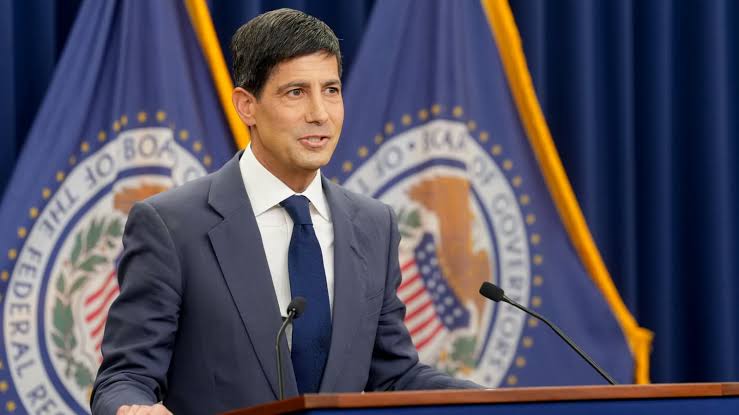
If corporate earnings determine margin profiles, central bank policy governs the discount rate applied to those cash flows, and this week delivers an unusually dense sequence of policy signals. The Federal Open Market Committee concludes its two-day meeting on Wednesday, July 29, with the decision at 2:00 p.m. Eastern and Chair Kevin Warsh's press conference following at 2:30 p.m. The benchmark federal funds rate sits at a target range of 3.50% to 3.75%, unchanged across the past four meetings, and a hold on Wednesday would make it five consecutive. Consensus expects exactly that, though the probability of a hike has been unusually live for a meeting where economists broadly agree on the outcome. Market-implied odds of an immediate increase spiked toward 46% in mid-July as oil climbed, sat near 37% at Friday's close, and fell to roughly 30% on Monday as the Hormuz de-escalation drained risk premium out of energy. The argument concentrates on September, with hike probability for that meeting priced near 80% at points this month.
Warsh's communication style materially raises the volatility around this event. Since taking over from Jerome Powell in May, he has deliberately stripped back forward guidance, cutting the June policy statement to roughly 130 words from 341 in April, removing language that had signalled a bias toward future cuts, and declining to submit his own projection to the dot plot. There is no updated Summary of Economic Projections at this meeting, since the next ones fall in September and December, which leaves the press conference as the only real window into the committee's tolerance for elevated energy prices. Warsh has been explicit that price stability is the priority and that the Fed has no tolerance for elevated consumer and producer costs, telling an audience in Sintra on July 1 that prices remain too high. The June projections already showed nine of eighteen officials expecting the funds rate to finish 2026 above the current range, with the median moving up to 3.8% from 3.4% in March, so dissent within the committee is a live possibility.
The data arrives immediately afterward and could either validate or undercut whatever the Fed signals. On Thursday, July 30, at 8:30 a.m. Eastern, the Bureau of Economic Analysis releases the advance estimate of second-quarter GDP alongside the June personal consumption expenditures price index, with weekly jobless claims landing in the same window. Growth consensus sits near 2.5% against a prior reading of 2.1%, while headline PCE has been running near 4.1% year-over-year with the core measure near 3.4%. Solid growth paired with sticky inflation would confirm macroeconomic resilience and raise the hurdle for any near-term easing considerably. A softer inflation print would give policymakers room to hold comfortably through the autumn.
Two further central banks complete the picture. The Bank of England meets this week, with all seventy economists in a Reuters poll expecting a hold at 3.75%. The Bank of Japan announces on Friday, July 31, alongside its quarterly Outlook Report, and is forecast to remain at 1% with the possibility of a further increase later in the year, which keeps cross-border carry-trade and currency risk on the table for global desks. The European Central Bank, having already left rates unchanged, has signalled that a September hike is likely, and Eurozone flash CPI lands on Friday as well. Running underneath all of it, newly imposed US tariffs covering a range of goods and some sixty trading partners represent a second inflationary channel operating independently of energy prices, which complicates any clean read on where underlying price pressure is actually coming from.
3. Digital Asset Positioning Into the Gauntlet
Bitcoin opened the week around $65,100 after touching a five-week high above $66,400 mid-month and dipping to roughly $64,800 as oil crossed $100, with total crypto market capitalization near $2.23 trillion. The Monday relief rally in crypto tracked the oil decline almost exactly. Digital assets are currently coupled far more tightly to the geopolitical risk premium than to any crypto-native narrative.
Three crypto-adjacent equities report inside the same window and each offers a different read on the sector. Robinhood reports after Wednesday's close with consensus near $0.41 to $0.43 in earnings per share on revenue around $1.27 billion, and the focus falls on event and prediction markets, which are expected to out-earn crypto this quarter, alongside record Gold subscriber numbers near 4.3 million. Expectations are elevated after a first-quarter miss sent shares down 13%, which leaves limited room for disappointment. Coinbase and Strategy both report after Thursday's close, landing hours after the Fed decision and on the same day as the GDP and PCE releases. Strategy's results will be dominated by Bitcoin mark-to-market swings following a roughly $8.3 billion unrealized crypto loss, with attention on its holdings of approximately 843,775 BTC worth around $54 billion, the strain on dividend obligations behind its preferred-share stack, and a fiat reserve of roughly $3.75 billion built up as the company paused Bitcoin purchases entirely in recent weeks. The stock is down roughly 38% year to date.
Deribit and CME settle their monthly Bitcoin and Ether options and futures contracts on Friday, July 31, which stacks two of the most crypto-correlated equity earnings reports directly ahead of a month-end derivatives expiry. A hawkish surprise from Warsh on Wednesday or an upside inflation print on Thursday could trigger rapid deleveraging across perpetual futures markets into that settlement. The mirror scenario is equally plausible: if Big Tech demonstrates robust enterprise cloud adoption while inflation comes in contained, risk assets could see a sharp liquidity relief rally into August.
4. How the Week Sequences
The calendar compresses four separate reads on rates into two consecutive sessions. Wednesday delivers the Fed decision in the afternoon followed by Microsoft, Meta, and Robinhood after the close, pairing the policy signal with the single largest test of AI capex credibility in one session. Thursday morning brings GDP and PCE before the open, immediately testing whatever the Fed communicated the previous afternoon, and then Amazon, Apple, Coinbase, and Strategy report after the close. Friday closes the sequence with the Bank of Japan decision, Eurozone flash inflation, and month-end derivatives settlement.
Traders are being advised to plan around the sequence. Divergent signals across consecutive days force rapid repositioning, and the combination of month-end flows, options expiry, and back-to-back macro releases creates conditions where liquidity can thin precisely when volatility peaks.
Frequently Asked Questions
When is the Fed's July 2026 interest rate decision? The Federal Open Market Committee announces its decision on Wednesday, July 29, 2026, at 2:00 p.m. Eastern, following a two-day meeting that began July 28. Chair Kevin Warsh's press conference follows at 2:30 p.m. There is no updated Summary of Economic Projections at this meeting.
Will the Fed raise rates in July 2026? Consensus expects a hold at the current 3.50% to 3.75% range, which would be the fifth consecutive meeting without a change. Market-implied odds of an immediate hike fell to roughly 30% on Monday after the US and Iran paused strikes over the Strait of Hormuz, down from about 37% at Friday's close and a mid-July peak near 46%. September is viewed as the more meaningful test.
How much is Big Tech spending on AI in 2026? Combined 2026 AI capital expenditure across Amazon, Alphabet, Meta, and Microsoft is running near $725 billion, up roughly 77% from about $410 billion in 2025. Microsoft is tracking toward approximately $190 billion, Amazon toward roughly $200 billion, Meta has guided to $125 billion to $145 billion, and Alphabet raised its guidance to $195 billion to $205 billion.
When do Microsoft, Meta, Apple, and Amazon report Q2 2026 earnings? Microsoft and Meta report after the close on Wednesday, July 29, and Apple and Amazon report after the close on Thursday, July 30. Alphabet already reported on July 22.
Why did Alphabet stock fall after its earnings? Alphabet raised its 2026 capital expenditure guidance to $195 billion to $205 billion, up from $180 billion to $190 billion, and the stock sold off immediately. The reaction signalled that investors now require visible AI returns rather than treating higher infrastructure spending as a positive in itself.
What is the Q2 2026 GDP and Core PCE forecast? The advance estimate of second-quarter GDP is released Thursday, July 30, at 8:30 a.m. Eastern with consensus near 2.5%, against a prior reading of 2.1%. The June PCE price index lands in the same window, with headline inflation running near 4.1% year-over-year and the core measure near 3.4%.
Which central banks are meeting this week? Three major central banks meet: the Federal Reserve on Wednesday, July 29, the Bank of England, which all seventy economists in a Reuters poll expect to hold at 3.75%, and the Bank of Japan on Friday, July 31, forecast to hold at 1% alongside its quarterly Outlook Report.
Disclaimer: This article is for informational purposes only and does not constitute financial, investment, or trading advice. Digital assets are volatile and you may lose capital. Conduct your own research before making any decision.