

What Is the Current Fed Funds Rate? July 2026 Update and Crypto Market Impact

As of July 15, 2026, the current federal funds rate target range is 3.50% to 3.75%. The midpoint of that range is 3.625%. The latest available effective federal funds rate, or EFFR, is 3.62%, reflecting the actual overnight rate at which eligible institutions borrowed and lent federal funds.
The Federal Open Market Committee maintained the target range at its June 16–17, 2026 meeting. The next scheduled FOMC meeting is July 28–29, 2026. Because interest-rate expectations can move the U.S. dollar, bond yields, equities, Bitcoin, and other cryptocurrencies, traders should monitor both the official decision and the language used in the policy statement.
Summary
The answer to “what is the current fed funds rate?” is 3.50%–3.75% as of July 15, 2026. The actual effective rate is close to the middle of that range at 3.62%.
The fed funds rate is the Federal Reserve’s main short-term monetary-policy benchmark. It influences borrowing costs, savings yields, financial conditions, market liquidity, and expectations for risk assets. For crypto traders, the rate itself matters, but changes in expected future policy can be just as important as the announced decision.
| Fed Rate Measure | Current Level | What It Means |
|---|---|---|
| Federal funds target range | 3.50%–3.75% | Official range set by the FOMC |
| Target-range midpoint | 3.625% | Simple midpoint used in market analysis |
| Effective federal funds rate | 3.62% | Actual median overnight transaction rate |
| Interest on reserve balances | 3.65% | Administered rate used to help control overnight rates |
| Next scheduled FOMC meeting | July 28–29, 2026 | Next opportunity for a policy-rate decision |
What Is the Current Fed Funds Rate Right Now?
The Federal Reserve’s current policy-rate page lists the federal funds target range at 3.50% to 3.75%. The FOMC confirmed this level in its June 17, 2026 policy statement.
The Federal Reserve Bank of New York separately publishes the effective federal funds rate. The EFFR is calculated as a volume-weighted median of reported overnight federal funds transactions. At the time of writing, the latest published observation is 3.62% for July 13, 2026, inside the FOMC’s target range.
This distinction is important:
- Target range: The policy range selected by the FOMC.
- Effective rate: The observed rate produced by actual overnight transactions.
- Midpoint: A convenient analytical reference, not a separately traded rate.
What Is the Federal Funds Rate?
The federal funds rate is the interest rate applied to unsecured overnight borrowing between eligible depository institutions in the United States. Banks use the market to manage short-term reserve and liquidity needs.
The Federal Reserve does not directly set every private transaction at one exact number. Instead, the FOMC establishes a target range, and the Fed uses administered rates and liquidity-management tools to keep market rates within that range.
According to the New York Fed’s explanation of monetary-policy implementation, the effective rate is published daily using data from the previous business day.
Why Does the Fed Use a Target Range?
A range gives overnight markets room to operate while preserving the central bank’s desired monetary-policy stance. In the current framework, the Fed mainly guides short-term rates through tools such as:
- Interest paid on reserve balances
- The overnight reverse repurchase facility
- The standing repo facility
- Open-market operations when needed
The June 2026 implementation note maintained the interest rate paid on reserve balances at 3.65%, helping keep the effective federal funds rate inside the 3.50%–3.75% target range.
Why Is the Current Fed Funds Rate Important?
The federal funds rate is an overnight interbank benchmark, but its effects spread across the economy and financial markets.
Borrowing Costs
Changes in the policy rate can influence the prime rate, credit-card APRs, business loans, adjustable-rate debt, auto financing, and other forms of short-term borrowing.
Mortgage rates are not directly set by the Fed, but they can respond to changes in Treasury yields and expectations for inflation and future monetary policy.
Savings and Cash Returns
Higher policy rates often support higher yields on savings accounts, money-market instruments, Treasury bills, and other short-duration products. Lower rates tend to reduce cash yields over time.
The U.S. Dollar and Bond Yields
A more restrictive Fed outlook can support the U.S. dollar and push short-term Treasury yields higher, although market reactions depend on what investors have already priced in.
A more accommodative outlook may weaken yields and improve liquidity expectations.
Stocks and Other Risk Assets
Higher discount rates can reduce the present value of expected future cash flows, potentially pressuring growth stocks and other long-duration assets.
Lower expected rates can have the opposite effect, especially when cuts are associated with cooling inflation rather than a severe economic downturn.
How Does the Fed Funds Rate Affect Bitcoin and Crypto?
The federal funds rate does not mechanically determine the price of Bitcoin. However, it influences several macroeconomic conditions that can affect cryptocurrency demand and volatility.
Liquidity and Risk Appetite
When rates are high or expected to rise, cash and government securities may offer more attractive returns. Financial conditions can tighten, leverage may become more expensive, and investors may reduce exposure to volatile assets.
When markets expect lower rates, improved liquidity and lower opportunity costs can support risk appetite. This may benefit Bitcoin and altcoins, although the result depends on why the Fed is easing.
The Dollar Channel
Crypto assets are commonly quoted against the U.S. dollar or dollar-linked stablecoins. A stronger dollar can create pressure for dollar-denominated risk assets, while a weaker dollar may be supportive.
The relationship is not constant and should not be treated as a guaranteed trading signal.
FOMC-Driven Volatility
Crypto markets trade around the clock, so they can react immediately to FOMC statements, press conferences, inflation data, labor-market reports, and shifts in rate expectations.
The biggest move may occur not when the Fed changes rates, but when its guidance differs from what markets expected.
Traders can use the MEXC Bitcoin price page to follow live BTC market data or access the BTC/USDT spot market on MEXC. MEXC also publishes macro-focused educational content, including its guide to how prediction markets price Fed decisions, CPI, and economic indicators.
Does a Fed Rate Cut Always Make Crypto Prices Rise?
No. A rate cut can be positive for crypto when it reduces real yields, improves liquidity expectations, and occurs alongside resilient economic growth.
However, a cut triggered by recession risk, financial stress, or rapidly weakening employment can initially cause investors to reduce risk.
The market reaction usually depends on four questions:
- Was the decision already priced in?
- Why did the Fed change policy?
- What did the Fed signal about future meetings?
- How did Treasury yields and the U.S. dollar respond?
This is why traders should compare the official decision with market expectations rather than interpreting “cut” as automatically bullish or “hike” as automatically bearish.
What Is the Fed Watching Before Its Next Rate Decision?
In its June statement, the FOMC said economic activity was expanding at a solid pace while inflation remained above its 2% objective.
Before the next meeting, investors are likely to focus on:
- Inflation reports from the U.S. Bureau of Labor Statistics
- PCE inflation and consumer-spending data from the Bureau of Economic Analysis
- Employment and unemployment data from the BLS Employment Situation
- Treasury yields published by the U.S. Department of the Treasury
- FOMC speeches, minutes, and policy statements
- Market-implied expectations available through the CME FedWatch Tool
No single indicator determines the decision. The FOMC evaluates incoming data, the economic outlook, and risks to both inflation and employment.
When Is the Next Fed Rate Decision?
The next scheduled FOMC meeting is July 28–29, 2026, according to the Federal Reserve’s official meeting calendar.
The policy statement is normally released at 2:00 p.m. Eastern Time on the second day of the meeting. Traders should also monitor the press conference because comments about inflation, employment, and future policy can move markets even when the target range remains unchanged.
How to Monitor the Fed Funds Rate
For the most reliable information, use primary sources:
- Check the Federal Reserve policy-rate page for the current target range.
- Review the latest FOMC statements and meeting calendar.
- Check the New York Fed EFFR page for the effective rate.
- Compare official data with Treasury yields and market-implied expectations.
- Monitor real-time cryptocurrency prices and volumes through MEXC Markets.
Investors should avoid relying on old articles or outdated search snippets because the rate may change after any scheduled or emergency FOMC decision.
FAQ
What is the current fed funds rate in 2026?
As of July 15, 2026, the current federal funds target range is 3.50% to 3.75%.
What is the effective federal funds rate?
The effective federal funds rate is the volume-weighted median rate on eligible overnight federal funds transactions. The latest published observation at the time of writing is 3.62% for July 13, 2026.
Is the fed funds rate 3.50% or 3.75%?
It is a target range from 3.50% to 3.75%, not one single official number. The midpoint is 3.625%, while the effective market rate can move within the range.
Who sets the federal funds rate?
The Federal Open Market Committee sets the target range. The Federal Reserve Bank of New York helps implement monetary policy and publishes the effective federal funds rate.
When is the next FOMC meeting?
The next scheduled meeting is July 28–29, 2026.
How does the fed funds rate affect Bitcoin?
It affects liquidity, the U.S. dollar, bond yields, borrowing costs, and risk appetite. These channels can influence Bitcoin, but there is no guaranteed one-direction relationship between Fed decisions and crypto prices.
Can traders follow Fed-related markets on MEXC?
Traders can monitor live crypto prices, use MEXC spot and futures markets where available, read macro-market analysis, and explore MEXC Prediction Markets for eligible event-based markets.
Product availability varies by region.
Is this article financial advice?
No. This content is for educational purposes only. Cryptocurrency and derivatives trading involve substantial risk, and past market reactions to Federal Reserve decisions do not guarantee future results.
Description:Crypto Pulse is powered by AI and public sources to bring you the hottest token trends instantly. For expert insights and in-depth analysis, visit MEXC Learn.
The articles shared on this page are sourced from public platforms and are provided for reference only. They do not represent the position or views of MEXC. All rights belong to Sarah Chen. If you believe any content infringes upon the rights of a third party, please contact service@support.mexc.com for prompt removal. MEXC does not guarantee the accuracy, completeness, or timeliness of any content and is not responsible for any actions taken based on the information provided. The content does not constitute financial, legal, or other professional advice, nor should it be interpreted as a recommendation or endorsement by MEXC. For expert insights and in-depth analysis, visit MEXC Learn.
Learn More About Solana
View More
Will Solana Break $100 in July? Solana (SOL) Price Prediction July 2026 and Analyst Targets

How High Can Solana (SOL) Go After the Iran Ceasefire Relief Rally?

Will SOL Hit $250 or Drop to $59? Solana (SOL) Price Prediction June 2026
Latest Updates on Solana
View More
XRP, Shiba Inu, Solana (SOL) and Ethereum (ETH) Price Analysis for June 10: Market Fuel Comes In Handy
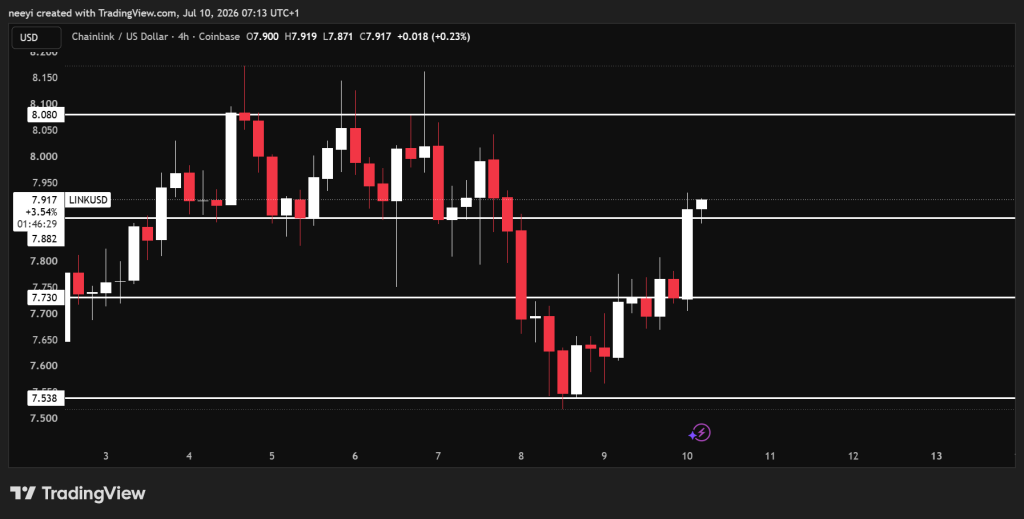
Crypto Price Prediction for Today, July 10: XRP, Solana (SOL), Chainlink (LINK)
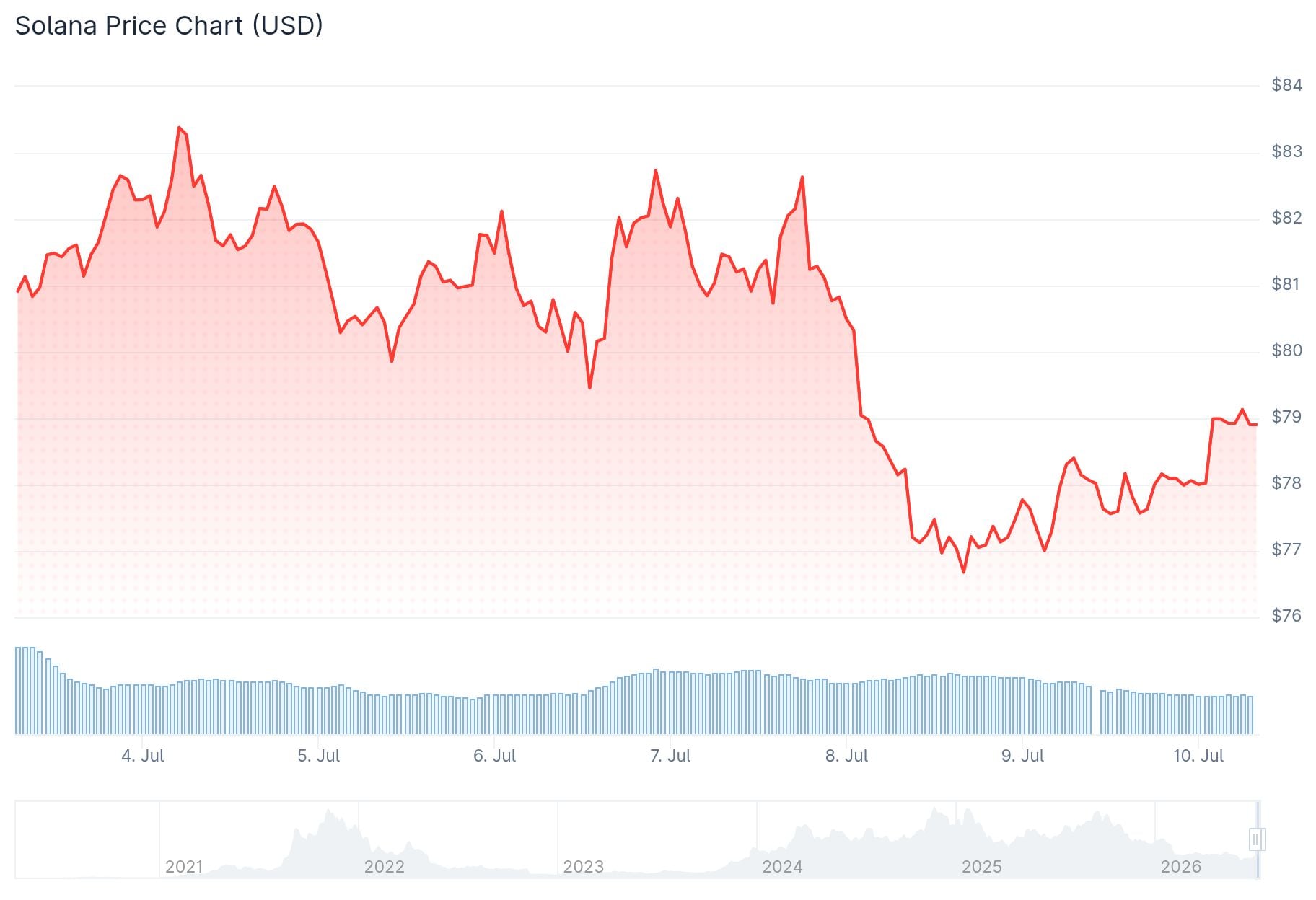
Solana (SOL) Must Conquer $85 Resistance to Reach $100 Target
HOT
Currently trending cryptocurrencies that are gaining significant market attention
Crypto Prices
The cryptocurrencies with the highest trading volume
Newly Added
Recently listed cryptocurrencies that are available for trading