

Why This Pro Trader Believes the Bitcoin Bear Market Just Ended

The post Why This Pro Trader Believes the Bitcoin Bear Market Just Ended appeared first on Coinpedia Fintech News
Bitcoin (BTC) first broke above $80,000 on May 4. While exciting, this upward development triggered a split in crypto Twitter. There are those who think the move marks the end of months-long consolidation and the onset of a bull run. On the other hand, some see it as a false breakout, calling for prices as low as $30,000 before a bullish reversal begins. One prominent crypto trader has listed the reasons he believes in a bullish setup.
Why there is only one way to go, and it’s up for Bitcoin
For one, Michaël van de Poppe is convinced, “there won’t be any rate hikes in the coming future.” According to the CME FedWatch Tool, there is a 95.9% probability that US interest rates will remain unchanged within the current 3.50%-3.75% range. Unwavering or low rates typically trigger bullish sentiment.
Secondly, the trader notes “enormous growth within a lot of companies,” and that “crypto will be used as the ultimate rails for AI to provide payments on.” According to Q1, 2026 earnings reports, tech and AI-related companies have seen 40%+ growth, with a positive spillover to financial and industrial companies, among others. Blended year-over-year (YoY) earnings per share growth for the S&P 500 is tracking at 27%-28%, marking the highest quarterly growth since Q4 2021. Meanwhile, blended YoY revenue growth is around 11.3%, marking the highest since Q2/Q3 2022.
Thirdly, ETF net inflows have been strongly positive in the past year, driven by heavy institutional buying.
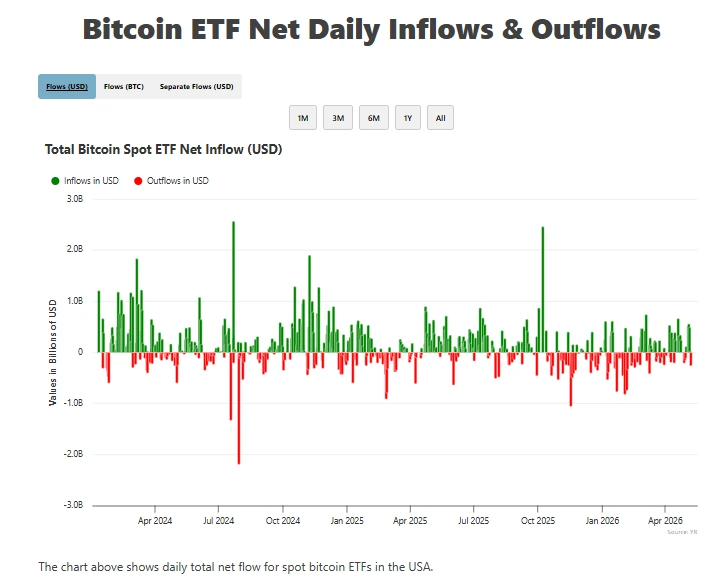
Source: Bitbo.io
Wait, there’s more
Other potentially advantageous developments for BTC include the upcoming CLARITY Act vote, talks of a BTC strategic reserve, and the appointment of a new pro-crypto Fed Chair.
At press time, Bitcoin was trading at $81,717, just slightly above its 21-day moving average support zone of $80,955. Maintaining this level is critical for a push towards the next resistance target of $85,000-$88,000, which would again form the basis for a rally to $100K.
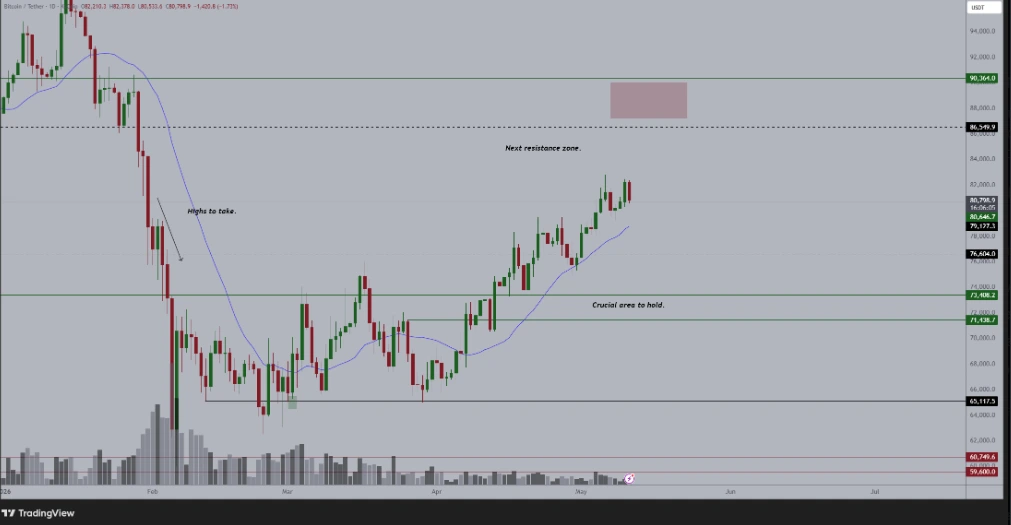
Source: Trading View
That said, a major headwind is the current delicate situation between the US and Iran and its ramifications for global markets (including higher energy prices and inflation).


You May Also Like

Pi Network Users Shocked After Website Shutdown Claims Spread

EBRD supports Egyptian fertiliser producer with $20m funding




