

Senate Releases Complete Text of Clarity Act Crypto Bill Before May 14 Vote
Key Takeaways
- The complete Clarity Act text was published by the Senate Banking Committee on Monday evening, hours before the May 14 committee markup session.
- Key provisions address stablecoin interest payments and establish legal safeguards for decentralized finance protocol creators.
- Traditional banking institutions advocate for stricter stablecoin regulations, citing concerns about deposit migration from conventional banking systems.
- An ethics clause designed to prevent government officials from profiting on crypto holdings remains absent — Democrats insist on its inclusion.
- Prediction markets show a 64% probability that President Trump will enact the Clarity Act into law during 2025.
Late Monday evening, the Senate Banking Committee made public the comprehensive 309-page Clarity Act, releasing it mere hours ahead of the May 14 markup hearing. This legislation represents one of the most ambitious efforts to establish a complete regulatory structure for digital assets in the United States.
While the full document hadn’t been publicly available until now, it had been shared privately among industry stakeholders, minimizing unexpected revelations. Crypto advocacy organizations worked through the night analyzing the legal language to verify their key objectives were reflected in the final version.
The legislation focuses on three primary domains: regulations governing stablecoin interest payments, liability protections for DeFi developers, and enhanced enforcement mechanisms for federal prosecutors handling digital asset money laundering cases.
Banking Sector Clashes with Crypto Industry Over Stablecoin Interest
Among the most controversial elements is the section addressing stablecoin yield programs. The published language prohibits cryptocurrency companies from offering interest on dormant stablecoin holdings. Only performance-based incentives are allowed.
Traditional banks, however, remain dissatisfied with these terms. Rob Nichols, who leads the American Bankers Association, distributed correspondence to banking executives encouraging them to contact their senators prior to the scheduled vote.
Nichols cautioned that existing provisions would “create unwarranted incentives for bank deposits to migrate into payment stablecoins, threatening both economic expansion and financial system stability.”
Banking industry coalitions submitted an additional letter to Banking Committee members requesting more stringent limitations on stablecoin reward structures.
Analysis from Galaxy countered these warnings, maintaining that stablecoin expansion will primarily result from international capital entering U.S. banking systems rather than domestic deposit transfers.
Conflict-of-Interest Language Creates Legislative Hurdle
Notably absent from the current draft is a conflict-of-interest provision that would restrict government officials from earning profits through cryptocurrency investments. This clause lies beyond the Banking Committee’s authority and requires separate legislative action.
White House cryptocurrency advisor Patrick Witt indicated the administration endorses broad ethics standards applicable to all government personnel, while opposing measures targeting individual officeholders.
Senate Republicans are anticipated to push the bill forward on party-line votes during the May 14 markup session. Subsequently, it must be reconciled with legislation approved by the Senate Agriculture Committee before proceeding to a floor vote.
Passage requires sixty votes in the full Senate, necessitating bipartisan cooperation. The administration aims for completion by July 4th. Senator Kirsten Gillibrand forecasts passage by early August.
Polymarket currently assigns a 64% probability that Trump signs the Clarity Act into law this year.
The post Senate Releases Complete Text of Clarity Act Crypto Bill Before May 14 Vote appeared first on Blockonomi.


You May Also Like
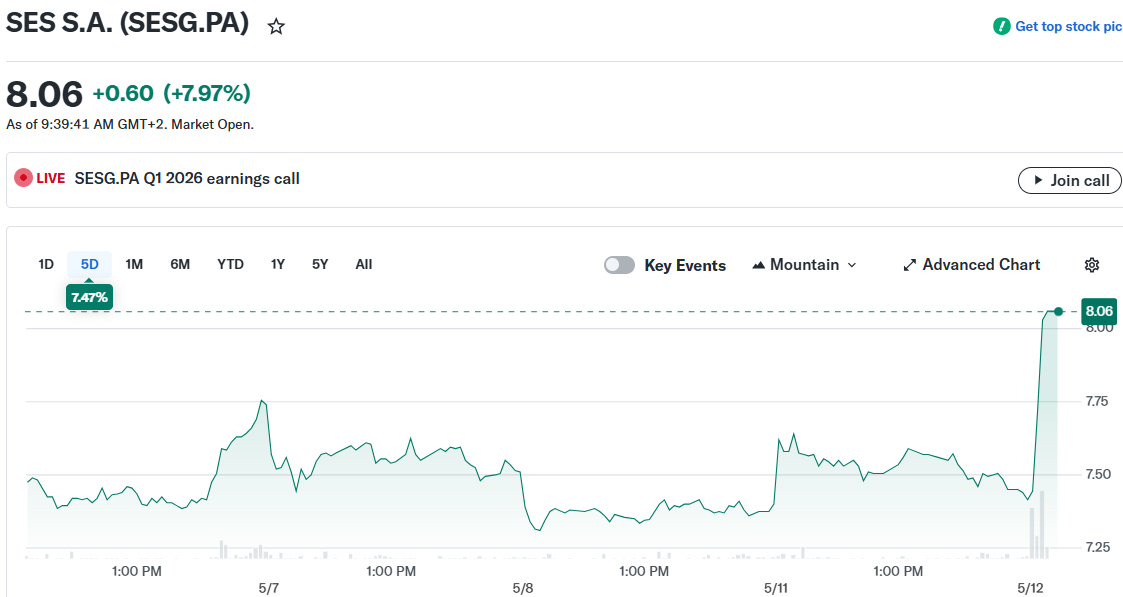
SES Reports 80% Revenue Jump as Aviation Connectivity and Intelsat Merger Drive Q1 Growth

Shai Gilgeous-Alexander, Thunder still perfect in playoffs after sweep of Lakers




