

Trump Backs CFTC as White House Reviews Prediction Market Rules
White House Reviews CFTC Prediction Markets Rules as Trump Signals Support for Agency Oversight
The White House is reportedly reviewing proposed rules surrounding prediction markets introduced by the U.S. Commodity Futures Trading Commission, a development that could significantly shape the future of event-based trading platforms and digital financial speculation in the United States.
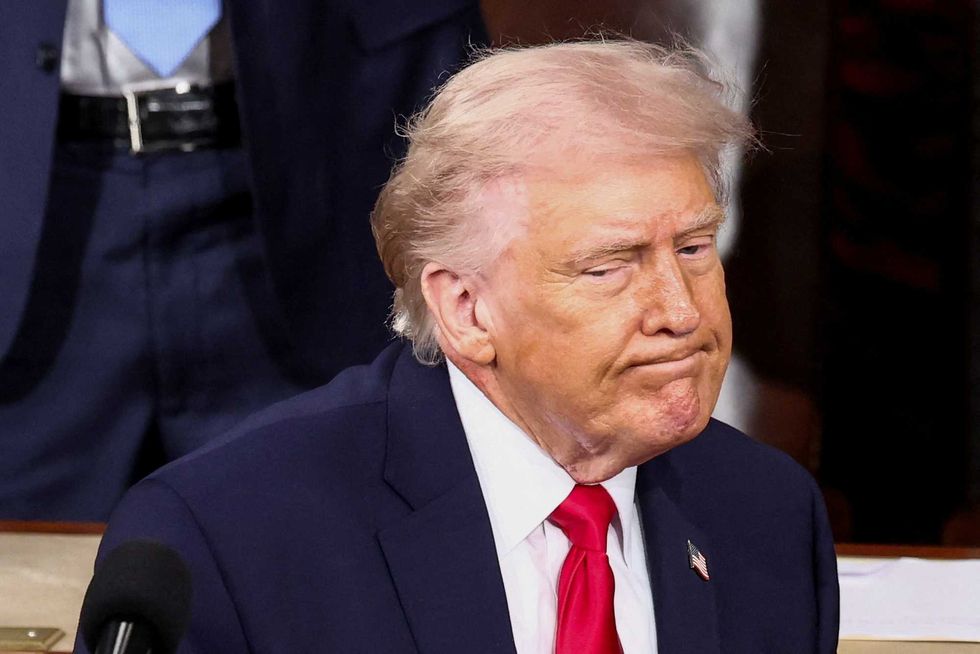
The move comes as former President Donald Trump publicly voiced support for the authority of the CFTC over the growing prediction markets industry, adding fresh political momentum to one of the most controversial sectors in modern finance.
Prediction markets, which allow users to place trades on the outcome of future events ranging from elections to economic data and sports, have rapidly gained popularity in recent years. Industry supporters argue the platforms provide valuable forecasting tools and improve information efficiency, while critics warn they may blur the line between financial innovation and gambling.
The latest reports gained widespread attention across social media after the information was highlighted by the X account of Cointelegraph, triggering renewed debate among traders, regulators, legal experts, and political analysts.
As Washington continues to evaluate how emerging financial technologies should be regulated, the White House review of the CFTC’s proposed framework could become a defining moment for the future of prediction markets in America.
 |
| Source: XPost |
Prediction Markets Become a Major Financial Debate
Prediction markets have evolved from niche internet platforms into a rapidly expanding industry attracting retail traders, institutional participants, and technology investors.
The concept allows participants to buy and sell contracts tied to real-world outcomes. These contracts can be linked to election results, central bank decisions, inflation data, geopolitical events, or even entertainment and sports outcomes.
Advocates believe prediction markets can provide more accurate forecasts than traditional polling or expert analysis because they aggregate collective market sentiment in real time.
Critics, however, argue that allowing financial speculation on political or social events raises ethical and legal concerns. Some lawmakers have questioned whether certain prediction contracts effectively function as unregulated gambling products.
The growing popularity of blockchain technology and decentralized finance platforms has further accelerated interest in event-based trading systems, making regulation increasingly urgent for federal agencies.
White House Closely Monitoring Regulatory Developments
According to reports circulating within financial and political circles, the White House is now carefully reviewing the CFTC’s proposed approach to regulating prediction markets.
The review reportedly focuses on balancing financial innovation with consumer protection while ensuring federal agencies maintain oversight over rapidly evolving digital trading systems.
Officials are believed to be evaluating whether existing commodity and derivatives laws are sufficient for overseeing modern prediction markets or whether additional regulatory frameworks may eventually be required.
The administration’s involvement highlights the increasing political importance of digital financial products as they gain mainstream attention across the United States.
While the White House has not publicly outlined specific positions regarding all aspects of the proposal, the ongoing review suggests policymakers recognize the sector’s growing influence on both financial markets and political discourse.
Trump Backs CFTC Authority
Former President Donald Trump added another major political dimension to the debate by expressing support for the CFTC’s authority over prediction markets.
Trump’s remarks are being interpreted by analysts as part of a broader effort to support alternative financial technologies while limiting what some conservatives view as excessive regulatory control from other federal agencies.
The former president has increasingly embraced financial innovation themes in recent months, particularly in sectors connected to cryptocurrency, blockchain technology, and decentralized finance.
Supporters of the CFTC argue the agency is better suited to regulate prediction markets compared to agencies with stricter enforcement reputations. Many within the digital asset and fintech industries believe the CFTC has historically taken a more innovation-friendly approach toward emerging technologies.
Trump’s comments could also influence future policy discussions if prediction markets become a larger issue during upcoming election cycles.
CFTC’s Expanding Role in Digital Finance
The Commodity Futures Trading Commission has gained increasing influence as financial markets evolve beyond traditional commodities and futures contracts.
Originally focused on agricultural products and derivatives markets, the agency now plays a growing role in overseeing cryptocurrency derivatives, digital trading products, and event-based contracts.
As decentralized financial technologies continue expanding, many legal experts believe the CFTC may eventually become one of the most important regulators in the digital finance ecosystem.
Industry participants have often praised the agency for engaging more directly with innovation-focused companies compared to some other federal regulators.
Still, legal uncertainty remains a major issue. Several high-profile court battles and policy disputes have exposed disagreements between regulators regarding which agencies should oversee emerging digital financial products.
The White House review of prediction market rules could therefore influence not only event-based trading but also the broader structure of future financial regulation in America.
Growing Popularity of Event-Based Trading Platforms
Prediction market platforms have experienced substantial growth over the past few years, particularly during major political events and periods of economic uncertainty.
Interest surged during election cycles as traders sought alternative ways to speculate on political outcomes. Platforms offering contracts tied to presidential elections, inflation rates, Federal Reserve decisions, and geopolitical developments attracted millions of dollars in trading volume.
Some analysts argue that prediction markets provide valuable public insights because participants risk real money based on expected outcomes, potentially creating more honest forecasts than opinion polls.
Others warn the platforms may encourage excessive speculation on sensitive political and social events.
The expansion of mobile trading apps and blockchain infrastructure has made these markets more accessible to younger investors and online trading communities.
As the industry grows, regulators face mounting pressure to establish clearer legal boundaries regarding what types of event contracts should be permitted.
Legal Questions Continue to Surround the Industry
One of the biggest challenges facing prediction markets remains legal classification.
Regulators and legal scholars continue debating whether prediction contracts should be treated as commodities, financial derivatives, gambling instruments, or entirely new categories of financial products.
The distinction carries enormous implications for taxation, licensing, consumer protections, and federal oversight authority.
Some companies operating in the sector argue that prediction markets serve legitimate economic and informational purposes rather than functioning purely as betting systems.
Opponents counter that allowing widespread speculation on political events could create ethical concerns or undermine public trust in democratic systems.
These unresolved legal questions have made the industry one of the most closely watched areas within financial regulation.
Financial Markets Watching Washington Closely
Investors, fintech startups, and blockchain companies are now closely monitoring signals coming from Washington regarding the future direction of prediction market regulation.
Many industry participants believe clearer federal guidance could unlock substantial institutional investment and encourage broader mainstream adoption.
Others fear overly restrictive policies could push innovation overseas, repeating concerns already seen within the cryptocurrency sector.
The outcome of the White House review could therefore shape not only prediction markets but also America’s competitiveness in financial technology innovation.
Analysts say the administration’s approach may ultimately reveal how future policymakers intend to handle rapidly evolving digital financial products in the years ahead.
Political Impact Could Expand Further
The intersection of finance, politics, and technology has become increasingly difficult to separate in modern America.
Prediction markets sit directly at the center of that convergence, particularly as elections, economic policies, and global events become tradable financial instruments.
Trump’s support for the CFTC’s role may energize supporters who favor less restrictive oversight and more innovation-friendly financial policies.
At the same time, critics are likely to continue pushing for stricter safeguards to prevent potential abuses or excessive speculation.
The debate surrounding prediction markets is expected to intensify as digital finance continues reshaping the global economy.
For now, the White House review of the CFTC’s proposed rules represents another major chapter in America’s ongoing struggle to define the future of modern financial innovation.
HokaNews will continue following developments surrounding prediction markets, financial regulation, blockchain innovation, and digital trading systems shaping the next era of global finance.
hokanews.com – Not Just Crypto News. It’s Crypto Culture.
Writer @Ethan
Ethan Collins is a passionate crypto journalist and blockchain enthusiast, always on the hunt for the latest trends shaking up the digital finance world. With a knack for turning complex blockchain developments into engaging, easy-to-understand stories, he keeps readers ahead of the curve in the fast-paced crypto universe. Whether it’s Bitcoin, Ethereum, or emerging altcoins, Ethan dives deep into the markets to uncover insights, rumors, and opportunities that matter to crypto fans everywhere.
Disclaimer:
The articles on HOKANEWS are here to keep you updated on the latest buzz in crypto, tech, and beyond—but they’re not financial advice. We’re sharing info, trends, and insights, not telling you to buy, sell, or invest. Always do your own homework before making any money moves.
HOKANEWS isn’t responsible for any losses, gains, or chaos that might happen if you act on what you read here. Investment decisions should come from your own research—and, ideally, guidance from a qualified financial advisor. Remember: crypto and tech move fast, info changes in a blink, and while we aim for accuracy, we can’t promise it’s 100% complete or up-to-


You May Also Like

4 Best Crypto Presales to Buy in June: Could These New Tokens 100x?

The two-year XRP lawsuit endgame: what’s left to resolve
Trump doesn't want the GOP to win in November — and his actions prove it



