Tokenization aided by MiCA, insights with Wojciech Kaszycki
Disclosure: The views and opinions expressed here belong solely to the author and do not represent the views and opinions of crypto.news’ editorial.
Selva Ozelli Esq, CPA, Author of Sustainably Investing in Digital Assets asks Wojciech Kaszycki, Chief Strategy Officer (CSO) of BTCS SA Europe’s first dedicated Digital Asset Treasury Company why he thinks there will be a consolidation of crypto treasury firms and the shift toward institutional grade stablecoin infrastructure and tokenization that is aided by MiCA. By Selva Ozelli Esq., CPA, Author of “Sustainably Investing in Digital Assets Globally”
Wojciech Kaszycki serves as the Chief Strategy Officer (CSO) for BTCS S.A. a Polish technology company headquartered in Warsaw recognized as Europe’s first dedicated Digital Asset Treasury Company (DATCO) which has an “Active Treasury” strategy, using Bitcoin as an anchor asset while generating yield through staking, validator operations, and tokenized Real-World Assets (RWA). In late 2025, the company reported a tenfold increase in market capitalization following its pivot to blockchain infrastructure and has since pursued significant capital raises, including a $100 million Series G round.
Wojciech is a serial entrepreneur with over 30 years of background in scaling fintech and digital-asset infrastructure. He is the founder of Mobilum, a regulated digital payment services provider and Bitcoin banking platform (CSE:MBLM) established in 2010. He led the development of a global plug-and-play fiat to crypto exchange platform and scalable on and off-ramp solutions used by exchanges, wallets, and DeFi protocols. As an ACAMS Certified Crypto asset Specialist, an active investor and advisor in fintech and medtech, focused on scaling digital economy infrastructure, he has been vocal about the consolidation of crypto treasury firms and the shift toward institutional-grade stablecoin infrastructure and tokenization.
- BTCS said crypto treasury firms without operational yield models could face consolidation as institutional standards tighten.
- Stablecoins, tokenized assets, and MiCA rules are accelerating institutional adoption across Europe.
- MiCA’s July 2026 deadline has pushed crypto firms to expand licensing and compliance efforts across multiple EU jurisdictions.
Tell us about your educational and professional journey leading up to founding Mobilum a regulated crypto payments platform.
I started in tech entrepreneurship in Poland in the early 1990s, right as the country was opening up. Over 30 years I built and scaled businesses across payments, fintech, and digital infrastructure. I earned my ACAMS Certified Crypto asset Specialist designation along the way. Mobilum was a natural evolution – combining my payments experience with the emerging crypto ecosystem.
You are an early believer and adopter of BTC. How did you become aware of BTC and tell us about Mobilum.
I discovered Bitcoin in 2014 and immediately saw the gap there was no easy way for holders to convert back to fiat. So, I set up Mobilum initially as an off-ramp for BTC users. From there it grew into a full plug-and-play fiat-to-crypto platform, serving exchanges, wallets, and DeFi protocols with scalable on- and off-ramp solutions.
Tell us about BTCS a crypto treasury company and how you became the CSO of this company.
BTCS (formerly Vakomtek) was a NewConnect-listed Polish tech company that we pivoted into Europe’s first dedicated Digital Asset Treasury Company. As CSO, I shaped the strategy: Bitcoin as the anchor treasury asset, with yield generation through CoreDAO validator operations, staking, and tokenized RWAs. The market responded – we saw a tenfold increase in market cap following the pivot.
For an investor what are the benefits of buying the stock of a crypto treasury company vs investing in shares of a crypto ETF?
An ETF gives you passive, index-like exposure. A treasury company gives you active exposure management is working to grow the BTC-per-share ratio through yield strategies, validator income, and strategic capital allocation. You’re buying operational upside, not just price tracking. Plus, treasury companies can leverage equity markets to accumulate assets in ways an ETF structurally cannot.
As of late 2025–early 2026, there are over 150 to nearly 200 publicly traded companies holding digital assets in their corporate treasuries, holding over $100 billion in crypto combined. Led by MicroStrategy, these companies—including miners, tech firms, and investment vehicles—have rapidly adopted Bitcoin, Ethereum, and Solana for their treasury management. You have been vocal about the consolidation of crypto treasury firms. Tell us why?
Most of these 150-200 companies holding crypto on their balance sheets have no real operational thesis – they bought Bitcoin and called it a strategy. That’s not sustainable. The market will consolidate around firms that generate actual yield on their holdings, have regulatory standing, and offer institutional-grade infrastructure. Passive holders will either be acquired, pivot, or fade. The winners will be those combining treasury management with real infrastructure – staking, validator operations, lending, tokenization.
In 2026, the tokenization of the world financial market is rapidly advancing through stablecoins and Central Bank Digital Currencies (CBDCs), which function as programmable, on-chain cash for settling digital assets. Stablecoins enable fast, 24/7 cross-border transactions and tokenized asset collateralization, while wholesale CBDCs are emerging to provide secure, final settlement in interbank markets. What are the factors supporting fast tokenization of the world financial markets?
Three forces are converging: regulatory clarity (MiCA in Europe, evolving frameworks globally), infrastructure maturity (stablecoins at $307B prove on-chain settlement works at scale), and institutional demand (banks and asset managers want 24/7, programmable, composable assets). Add falling interest rates driving search for yield, and you have every incentive aligned for rapid tokenization.
The world financial sector is tokenizing under two different approaches stablecoin vs CBDC what are the benefits to either approach?
Stablecoins are market-driven, fast, composable, and already at scale – they work today for cross-border payments and DeFi collateral. CBDCs offer sovereign backing and settlement finality, which matters for interbank and wholesale markets. I see them coexisting: stablecoins for retail and commercial flows, wholesale CBDCs for institutional settlement. The key is interoperability between the two layers.
The European Union’s (EU) Markets in Crypto-Assets (MiCA) regulation is widely considered the world’s first comprehensive, pan-European regulatory framework for digital assets that was approved in 2023 and fully active by early 2025. It provides a unified rulebook for crypto-asset service providers (CASPs) and issuers across all 27 EU countries with a deadline of July 1, 2026 which ends the 18-month “grandfathering” transitional period for CASPs. Does MiCA apply to crypto treasury companies and crypto payments platforms?
Yes, but differently. A crypto payments platform like Mobilum falls squarely under CASP licensing requirements. A pure treasury company holding Bitcoin on its balance sheet is less directly regulated under MiCA – it’s more of a corporate treasury decision than a regulated crypto service. However, the moment a treasury company offers services to third parties – custody, exchange, staking-as-a-service – MiCA kicks in fully. The July 2026 grandfathering deadline is the hard line.
What are the challenges of MiCA implementation across the 27 EU countries for crypto treasury companies and crypto payments platforms?
Fragmented transposition across 27 member states is the biggest headache. National competent authorities interpret requirements differently – capital adequacy calculations, substance requirements, fit-and-proper assessments all vary. For a company operating across borders, you’re dealing with one regulation but effectively 27 implementations. Add DORA (Digital Operational Resilience Act) on top, and the compliance burden is significant, especially for smaller firms.
Are there areas of regulatory uncertainty in MiCA implementation across the 27 EU countries for crypto treasury companies and crypto payments platforms and how are firms adapting in real time?
The biggest grey areas are around DeFi (MiCA largely doesn’t address it), NFT classification, and how exactly staking services are categorized. For treasury companies, the treatment of Bitcoin as a reserve asset under prudential rules remains unclear. Firms are adapting by over-engineering compliance, applying for licenses in multiple jurisdictions, building modular compliance stacks, and maintaining close dialogue with regulators. At Mobilum Group we work across multiple EU licenses precisely to manage this uncertainty.
Anything else you would like to add?
The next 18 months will define who the real players are in European crypto infrastructure. MiCA is not a barrier it’s a moat for those who are ready. We’re building for a world where Bitcoin banking, tokenized assets, and regulated stablecoin infrastructure converge. That’s what Mobilum Group and BTCS are positioned for.
Selva Ozelli Esq, CPA is an international digital asset legal expert and author of Sustainably Investing in Digital Assets Globally. Her writings are translated into 45 languages and republished in over 200 global publications. She is recognized as an expert media/TV commentator on global digital asset regulation, tax, and technology matters.
Disclosure: The views and opinions expressed here belong solely to the author and do not represent the views and opinions of crypto.news’ editorial.


You May Also Like

Hanne Sannes-Moe is Appointed New CEO of Telenor Shared Services
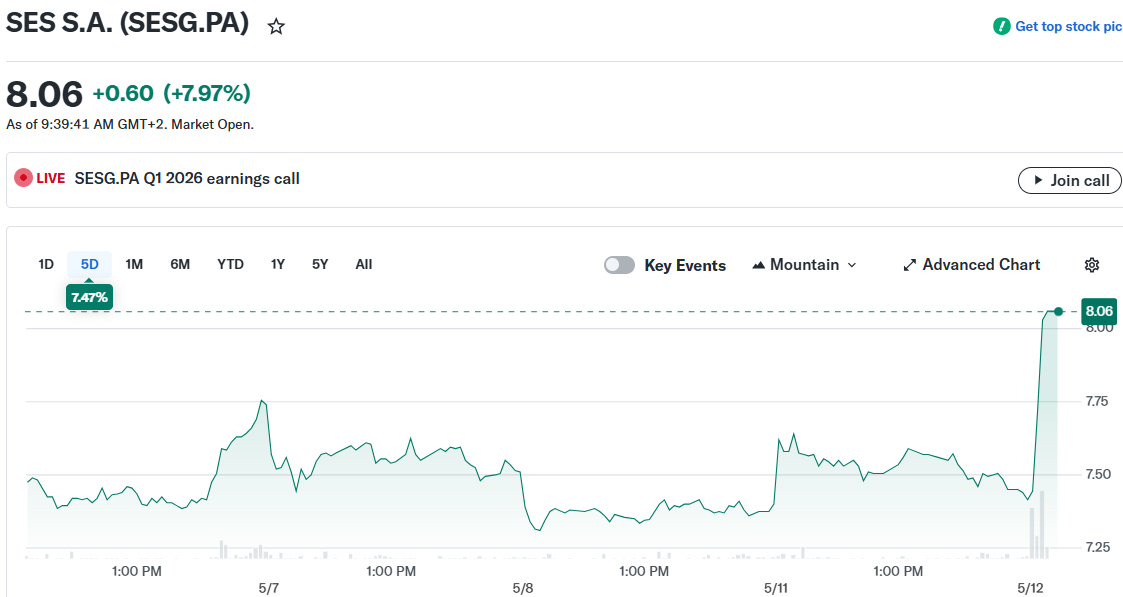
SES Reports 80% Revenue Jump as Aviation Connectivity and Intelsat Merger Drive Q1 Growth