

Quantum Computing and AI: The Growing Threat to Cryptocurrency Security
Key Takeaways
- The convergence of artificial intelligence with quantum computing is shortening the timeline for potential threats to blockchain encryption systems.
- Adversaries are employing “harvest now, decrypt later” tactics, collecting encrypted blockchain data today for future decryption when quantum technology matures.
- The majority of blockchain platforms, from Bitcoin to Ethereum, depend on elliptic curve cryptography that quantum machines could eventually compromise.
- Machine learning technologies serve dual purposes: attackers leverage them to discover vulnerabilities while defenders deploy them for security audits and verification processes.
- Major blockchain ecosystems including NEAR, Ethereum, Solana, and additional networks are actively developing quantum-resistant migration roadmaps.
Security professionals and blockchain researchers are sounding alarms that machine learning advancements are propelling quantum computing capabilities forward at an unprecedented pace. This technological convergence is compelling cryptocurrency platforms to fundamentally reconsider their approach to safeguarding digital assets and sensitive information.
What once seemed like a distant hypothetical scenario—quantum computers posing genuine risks to blockchain infrastructure—now appears to be approaching faster than the industry anticipated, according to leading researchers.
Understanding the Fundamental Risk
The overwhelming majority of cryptocurrency networks, notably Bitcoin and Ethereum, depend fundamentally on elliptic curve cryptography to maintain wallet security and transaction integrity. A quantum computer with adequate processing capability could potentially reverse-engineer private keys from their corresponding public keys, creating pathways for malicious actors to compromise and empty vulnerable cryptocurrency wallets.
What was once purely academic speculation has evolved into a concrete concern. Security professionals now highlight a troubling tactic called “harvest now, decrypt later”—where well-resourced adversaries systematically capture encrypted information in the present, banking on future quantum computing breakthroughs to unlock it.
The Dual Role of Artificial Intelligence
Artificial intelligence isn’t merely hastening quantum threats—it’s actively being deployed in current-day offensive and defensive cybersecurity operations across the cryptocurrency landscape.
From an attack perspective, AI models are demonstrating increasing sophistication in identifying security weaknesses within software systems. Pruden anticipates that machine learning will dramatically increase the frequency of successful exploits within the industry, as these systems grow more adept at discovering cryptographic implementation flaws and potentially compromising weaker security protocols entirely.
Conversely, blockchain developers are harnessing artificial intelligence for protective purposes, including automated code reviews, formal verification processes, and comprehensive testing of quantum-resistant cryptographic systems. These methodologies can identify and neutralize security vulnerabilities before malicious actors can exploit them.
He further highlighted a concerning cyclical pattern: artificial intelligence facilitating the development of more sophisticated quantum computers, which could subsequently enable the creation of even more advanced AI architectures.
How Blockchain Platforms Are Responding
Numerous cryptocurrency projects have moved beyond planning stages and are actively implementing countermeasures. NEAR Protocol recently unveiled initiatives to embed post-quantum cryptographic standards directly into its account architecture. This architectural decision would enable users to upgrade their cryptographic protections seamlessly without requiring asset migration to entirely new wallet addresses.
Ethereum, Zcash, Solana, and Ripple are similarly engaged in researching and deploying their respective post-quantum security frameworks.
Pruden articulated the paradigm shift facing the industry: cryptographic security can no longer operate on decade-long update cycles. Instead, it demands continuous monitoring, assessment, and evolution.
The post Quantum Computing and AI: The Growing Threat to Cryptocurrency Security appeared first on Blockonomi.


You May Also Like

TrapDoor Malware Campaign Infiltrates Developer Supply Chains to Target Crypto and AI Projects

TrapDoor Malware Targets Crypto and AI Developers in Supply Chain Attack
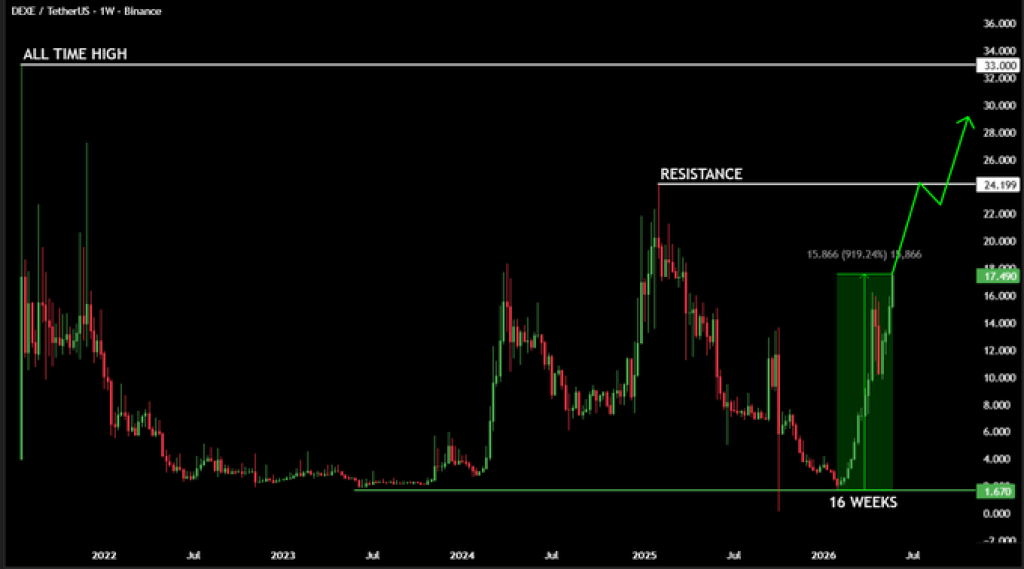
Here’s Why DeXe (DEXE) Price is Pumping Today



