The post Unity Nodes Transforms the $2 Trillion Sector appeared on BitcoinEthereumNews.com. For decades, the global telecommunications sector has suffered from centralized systems, expensive to maintain, vulnerable to fraud, and not inclined towards innovation. Telephone companies lose billions of dollars every year due to inefficiencies and scams, forced to manage manual checks and intermediaries that slow down every process.  In this scenario, the birth of Unity Nodes represents a groundbreaking shift, bringing the telecom infrastructure onto blockchain and ushering in a new era of decentralized verification and transparency. Unity Nodes: the new frontier of decentralized On-Chain verification Unity Nodes is born from the collaboration between Minutes Network Token X (MNTx) and World Mobile Treasury Services Ltd (WMTx). The objective is clear: to replace traditional oversight with a real-time auditing system, based on cryptographically verifiable and immutable data.  Thanks to this architecture, the verification of network performance occurs directly on-chain, eliminating the need for costly intermediaries and drastically reducing the risk of fraud. A key element of this revolution is the integration of the Polkadot DOT token as the first asset partner in Unity’s on-chain telecom economy. Unity node operators receive rewards directly in DOT, creating an ecosystem where active participation is rewarded in a transparent and sustainable manner. Smartphones as validator nodes: the network becomes democratic Unity Nodes transforms every smartphone into an active validator node. Regular network activities — such as test calls, routing pings, and fault detection — become verifiable proofs of work recorded on the blockchain. Instead of paying security companies or centralized verifiers, now the network operators themselves receive compensation, directly from carrier fees and not from inflationary token emissions. This model rewards real users who contribute to the maintenance and integrity of the network, making participation in the network not only useful but also economically advantageous. On-Chain Verification: transparency and security in real-time Verification Process and Rewards… The post Unity Nodes Transforms the $2 Trillion Sector appeared on BitcoinEthereumNews.com. For decades, the global telecommunications sector has suffered from centralized systems, expensive to maintain, vulnerable to fraud, and not inclined towards innovation. Telephone companies lose billions of dollars every year due to inefficiencies and scams, forced to manage manual checks and intermediaries that slow down every process.  In this scenario, the birth of Unity Nodes represents a groundbreaking shift, bringing the telecom infrastructure onto blockchain and ushering in a new era of decentralized verification and transparency. Unity Nodes: the new frontier of decentralized On-Chain verification Unity Nodes is born from the collaboration between Minutes Network Token X (MNTx) and World Mobile Treasury Services Ltd (WMTx). The objective is clear: to replace traditional oversight with a real-time auditing system, based on cryptographically verifiable and immutable data.  Thanks to this architecture, the verification of network performance occurs directly on-chain, eliminating the need for costly intermediaries and drastically reducing the risk of fraud. A key element of this revolution is the integration of the Polkadot DOT token as the first asset partner in Unity’s on-chain telecom economy. Unity node operators receive rewards directly in DOT, creating an ecosystem where active participation is rewarded in a transparent and sustainable manner. Smartphones as validator nodes: the network becomes democratic Unity Nodes transforms every smartphone into an active validator node. Regular network activities — such as test calls, routing pings, and fault detection — become verifiable proofs of work recorded on the blockchain. Instead of paying security companies or centralized verifiers, now the network operators themselves receive compensation, directly from carrier fees and not from inflationary token emissions. This model rewards real users who contribute to the maintenance and integrity of the network, making participation in the network not only useful but also economically advantageous. On-Chain Verification: transparency and security in real-time Verification Process and Rewards…

Unity Nodes Transforms the $2 Trillion Sector

For feedback or concerns regarding this content, please contact us at crypto.news@mexc.com

For decades, the global telecommunications sector has suffered from centralized systems, expensive to maintain, vulnerable to fraud, and not inclined towards innovation. Telephone companies lose billions of dollars every year due to inefficiencies and scams, forced to manage manual checks and intermediaries that slow down every process. 

In this scenario, the birth of Unity Nodes represents a groundbreaking shift, bringing the telecom infrastructure onto blockchain and ushering in a new era of decentralized verification and transparency.

Unity Nodes: the new frontier of decentralized On-Chain verification

Unity Nodes is born from the collaboration between Minutes Network Token X (MNTx) and World Mobile Treasury Services Ltd (WMTx). The objective is clear: to replace traditional oversight with a real-time auditing system, based on cryptographically verifiable and immutable data. 

Thanks to this architecture, the verification of network performance occurs directly on-chain, eliminating the need for costly intermediaries and drastically reducing the risk of fraud.

A key element of this revolution is the integration of the Polkadot DOT token as the first asset partner in Unity’s on-chain telecom economy. Unity node operators receive rewards directly in DOT, creating an ecosystem where active participation is rewarded in a transparent and sustainable manner.

Smartphones as validator nodes: the network becomes democratic

Unity Nodes transforms every smartphone into an active validator node. Regular network activities — such as test calls, routing pings, and fault detection — become verifiable proofs of work recorded on the blockchain. Instead of paying security companies or centralized verifiers, now the network operators themselves receive compensation, directly from carrier fees and not from inflationary token emissions.

This model rewards real users who contribute to the maintenance and integrity of the network, making participation in the network not only useful but also economically advantageous.

On-Chain Verification: transparency and security in real-time

Verification Process and Rewards

Operators with a Unity license perform verification calls to test and validate the network’s performance. Each result is hashed and recorded on the World Mobile Chain (WMTx), creating an immutable and real-time accessible proof. The generated rewards can be converted into various tokens supported by the platform, including ETH, BTC, ADA, WMTx, MNTx and now also DOT.

This collaboration makes DOT a central participant in Unity’s decentralized infrastructure, extending its role within the DePIN (Decentralized Physical Infrastructure Network) landscape for telecommunications.

A new model of distributed auditing

Each Unity license operator becomes a small verification hub, replacing the centralized auditing infrastructure with a distributed network of people and mobile devices. In this way, transparency, accountability, and efficiency become fundamental pillars of the new telecom operations.

An integrated ecosystem: Minutes Network, MNTx and WMTx

The Unity ecosystem is based on three main components:

  1. Minutes Network: interconnected global carrier.
  2. MNTx: decentralized layer that powers the Switch and Validation nodes.
  3. WMTx: decentralized settlement layer that cryptographically anchors verification proofs.

By anchoring the results of on-chain audits, Unity ensures that each transaction is independently verifiable, creating a reliable record of the network’s actual activity.

This model aligns incentives between individuals and infrastructure providers, transforming daily connectivity into verifiable and remunerative work that strengthens the entire global telecommunications ecosystem.

A geodiverse and participatory edge network

Unity Nodes builds a geographically diverse edge network powered by people, operating in parallel with existing telecom infrastructures. By decentralizing the validation process, Unity Nodes allows a wide range of devices and verification methods to offer global coverage, providing a telecom-grade verification network. 

The result is an efficient, reliable, and transparent infrastructure, with immutable on-chain proofs of every verification event, instantly accessible via API to partners and clients.

The vision of the leaders: a sharing economy for telecommunications

Micky Watkins, CEO of World Mobile, emphasizes how Unity represents the true power of the people: 

Who are the protagonists of this revolution

Minutes Network Token X

Minutes Network Token X is a telecom infrastructure company registered in St. Lucia, redefining the value flow in global voice traffic. Thanks to proprietary MinTech technology, licensed carrier operations, and decentralized switching and validation infrastructure, it offers call termination and authentication at competitive rates.

Polkadot

Polkadot is the secure and powerful heart of Web3, providing a shared foundation that unites some of the most innovative applications and blockchains in the world. Its modular architecture allows developers to create specialized blockchains, ensuring security and transparent governance for sustainable ecosystem growth.

World Mobile Treasury Services Ltd

World Mobile Treasury Services Ltd, registered in the United Kingdom, is revolutionizing global connectivity through its Decentralized Physical Infrastructure Network (DePIN), enabling individuals and communities to build, maintain, and monetize telecom infrastructure thanks to economic incentives based on blockchain.

Conclusion: the future of telecommunications is On-Chain

The birth of Unity Nodes marks a turning point for the telecom sector, bringing transparency, efficiency, and participation to a 2 trillion dollar industry. Thanks to decentralized verification, every smartphone can become an active node, rewarding those who contribute to the security and reliability of the network. 

With the entry of Polkadot and the power of blockchain, the future of telecommunications is finally in the hands of users, ready to share value and responsibility in a global and transparent ecosystem.

Source: https://en.cryptonomist.ch/2025/10/27/telecommunications-on-blockchain-unity-nodes-transforms-the-2-trillion-sector/

Market Opportunity
Notcoin Logo
Notcoin Price(NOT)
$0.0003795
$0.0003795$0.0003795
-0.02%
USD
Notcoin (NOT) Live Price Chart
Disclaimer: The articles reposted on this site are sourced from public platforms and are provided for informational purposes only. They do not necessarily reflect the views of MEXC. All rights remain with the original authors. If you believe any content infringes on third-party rights, please contact crypto.news@mexc.com for removal. MEXC makes no guarantees regarding the accuracy, completeness, or timeliness of the content and is not responsible for any actions taken based on the information provided. The content does not constitute financial, legal, or other professional advice, nor should it be considered a recommendation or endorsement by MEXC.

You May Also Like

UK crypto holders brace for FCA’s expanded regulatory reach

UK crypto holders brace for FCA’s expanded regulatory reach

The post UK crypto holders brace for FCA’s expanded regulatory reach appeared on BitcoinEthereumNews.com. British crypto holders may soon face a very different landscape as the Financial Conduct Authority (FCA) moves to expand its regulatory reach in the industry. A new consultation paper outlines how the watchdog intends to apply its rulebook to crypto firms, shaping everything from asset safeguarding to trading platform operation. According to the financial regulator, these proposals would translate into clearer protections for retail investors and stricter oversight of crypto firms. UK FCA plans Until now, UK crypto users mostly encountered the FCA through rules on promotions and anti-money laundering checks. The consultation paper goes much further. It proposes direct oversight of stablecoin issuers, custodians, and crypto-asset trading platforms (CATPs). For investors, that means the wallets, exchanges, and coins they rely on could soon be subject to the same governance and resilience standards as traditional financial institutions. The regulator has also clarified that firms need official authorization before serving customers. This condition should, in theory, reduce the risk of sudden platform failures or unclear accountability. David Geale, the FCA’s executive director of payments and digital finance, said the proposals are designed to strike a balance between innovation and protection. He explained: “We want to develop a sustainable and competitive crypto sector – balancing innovation, market integrity and trust.” Geale noted that while the rules will not eliminate investment risks, they will create consistent standards, helping consumers understand what to expect from registered firms. Why does this matter for crypto holders? The UK regulatory framework shift would provide safer custody of assets, better disclosure of risks, and clearer recourse if something goes wrong. However, the regulator was also frank in its submission, arguing that no rulebook can eliminate the volatility or inherent risks of holding digital assets. Instead, the focus is on ensuring that when consumers choose to invest, they do…
Share
BitcoinEthereumNews2025/09/17 23:52
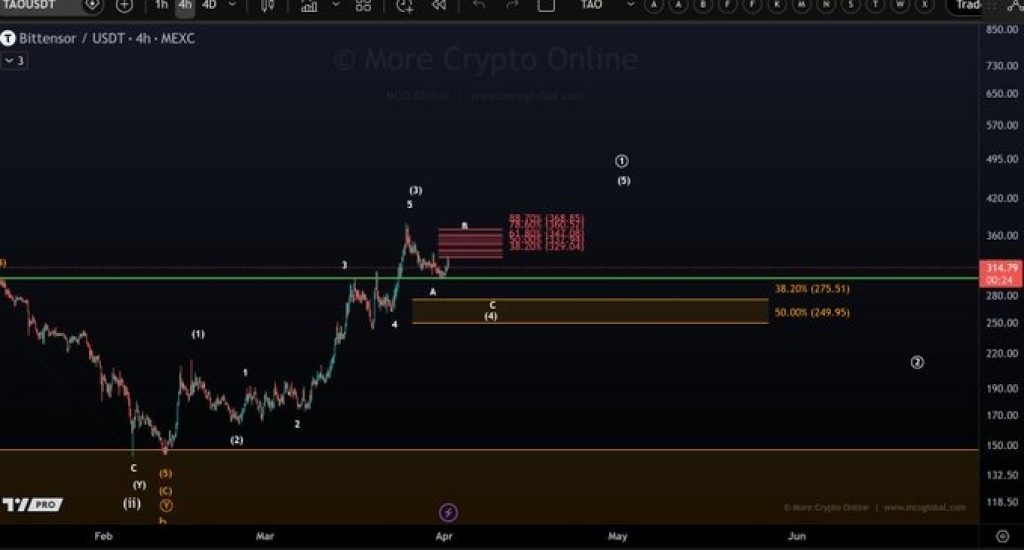
Thinking of Buying Bittensor? Watch These TAO Price Correction Levels First

Thinking of Buying Bittensor? Watch These TAO Price Correction Levels First

Bittensor (TAO) is navigating a rough patch as broader market conditions turn shaky. TAO just took a hit along with the rest of the AI token crowd, but if you look
Share
Captainaltcoin2026/04/03 00:30
China Nabs Another Huione Group Core Member in Cambodia Extradition

China Nabs Another Huione Group Core Member in Cambodia Extradition

The post China Nabs Another Huione Group Core Member in Cambodia Extradition appeared on BitcoinEthereumNews.com. Li Xiong, a senior figure at Huione Group, an
Share
BitcoinEthereumNews2026/04/02 17:54

Newbies:Deposit $100, Get $1,000

Newbies:Deposit $100, Get $1,000Newbies:Deposit $100, Get $1,000

Plus Up to a $50 Referral Bonus