

👨🏿🚀TechCabal Daily – A Ripple in Flutterwave
Happy mid-week 
Looking for a job in African tech? We’re putting fresh focus on the TechCabal Job Board, where you’ll find active openings from startups, fintechs, telecoms, venture capital firms, and other companies across the continent.
We’ll update the board every week with new roles and remove outdated listings to keep opportunities current.
Hiring? We’d like to help. Recruiters and hiring managers can submit open roles through this form, and we’ll feature suitable roles on the board for thousands of professionals across Africa’s tech ecosystem.
Whether you’re looking to make your next career move or find the right talent for your team, the TechCabal Job Board is built to make those connections easier.

Get smarter about Francophone Africa with our newsletter, Francophone Weekly—the startups, tech policies, and institutions building the pipelines for ecosystem growth.
- Chimoney is getting acquired
- CBN has new rules
- Flutterwave raises a Series E from US-based Ripple
- Egypt is building a new data centre
- World Wide Web 3
- Opportunities
regulation
CBN has new rules for banks and fintechs
 Image: Tenor
Nigeria’s financial institutions have spent the last few years trying to become ‘everything’ apps, i.e., they want to serve customers and merchants, offer payments, banking, lending, and everything possible in the financial ecosystem. Nigeria’s Central Bank (CBN) has had a look at that trend and said not so fast.
Here’s what happened: In a circular released on Monday, the regulator outlined new sets of rules on who owns payment companies, where payment data is stored, and how much of the payments ecosystem any one player can control.
Tell us who calls the shots: The CBN now wants payment companies to disclose their ultimate beneficial owners—the people who control a business, even when ownership is buried beneath holding companies or some complex corporate structures.
Keep payment data at home: From January 2027, payment transaction data generated in Nigeria must be stored on servers located in Nigeria. The goal is visibility and control. If payment data lives abroad, regulators have less oversight over it. Now, that doesn’t mean every company must build its own data centre. Operators can use local cloud providers and data centre facilities run by Rack Centre, MainOne, Open Access Data Centres (OADC), MTN, and other local infrastructure providers.
You can’t dominate both sides of payments: This is the rule that could reshape competition. The CBN says any institution controlling more than 25% of the consumer payments market cannot hold more than 15% of the merchant acquiring market, and vice versa. This means that if a financial institution becomes dominant in consumer payments (bank accounts, cards, or wallets), it won’t be allowed to build an equally dominant position in merchant payments, which includes payment gateways and infrastructure or PoS terminals.
What’s all this for? Nigeria’s digital payments ecosystem processed ₦1.2 quadrillion ($884.78 billion) in 2025. These rules are CBN’s blueprint for keeping Nigeria’s payments ecosystem from becoming too dependent on foreign infrastructure or difficult to supervise.
We Have Secured the Bank of Ghana EPSP Licence.
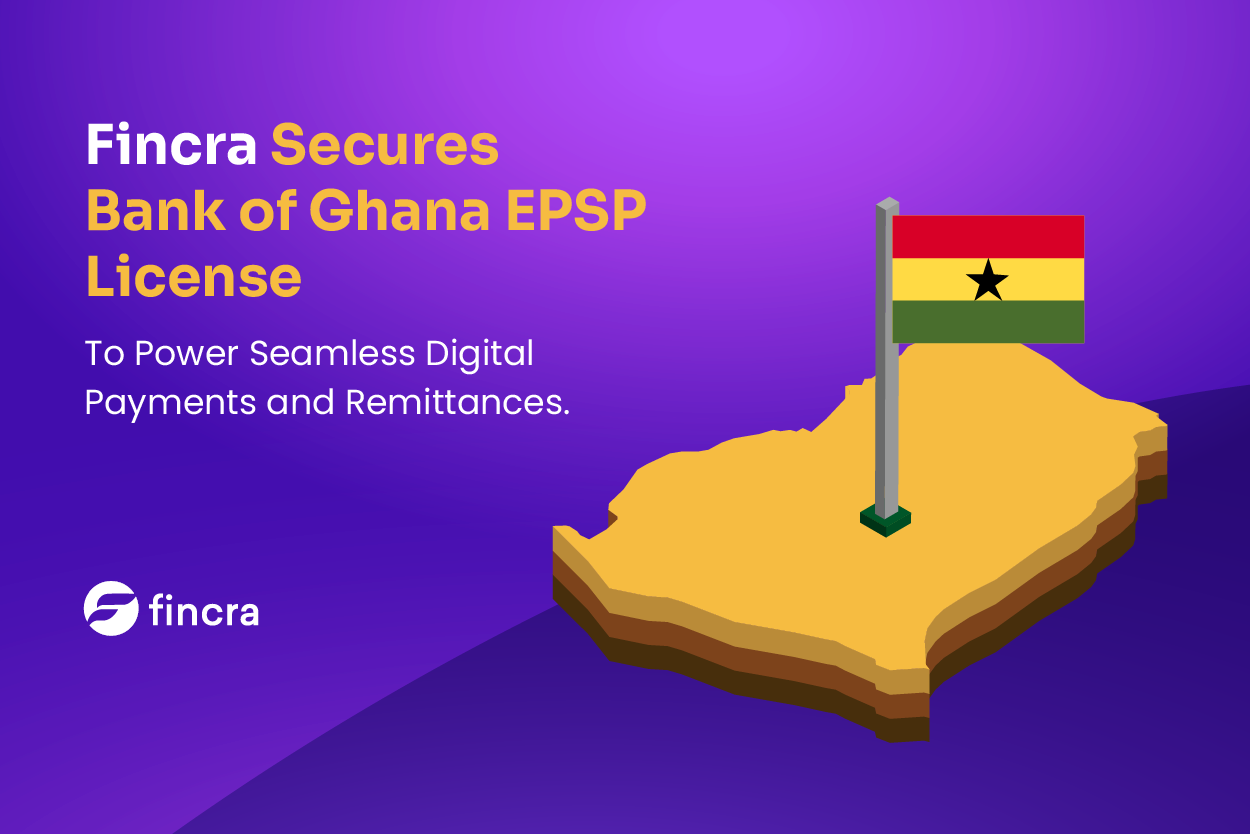
Fincra has officially secured its Enhanced Payment Service Provider licence. This regulatory milestone authorizes Fincra to directly collect, process, and settle payments in Ghanaian Cedis, offering a highly streamlined financial pipeline for businesses operating within the region. Start here.
companies
Flutterwave raises a Series E from US-based Ripple
 Image: Tenor
Nigerian fintech unicorn, Flutterwave, has raised a Series E round at a $3.25 billion valuation after securing a ‘strategic investment’ from Ripple, the US payments company behind the XRP Ledger and RLUSD stablecoin. The company isn’t disclosing how much Ripple invested, but the deal gives Ripple an equity stake in Flutterwave and bumps up its valuation from the $3 billion it reached during its 2022 Series D round.
Are Series E rounds even a thing in Nigeria anymore? Not really. Nigeria’s startup ecosystem hasn’t seen many large late-stage raises in recent years. One of the last headline-grabbing examples was software company Andela’s $200 million raise in 2021. According to data from Briter Intelligence, early-stage deals have dominated African startup funding activity by volume in recent years as investors became more cautious. That’s why Flutterwave raising fresh capital at a higher valuation is notable.
What changes with this round? Ripple’s RLUSD stablecoin and the XRP Ledger will now plug into Flutterwave’s infrastructure, allowing merchants and customers to send, hold, and convert money using stablecoins. The company expects the partnership to increase stablecoin transaction volumes on its platform. For Flutterwave’s customers, that could mean faster cross-border settlements and easier access to dollar-denominated value.
Flutterwave is assembling Stablecoin Avengers: The Ripple deal didn’t come out of nowhere. Over the past year, Flutterwave has been entering stablecoin partnerships. It joined the Circle Payment Network in 2025, integrated Polygon as a settlement layer in October 2025, launched stablecoin wallets with Turnkey and Nuvion in January 2026, and partnered with Tempo for settlement infrastructure in June 2026.
Viewed together, Flutterwave appears to be preparing for a future where stablecoins become just another way to move money, like bank transfers and card payments.
Naira Life 2026 is here!

The theme for this year’s Naira Life Conference by Zikoko is “All About Wealth.”
Join 2,000+ in Lagos on August 22 for a day of practical money conversations and workshops designed to move you from simply earning an income to building lasting wealth. Get 15% off early bird tickets.
companies
Chimoney is getting acquired
 Image source: Tenor
Four weeks ago, Chimoney, a Nigerian-founded fintech that built cross-border payment infrastructure for businesses, announced it was shutting down after four years andunder $1 million raised. On Monday, founder Uchi Uchibeke posted something nobody expected:Chi Technologies, Chimoney’s parent company, has signed an agreement in principle to be acquired by CapitalSage Vantage Limited, a subsidiary of CapitalSage Holdings.
Why Chimoney?: Startup shutdowns mostly involve frozen accounts, unanswered emails, and founders who go quiet. Chimoney did the opposite. It notified investors in February, clients in April, published migration guides for developers, and kept refunding wallet balances on schedule through August. It also held onto something valuable: a hard-to-getPayment Service Provider (PSP) licence under Canada’s new retail payments regime.
What next? CapitalSage gets an instant, licenced entry into Canadian payments—something that typically takes months of regulatory legwork to build from scratch. Uchibeke, meanwhile, is moving on to build APort, a separate AI product unrelated to Chimoney.
connectivity
Egypt just signed a $400 million deal to build a new data centre
 Image Source: Google
Egypt’s National Telecommunications Regulatory Authority (NTRA) hassigned a licencing agreement with Hassan Allam Digital Infrastructure to develop and operate a $400 million data centre in the country, the Ministry of Communications and Information Technology announced on Monday.
Why is Egypt doing this now? Egypt has spent years positioning itself as a digital infrastructure hub for the Middle East and North Africa (MENA) region, leaning on undersea cable connectivity, lower operating costs, and government incentives to attract this kind of investment. Hassan Allam Digital Infrastructure is a subsidiary of one of Egypt’s largest construction conglomerates, pairing a company that already builds at scale in the country with the licence to run critical digital infrastructure.
It’s a continent-wide thing: Egypt joins Gabon, Kenya, Nigeria, and South Africa in making concrete moves on data centre infrastructure this year. The race isn’t about who announces the biggest number. It’s about who actually gets theirs built, licensed, and running first.
Showcase Your Brand at Moonshot by TechCabal

Founders. Investors. Policymakers. Enterprise leaders. Moonshot 2026 brings together the people shaping Africa’s technology ecosystem across AI, commerce, climate, enterprise, and culture. Spotlight your brand today.
CRYPTO TRACKER
The World Wide Web3
Source:

|
Coin Name |
Current Value |
Day |
Month |
|---|---|---|---|
| Bitcoin | $65,834 |
– 0.35% |
– 15.54% |
| Ether | $1,794 |
+ 1.77% |
– 15.33% |
| XRP | $1.21 |
– 0.50% |
– 12.44% |
| Solana | $73.69 |
– 0.02% |
– 13.11% |
* Data as of 06.42 AM WAT, June 17, 2026.
Opportunities
- The Stellar Development Foundation has launched its first accelerator programme targeting Europe, the Middle East, and Africa, partnering with blockchain venture firm CV Labs to back ten early-stage startups building payments infrastructure, tokenised assets, and decentralised finance applications. The 12-week programme, beginning August 2026, will run primarily remotely but includes an on-site component in Cape Town and concludes with a demo day at Stellar’s Meridian conference in Lisbon in October. Each selected startup can receive up to $150,000 in XLM, Stellar’s native token, in initial funding. Apply by July.
- PawaPay crosses 3 billion transactions on Africa’s mobile money rails
- Francophone Weekly: Why Solarbox is building Senegal’s EV ecosystem around the sun
- Kenya’s KCB Group fires staff over fraud as cases drop sharply
Written by: Opeyemi Kareem and Zia Yusuf
Edited by: Ganiu Oloruntade
Want more of TechCabal?
Sign up for our insightful newsletters on the business and economy of tech in Africa.
- The Next Wave: futuristic analysis of the business of tech in Africa.
- Francophone Weekly by TechCabal: insider insights and analysis of Francophone’s tech ecosystem
P:S If you’re often missing TC Daily in your inbox, check your Promotions folder and move any edition of TC Daily from “Promotions” to your “Main” or “Primary” folder and TC Daily will always come to you.



You May Also Like
HSBC (HSBC) Stock; Edges Higher as Google Cloud AI Deal Expands Banking Automation and Risk Controls

Euro Holds Above 1.1600 as Markets Await Fed Decision on Rates

BNB Price Prediction: Red Packet promotions help BNB's price



