

Duke CEO offers sobering prediction on data center electricity demand
On Wednesday, June 3, Duke Energy (DUK) CEO Harry Sideris delivered a figure that cuts through the slow narrative of America’s energy sector.
Speaking at the Edison Electric Institute’s annual conference in Las Vegas last week, he said electricity demand is now growing at 10 times the rate it did for the past three decades.
For most of those 30 years, American utilities’ load growth was between 0% and 0.5% annually, a pace so gradual that planning a decade ahead was routine.
However, things have changed today.
Growing Artificial Intelligence demands are increasing electricity consumption
According to Bloomberg, Sideris expects something closer to 5% annual load growth, and the cause is something most people are familiar with.
“I’ve been with the company 30 years, and we’ve been growing between 0 and 0.5% of load, and now we are looking at 10 times that,” Sideris told Bloomberg Television.
The reason behind the shift is artificial intelligence.
Specifically, the explosion of AI data centers that run around the clock, consume enormous volumes of electricity, and show no signs of slowing down.
Duke Energy’s $103 billion answer to an unprecedented demand surge
Duke Energy is not just sending a warning, but also committing to a meaningful solution with significant capital.
Duke has unveiled a five-year spending plan totaling $103 billion, targeting more than 13 gigawatts of new generation capacity by 2030, according to The Charlotte Observer.
For context, one gigawatt is roughly enough to power 750,000 average American homes.
Related: Major gas, energy company files for bankruptcy
The company has already signed electric service agreements with data center customers covering 7.6 gigawatts of demand, with a further 15 gigawatts in the “late stage pipeline,” E&E News reported.
Nearly 5 gigawatts of those projects are already under construction, with customers expected to begin drawing power in the second half of 2027.
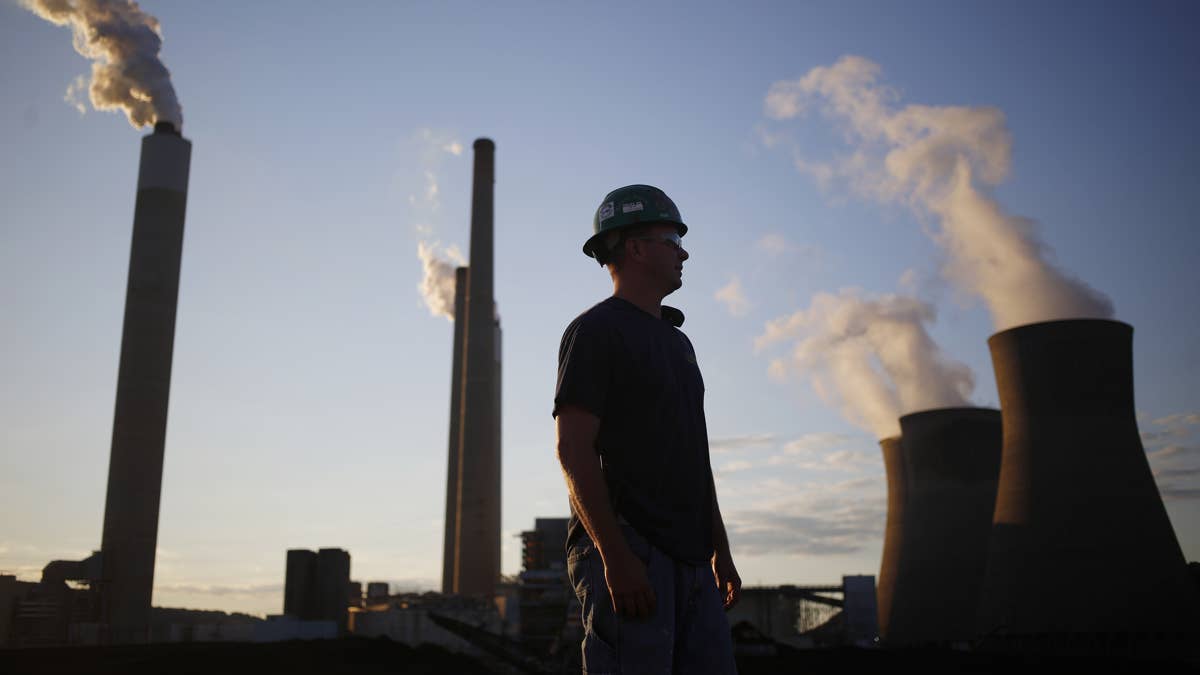 Duke Energy CEO Harry Sideris unveiled a $103 billion capital plan to meet AI-driven electricity demand growing at 10 times its historic rate.
Bloomberg &sol Getty Images
Why Duke sits at the heart of this AI energy buildout
Duke Energy’s service territories span fast-growing states including North Carolina, South Carolina, Florida, and Indiana.
Charlotte, Duke’s headquarters city, adds approximately 157 new residents every day.
South Carolina is currently the fastest-growing U.S. state, according to Sideris.
TheStreet aims to feature only the best products and services. If you buy something via one of our links, we may earn a commission.
Sponsored: Interested in AI? Start your trading journey at Robinhood
Lower power prices in the Southeast and Midwest give utilities in these regions a structural edge in attracting data center operators, Morningstar analysts note.
That combination of population growth, affordable rates, and rapidly expanding territory puts Duke in a position to benefit from AI’s power demands.
As data center operators scout locations where power is cheap, reliable, and available at scale, Duke’s service coverage presents as a great fit, and the company’s signed contracts already reflect that advantage.
Why the grid cannot treat this as a normal growth cycle
Duke is not alone in absorbing this pressure.
Goldman Sachs Research projects that U.S. data center power demand will rise from 31 gigawatts in 2025 to 66 gigawatts in 2027, more than doubling in two years.
By that point, data centers would account for 8.5% of total U.S. peak summer power demand, up from 4.1% in 2025.
The U.S. Department of Energy projects data centers could draw between 6.7% and 12% of all U.S. electricity by 2028.
More Energy Stocks:
- Goldman Sachs issues warning on AI’s surging power demand
- NextEra deal creates a $400B major utility stock
- JPMorgan resets Bloom Energy stock price target
Traditional electricity customers, including homes, factories, and offices, follow cycles. They pull less power at night, in moderate weather, and on weekends.
A data center does none of that. It runs at near-full capacity every hour of every day, which is a fundamentally different strain on a grid designed around predictable variation.
Sideris put the planning challenge plainly: “Now it seems like every time we plan, we have to re-plan by the time it comes off the printer,” he said.
The investor case and the risks DUK shareholders should weigh
For DUK shareholders, the growth trajectory looks compelling on paper. The company is targeting 5% to 7% earnings-per-share growth through 2030.
First quarter 2026 revenue of $9.18 billion came in 8.1% above analyst estimates, and earnings per share of $1.96 beat by 13%, according to Investing.com.
The consensus analyst price target sits around $138, implying upside from current levels.
The risks, though, are not trivial.
Rising bills have already generated political friction
North Carolina’s governor has publicly criticized Duke for seeking to pass $800 million in fuel costs onto customers while simultaneously pursuing a rate increase.
Sideris maintained that Duke’s rates remain below the national average and are rising more slowly than inflation, pointing to a plan to deliver more than $5 billion in customer cost savings through tax credit sales and utility mergers in the Carolinas.
JPMorgan recently trimmed its Duke price target, citing concerns around permitting timelines and political pressure over data center cost allocation.
For the full growth thesis to hold,
- Data center construction needs to stay on schedule.
- Regulatory rate structures need approval across multiple states.
- Gas prices need to remain stable, given that much of Duke’s new capacity will be gas-fired.
For income-focused investors, Duke’s regulated utility model and consistent dividend history provide a buffer.
For growth-focused investors, a contracted pipeline of 7.6 gigawatts, with 15 more gigawatts in late-stage development, represents a decade-long revenue ramp few utilities can match.
Sideris made the core case clearly in Las Vegas: the demand is already here, the contracts are signed, and the construction is underway.
The real question for investors is not if AI is reshaping the U.S. power grid, but whether Duke can execute at a pace that matches an industry moving faster than any utility has ever had to.
Related: Nordic energy CEO sends blunt warning on oil and economy


추천 콘텐츠

Bitcoin Price Is Only Halfway To The Bottom And Will Crash Below $40,000, Here’s Why

Natural Diamond Traceability Push Aims to Restore Buyer Confidence

Michael Saylor Hints at Another Bitcoin Buy in ‘Still Adding Dots’ Post


인기 뉴스
더보기
