

The fastest, cheapest and easiest ways to cover the 325km between Korea’s two biggest cities
Seoul and Busan sit about 325km apart (roughly 417km by road), and you’ve got five ways to bridge them: KTX train, flight, bus, rental car or taxi. Here’s what each costs in SGD, how long it really takes, and the one most travellers should book.
| Quick answer | Detail |
|---|---|
| Fastest overall | KTX train, Seoul Station to Busan Station in ~2h15m |
| Cheapest | Intercity bus, from 20,000 KRW (~S$17); or Mugunghwa train, 28,600 KRW (~S$24) |
| Best all-round pick | KTX, from 59,800 KRW (~S$50), fast and frequent with no airport hassle |
| Flight time | ~55 min Gimpo (GMP) to Gimhae (PUS), but ~3h door-to-door |
| Paying there | Tap your YouTrip card for 0% FX; withdraw won from an ATM for cash spots |
Table of Contents
- Seoul to Busan at a Glance: Time & Cost Compared
- How Long Does It Take to Get from Seoul to Busan?
- Why Visit Busan?
- By Train: The KTX (and the Cheaper SRT)
- By Flight: Quick, but Is It Worth It?
- By Bus: The Cheapest Way to Travel
- By Car: Can You Drive from Seoul to Busan?
- Where to Stay in Busan
- Paying in Korea
- FAQs
- The Verdict
Seoul to Busan at a Glance: Time & Cost Compared
The KTX wins for most people: about 2h15m, frequent departures, and no airport queues. Here’s how the five compare.
| Mode | Time | Cost (from) | Best for |
|---|---|---|---|
| KTX train | ~2h15m | 59,800 KRW (~S$50) | Speed without the airport hassle |
| SRT train | ~2h10m | 52,600 KRW (~S$44) | Same speed, ~10% cheaper (from Suseo) |
| Flight | ~55 min (3h door-to-door) | from ~S$50 | Quick hops if you’re near Gimpo |
| Express bus | 4–4.5 hrs | 23,000 KRW (~S$19) | Comfortable budget travel |
| Intercity bus | 5–6 hrs | 20,000 KRW (~S$17) | The absolute cheapest seat |
| Car rental | 4.5–5.5 hrs | rental + fuel + tolls | Detours and countryside stops |
| Taxi | ~4.5 hrs | 400,000 KRW (~S$336) | Emergencies and deep pockets only |
Train fares from Korail and SR; bus fares from Kobus; flight fares from Google Flights.
 Related Guide: Heading further south after Busan? Our Seoul to Jeju guide compares flights and ferries to the island the same way.
How Long Does It Take to Get from Seoul to Busan?
The fastest way is the KTX at about 2 hours 15 minutes, station to station. Everything else takes longer once you add airport time, traffic or stops.
- KTX train: ~2h15m (the SRT shaves it to ~2h10m)
- Flight: ~55 minutes in the air, but realistically ~3 hours door-to-door once you factor in getting to Gimpo, security and the ride into Busan from Gimhae
- Express bus: 4–4.5 hours with one rest stop
- Intercity bus / slow train: 5–6 hours
- Driving: 4.5–5.5 hours on a clear run, longer through the Daejeon bottleneck
For pure travel time, the train wins once you count the trip to and from the airport when you fly.
Related Guide: Working out when to go too? Our Cherry Blossom Korea guide maps the peak bloom dates worth planning around.
Why Visit Busan?
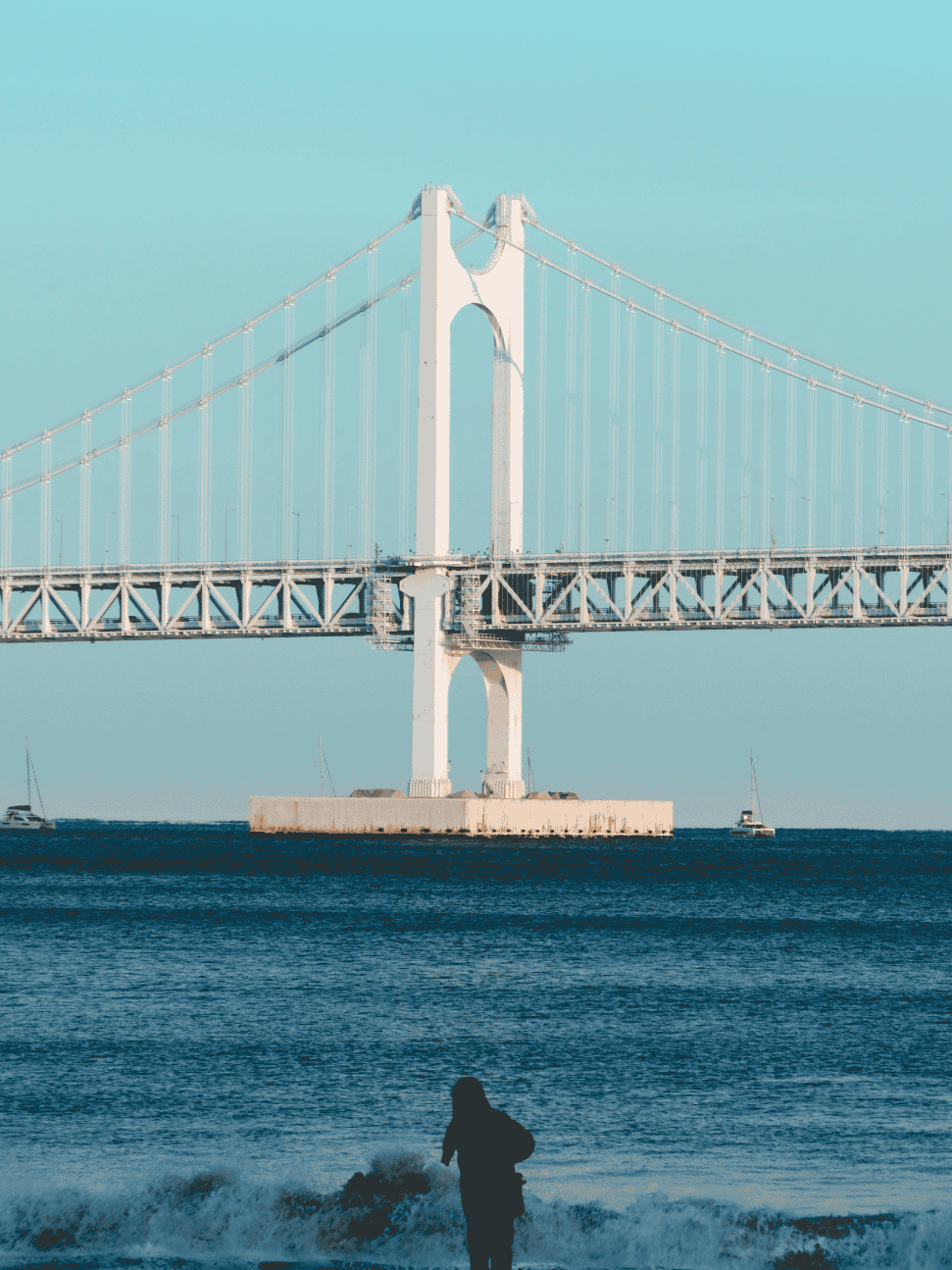
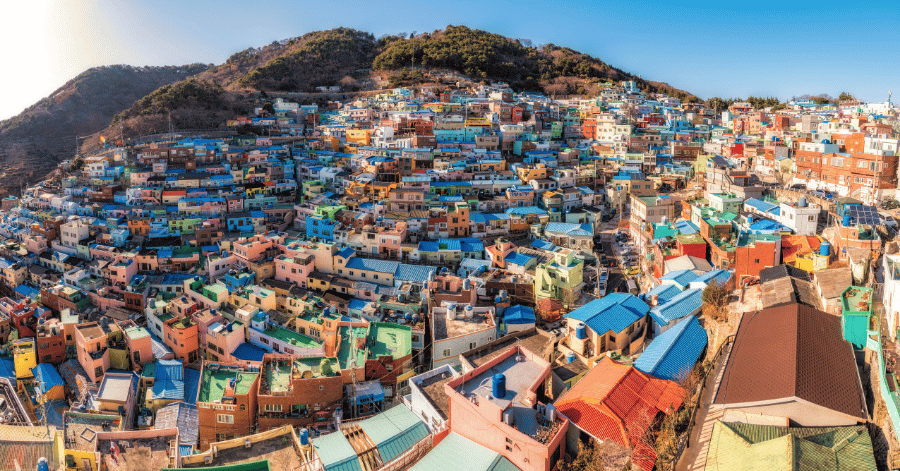
Busan is Korea’s second-largest city and its coastal counterpoint to Seoul: beaches, fresh seafood and a more laid-back pace. It’s the easy add-on to a Seoul trip, and the reason most people make this journey in the first place.
You’ve got the colourful hillside houses of Gamcheon Culture Village, the sand and skyline at Haeundae Beach, and a seafood feast at Jagalchi Market, Korea’s largest. So if you’re torn between the two cities, you don’t have to choose: the KTX puts Busan just over two hours from Seoul.
Related Guide: Once you arrive, our 14 best things to do in Busan covers Gamcheon, Haeundae and the seafood worth queuing for.
By Train: The KTX (and the Cheaper SRT)
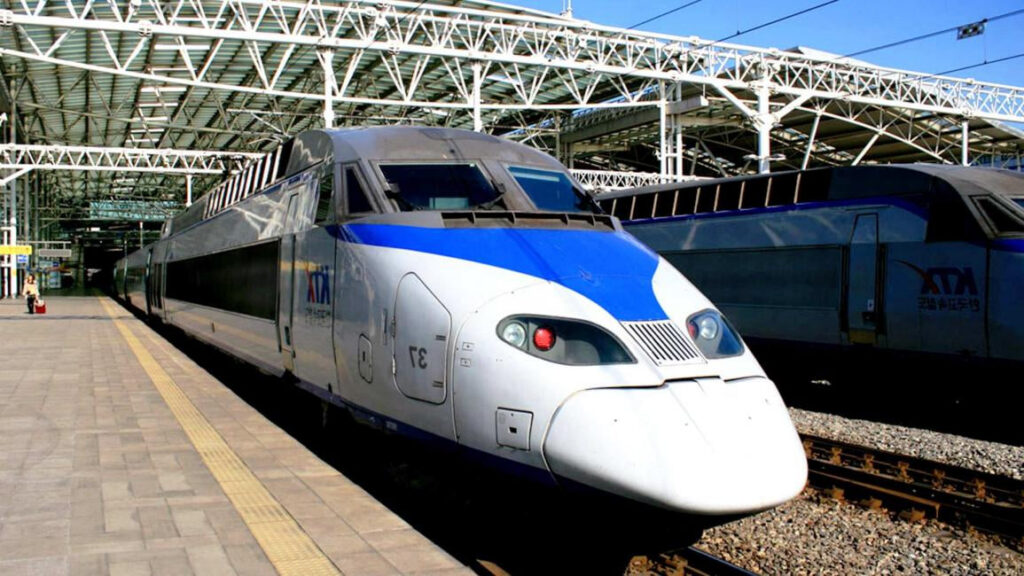
Image Creidts: KKday
The KTX is the default choice, and for good reason: it links Seoul Station and Busan Station in about 2h15m at speeds up to 300 km/h, with departures throughout the day. A standard one-way adult ticket is 59,800 KRW (~S$50).
It’s comfortable, reliable, and drops you in the centre of both cities, no airport transfers needed. Bring a coffee and a snack, and you’ll be in Busan before your second K-drama episode ends.
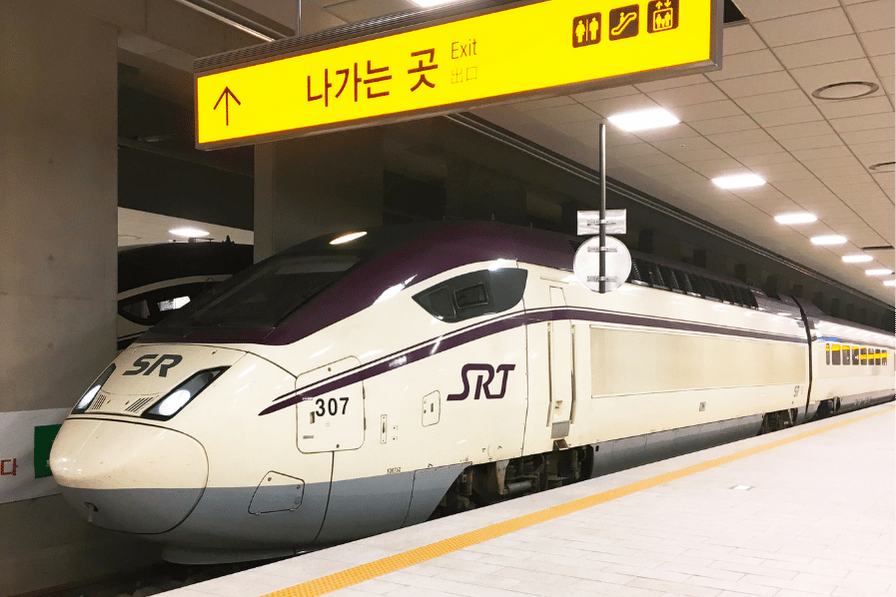
Image Credits: Wikipedia
The SRT: same speed, cheaper. Fewer travellers know about the SRT, a high-speed train run by a separate operator (SR) that’s about 10% cheaper at 52,600 KRW (~S$44) for a standard seat, and marginally faster at ~2h10m. The catch: it leaves from Suseo Station in southern Seoul (Gangnam area), not Seoul Station, so it only saves you time if you’re already staying south.
If you’re not in a rush, regular trains cost less. They’re slower but cheaper:
- ITX-Saemaeul: 42,600 KRW (~S$36), about 4–5 hours
- Mugunghwa: 28,600 KRW (~S$24), about 5–6 hours with multiple stops
How to Book Your Train Tickets
Book online via the Korail website or app (for KTX and regular trains) or the SR app (for SRT), or buy at the station counter or kiosk. A few tips:
- Book early for peak periods. Cherry blossom season (late March to April) and major holidays like Chuseok sell out fast.
- Travelling beyond Busan? A KORAIL Pass gives unlimited rides over a set number of days, which can work out cheaper if you’re hopping between cities.
- Discounts are available for children, seniors and groups.
- Reserved seats, free Wi-Fi, luggage racks and snack carts (with Korean-style bento) come as standard on the KTX.
Related Guide: Getting around once you arrive? Our T-money card guide covers Korea’s tap-and-go transit card for buses and subways.
By Flight: Quick, but Is It Worth It?
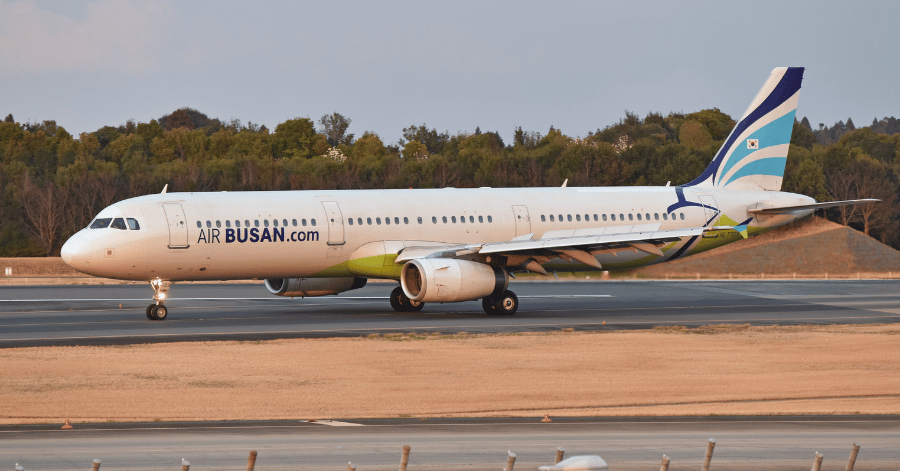
Image Credits: Wikipedia
Flying is the fastest in the air at ~55 minutes, but rarely faster than the KTX once you count the full journey. Flights run between Gimpo (GMP) in Seoul and Gimhae (PUS) in Busan on carriers like Jeju Air, Air Busan, T’way and Korean Air, from around S$50 one-way (S$80–130 is more typical outside the cheapest seats).
It works out about the same because Gimpo is farther from central Seoul than Seoul Station, and Gimhae is a 30–40 minute light-rail ride from Busan’s centre. Add check-in, security and waiting, and you’re looking at ~3 hours door-to-door versus the KTX’s ~2h15m.
Getting to and from the airports: Gimpo connects to central Seoul via Seoul Metro Lines 5 and 9 and the AREX airport railway (about 30 minutes). On the other end, Gimhae links to the city on the Busan-Gimhae Light Rail (BGL), roughly 30–40 minutes to Seomyeon or Haeundae.
 Booking tips: budget carriers like Jeju Air, Air Busan and T’way run the cheapest fares; use self-check-in kiosks or a mobile boarding pass to save time; and in peak season, get to Gimpo 1.5–2 hours early.
When a flight actually makes sense: you’re already staying near Gimpo, you snag a genuinely cheap fare, or you’re connecting onward from Busan. Otherwise, the train is the simpler choice.
Related Guide: Squeezing in Seoul first? Our 56 best things to do in Seoul has the highlights worth your time before you head south.
By Bus: The Cheapest Way to Travel
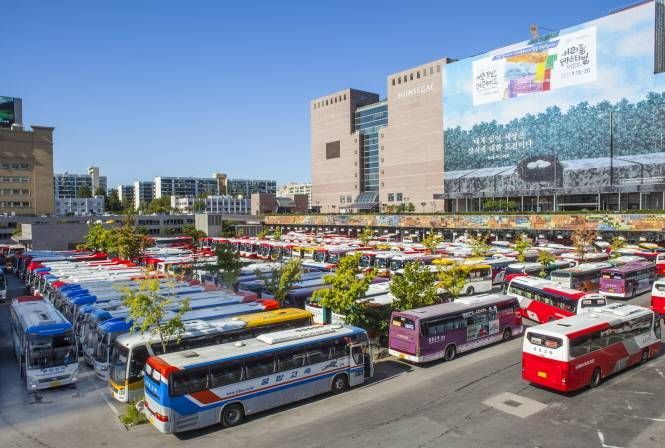
Image Credits: VISITKOREA
The bus is the cheapest way to get to Busan, with intercity fares from 20,000 KRW (~S$17). There are two types: faster express buses and cheaper, slower intercity buses.
Express bus (고속버스): Runs direct from Seoul Express Bus Terminal to Busan, taking 4–4.5 hours with one rest stop.
- Economy: 23,000 KRW (~S$19)
- Deluxe (우등, Udeung): around 34,000 KRW (~S$29), wider seats, fewer passengers
- Premium: 48,000–53,000 KRW (~S$40–45), lie-flat-style seats
Board at Seoul Express Bus Terminal (194 Sinbanpo-ro, Seocho-gu; Subway Lines 3, 7, 9) and arrive at Busan Central Bus Terminal (near Nopo Station, Metro Line 1). Book online via Kobus or at the terminal. Express buses have reclining seats, charging ports and Wi-Fi on most deluxe services, plus a mid-way rest stop.
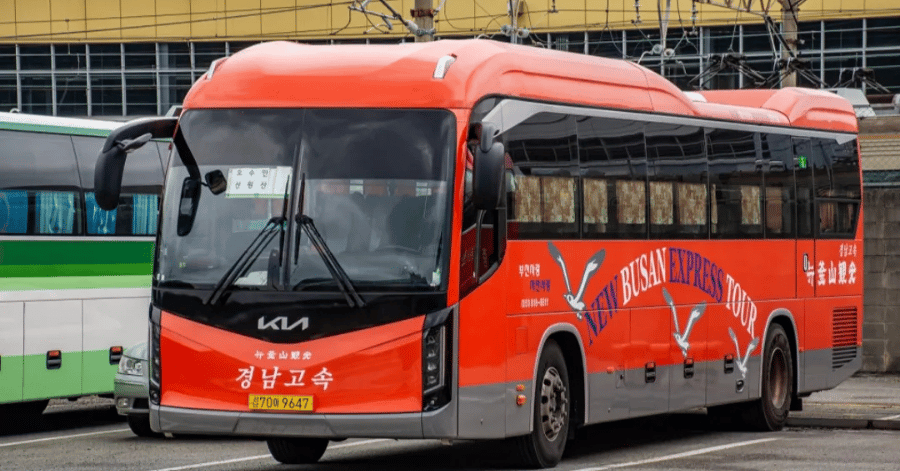
Image Credits: NamuWiki
Intercity bus (시외버스): The cheapest seat at 20,000–25,000 KRW (~S$17–21), but slower at 5–6 hours with multiple stops. Board at Seoul Nambu Bus Terminal (247 Banpo-daero, Seocho-gu; Subway Line 3, Exit 5) and arrive at Busan Sasang Bus Terminal (Sasang Station, Metro Line 2). Tickets are usually counter-only, with basic seating and no Wi-Fi.
| Express bus | Intercity bus | |
|---|---|---|
| Duration | 4–4.5 hrs | 5–6 hrs |
| Cost | 23,000–53,000 KRW (~S$19–45) | 20,000–25,000 KRW (~S$17–21) |
| Stops | Direct | Multiple |
| Booking | Kobus (online) or terminal | Terminal only |
| Comfort | Reclining seats, Wi-Fi, charging ports | Basic seats, fewer amenities |
Pro tip: A late-night express bus (after 11 PM) can save you a night’s accommodation. You’ll roll into Busan bright and early, ready to explore.
Related Guide: Korea Weather Guide: Best Time To Visit Korea By Month
By Car: Can You Drive from Seoul to Busan?
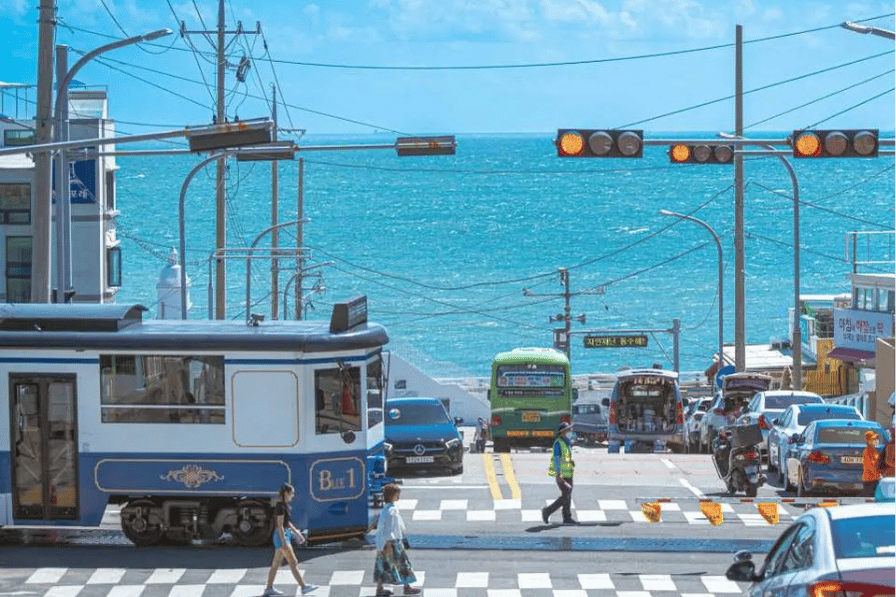
Image Credits: KKday
Yes, you can drive the ~417km via the Gyeongbu Expressway in about 4.5–5.5 hours, but most Singapore visitors skip it. A rental only pays off if you want to detour through towns along the way.
If you do drive, the charm is the stops along the Gyeongbu Expressway:
- Suwon (1 hour from Seoul): the UNESCO-listed Hwaseong Fortress, plus a plate of Suwon galbi (marinated beef ribs).
- Daejeon (2 hours): a soak at Yuseong Hot Springs and city views from Daejeon Observatory.
- Andong (3.5 hours): the 600-year-old Hahoe Folk Village and andong jjimdak (braised soy chicken).
- Gyeongju (4 hours): Bulguksa Temple and the ancient royal tombs at Tumuli Park, for the history buffs.
- Ulsan (4.5 hours): Taehwagang River Grand Park, a last green stretch before Busan.
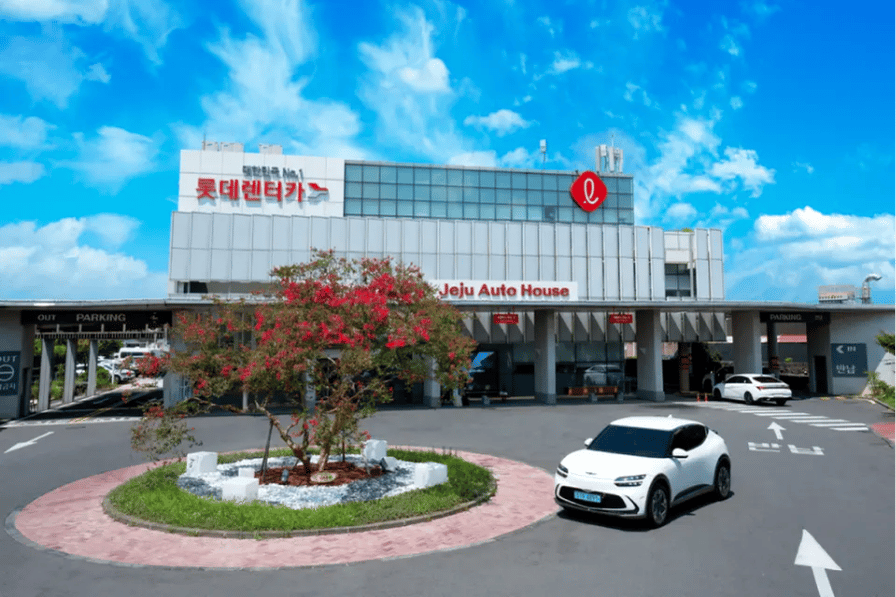
Image Credits: KKday
Renting a car: The main options are Lotte Rent-a-Car (the largest, with pick-up at Incheon Airport and Seoul Station), Hertz Korea (English-language service) and Socar (app-based car-sharing, good for one-way trips). Book ahead in spring and autumn.
A few practical notes:
- Documents: You’ll need an International Driving Permit (issued in Singapore), your home licence and your passport.
- Navigation: Use Naver Maps or KakaoMap, as Google Maps has limited functionality in Korea.
- Parking in Busan is tricky near hotspots like Haeundae and Jagalchi; public lots run about 1,000–2,000 KRW (~S$0.85–1.70) per hour.
The taxi option exists too. Book one through the KakaoTaxi app (Korea’s version of Grab) for a door-to-door ride, but at 400,000–500,000 KRW (~S$336–420) one-way it’s strictly for emergencies, big groups splitting the fare, or missing the last train. Confirm the fare with the driver before you set off.
Related Guide: Renting elsewhere in Korea? Our Jeju car rental guide breaks down companies, costs and the paperwork you’ll need.
Where to Stay in Busan

Image Credits: Klook
Busan has a stay for every budget, and your area matters more than the star rating. Seomyeon is central and lively; Nampo-dong puts you by the markets; Haeundae is the beach. Five picks across price tiers:
- Blue Backpackers Hostel (Seomyeon), from ~S$41/night. Dorms and private rooms, free breakfast, social common areas. Great for solo travellers.
- Arban Hotel (Seomyeon), from ~S$80/night. Sleek, minimalist rooms and a rooftop terrace, walking distance to Seomyeon Subway Station.
- Hotel Foret Premier Nampo (Nampo-dong), from ~S$111/night. Steps from Jagalchi Fish Market and Gukje Market, some rooms with sea views.
- Park Hyatt Busan (Haeundae), from ~S$375/night. Marina views, an infinity pool and a spa, for a proper splurge.
- The Westin Josun Busan (Haeundae), from ~S$375/night. Right on Haeundae Beach with direct beach access and beachfront rooms.
Visiting during cherry blossom season (late March to early April)? Base yourself near Oncheoncheon Stream or Dalmaji Hill, both of which bloom beautifully and put you close to the best sakura spots.
Related Guide: Lotte Duty Free Korea: Exclusive Deals, K-Beauty Picks & What to Know
Paying in Korea
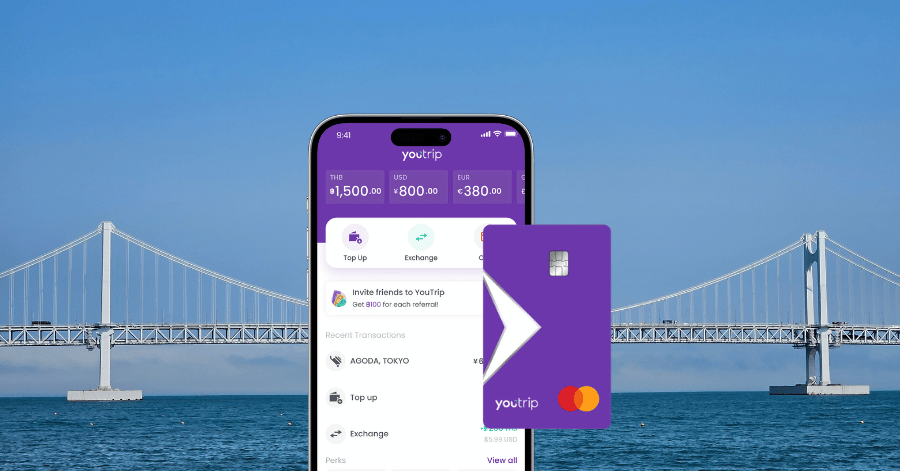
Korea is largely cashless in the cities, so the smartest way to pay is to tap your YouTrip card and skip the money changer entirely. Korean won isn’t a currency you need to exchange in advance, your card handles it at the point of sale.
Tap your YouTrip card for cards-accepted spots, from KTX kiosks to convenience stores, and YouTrip charges 0% FX on every won transaction, billed at the Mastercard wholesale rate. Every tap auto-converts your SGD to won at wholesale, with no foreign transaction fee, far better than a credit card stacking 3–3.5% FX on every overseas spend. Money changers don’t charge a visible fee either; they bake a markup of a few percent into the rate, and it’s worse at airport and checkpoint counters.
For the cash-only spots (some markets, small eateries, a few older buses), withdraw won from an ATM when you land. With YouTrip, the first S$400 of overseas ATM withdrawals each calendar month is free, then a flat 2% after, with the allowance resetting on the 1st.
 Bottom line: tap for nearly everything, carry a little cash for the rest, and don’t pre-buy won at home. For deeper detail, see our Can YouTrip be used in Korea? explainer and the SGD to KRW rate guide, plus our South Korea ATM withdrawal guide for fees on the ground.
FAQs
The fastest way is the KTX train at about 2 hours 15 minutes (the SRT is marginally quicker at ~2h10m). Flying takes ~55 minutes in the air but around 3 hours door-to-door, while buses take 4–6 hours depending on the service.
A standard one-way KTX ticket costs 59,800 KRW (~S$50). The SRT is about 10% cheaper at 52,600 KRW (~S$44), and slower regular trains (ITX-Saemaeul, Mugunghwa) run from 28,600 KRW (~S$24).
The intercity bus is cheapest at 20,000 KRW (~S$17), followed by the Mugunghwa train at 28,600 KRW (~S$24). Both are slower (5–6 hours), so you’re trading time for savings.
For most travellers, the train. A flight is faster in the air but works out around the same door-to-door once you add airport transfers and security, and the KTX drops you in the city centre. Fly only if you’re near Gimpo or find a genuinely cheap fare.
Yes. The drive is about 417km via the Gyeongbu Expressway, taking 4.5–5.5 hours. You’ll need an International Driving Permit, and Naver Maps or KakaoMap for navigation. Most short-trip visitors stick to the train, though.
Seoul and Busan are about 325km apart in a straight line, or roughly 417km by road and rail. It’s the length of the country: Busan sits on the southeastern coast, Seoul in the northwest.
Different routes, one obvious winner
Five ways to get from Seoul to Busan, but the answer is usually the same: the KTX is fast, frequent, central and fairly priced, and the SRT does the same job for a little less if you’re staying south. Fly only if you’re near Gimpo or score a cheap fare; take the bus if you’re counting every won; drive only if the journey is the point.
Not a YouTrooper yet? Sign up for your free YouTrip card and tap your way across Korea with no foreign transaction fees, the wholesale exchange rate, and the ability to hold and lock in 12 currencies to spend in 150+ countries. Use code YTBLOG5 for a free S$5 in your account, then head to our YouTrip Perks page for exclusive deals. Join our Telegram (@YouTripSG) and our Community Group (@YouTripSquad) for more tips and #YouTrooper perks. Happy travels! 


Related Guides:
International Driving License Singapore: Price, How to Apply & Where to Go
Best eSIM Singapore: Guide to Travel eSIMs, Cheap Options & Tips
Korea Power Plug & Socket Guide: Types, Voltage, Adapters & Tips
The post Seoul to Busan: KTX, Flights & the Cheapest Way (2026) appeared first on YouTrip Singapore.


추천 콘텐츠

Aster is Predicted to Drop to $ 0.477166 By Jun 19, 2026

WikiLeaks lost 95% of income then adopted BTC in 2011
Watch Out: It’s FED Week – Lots of Economic Developments and Altcoin Events This Week – Here’s the Day-by-Day, Hour-by-Hour Schedule


인기 뉴스
더보기
