

Can Someone Actually Use Crypto to Buy Things in Real Life?
BitcoinWorld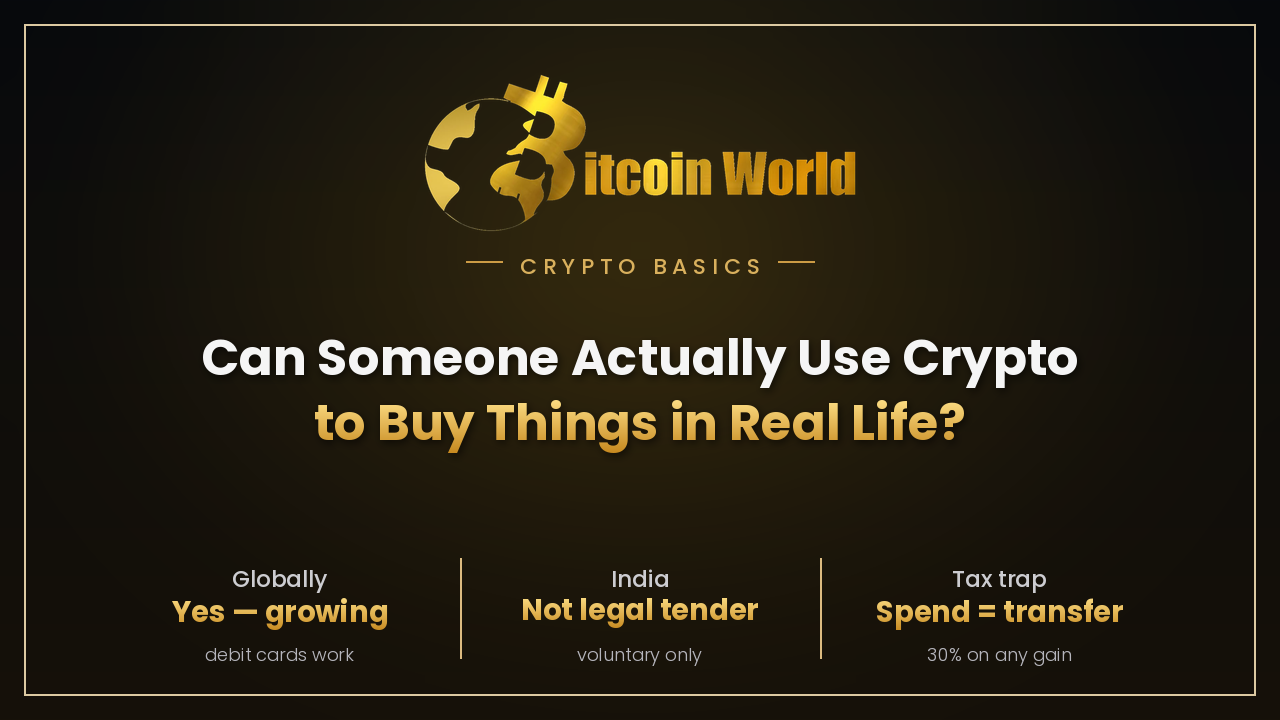
Can Someone Actually Use Crypto to Buy Things in Real Life?
Can Someone Actually Use Crypto to Buy Things in Real Life?
Using crypto to buy things in real life is no longer a theoretical concept – it works today, in more places than most people expect, even though it remains far from universal. From international merchants to crypto debit cards to a handful of Indian platforms, spending cryptocurrency on real goods and services is genuinely possible. The catch for Indian users is that every spend is a taxable event under VDA rules. This article explains where and how crypto can be spent, how payments work in practice, the tax consequences of spending crypto in India, and the realistic limits you’ll encounter.
Can Someone Actually Use Crypto to Buy Things in Real Life?
Yes – crypto can be used to buy things in real life, though acceptance remains selective rather than universal.
- Global merchants: Major companies including Microsoft, Overstock, Newegg, and AT&T accept Bitcoin for certain products and services.
- Crypto debit cards: Platforms like Binance Card, Crypto.com Visa, and Coinbase Card convert crypto to fiat at the point of sale – accepted wherever Visa or Mastercard is used.
- Travel and bookings: Services like Travala allow full crypto payment for hotels and flights across hundreds of thousands of properties.
- El Salvador: The only country where Bitcoin is legal tender, meaning merchants are required to accept it.
- Peer-to-peer: Individuals can settle personal transactions in crypto wherever both parties agree.
How Does Paying With Crypto Actually Work?
The mechanics differ depending on the payment method used.
- Direct on-chain payment: The merchant provides a wallet address; you send the exact crypto amount; the transaction confirms on the blockchain. Used for larger or specialist merchants.
- Crypto debit card: The card provider converts your crypto to INR or USD instantly at the point of sale – the merchant sees a normal card transaction and never handles crypto.
- Payment processors: Merchants using processors like BitPay or CoinGate accept crypto and receive fiat – removing the need for the merchant to hold crypto.
- QR code payment: Increasingly common for smaller crypto-native merchants – scan the QR code, confirm the amount, send from your wallet.
Can You Use Crypto to Buy Things in India Specifically?
India’s crypto payment landscape is limited but growing, constrained primarily by the lack of legal tender status.
- Not legal tender: Crypto cannot be demanded as payment for any debt in India – merchants are not legally obligated to accept it.
- Voluntary acceptance: Some crypto-native businesses, freelancers, and international platforms serving Indian users accept crypto voluntarily.
- Crypto debit cards for Indians: Cards issued by international platforms can be used for online purchases but may face restrictions on Indian-issued Visa/Mastercard networks.
- P2P transactions: Crypto settles private transactions between willing parties – common in freelancing and international business contexts.
What Are the Tax Consequences of Spending Crypto in India?
Spending crypto is treated identically to selling it under India’s VDA framework – this surprises many users.
- Spending = transfer: The Income Tax Act 2025 classifies spending crypto on goods or services as a taxable transfer of a VDA.
- 30% tax on any gain: If the crypto you spend has appreciated since you bought it, the gain is taxed at 30% plus 4% cess.
- FMV at time of spend: The fair market value of the crypto at the point of spending in INR is treated as the sale consideration.
- Practical implication: Buying a ₹10,000 item with Bitcoin you acquired at a lower price triggers a taxable gain on the appreciation – making crypto an inefficient payment method for everyday purchases from a tax perspective.
Frequently Asked Questions
Where is crypto most widely accepted as payment globally?
Crypto payments are most widely accepted through crypto debit cards, which work at any Visa or Mastercard terminal worldwide by converting crypto to fiat at the point of sale. Direct crypto acceptance is common in tech, gaming, travel (via Travala), and luxury goods sectors, as well as with individual merchants and freelancers who prefer crypto. El Salvador remains the only country where Bitcoin is legal tender and must be accepted by all merchants.
Does spending crypto on goods or services attract tax in India?
Yes – using crypto to pay for goods or services is treated as a transfer of a VDA under the Income Tax Act 2025 and triggers a 30% tax on any gain from the cost of acquisition to the FMV at the time of spending. This makes crypto payments tax-inefficient for everyday purchases compared to rupee spending. The taxable event must be declared in Schedule VDA of your ITR even if the purchase itself was small.
Can Indian users use a crypto debit card for everyday spending?
Yes – Indian residents can hold and use crypto debit cards issued by international platforms for online purchases and some in-person spending. However, each use of the card that liquidates appreciated crypto creates a taxable event in India, and RBI regulations may restrict some card features for Indian residents. The convenience of a crypto card must be weighed against the reporting and tax obligations each spend creates.
Conclusion: Real But Restricted – and Taxed Every Time
Using crypto to buy things in real life works today – through debit cards, direct merchant acceptance, and payment processors – but for Indian users it comes with a hidden cost that cash doesn’t: every spend of appreciated crypto is a taxable VDA transfer. For most everyday purchases, this makes crypto a tax-inefficient payment method compared to rupees. Where it genuinely shines is in international freelancing, cross-border transactions, and niche sectors where crypto-native platforms offer better rates or access than traditional banking. Use it where it makes practical and financial sense – and record every transaction for your Schedule VDA.
This post Can Someone Actually Use Crypto to Buy Things in Real Life? first appeared on BitcoinWorld.


추천 콘텐츠

Bitcoin Price Is Only Halfway To The Bottom And Will Crash Below $40,000, Here’s Why

Natural Diamond Traceability Push Aims to Restore Buyer Confidence

Michael Saylor Hints at Another Bitcoin Buy in ‘Still Adding Dots’ Post


인기 뉴스
더보기
