

AI Chip Selloff Deepens Before Micron Earnings as $1T Thesis Gets Tested
AI Semiconductor Stocks Pull Back Ahead of Micron Earnings
The pressure on Tuesday was broad across the entire global AI semiconductor chain. The tech-heavy Nasdaq Composite fell 2.2%, while the S&P 500 dropped 1.4%.
The damage concentrated heavily on key hardware and infrastructure providers:
- Micron Technology (MU): Plunged over 13% ahead of its highly anticipated fiscal earnings report.
- Nvidia (NVDA): The undisputed bellwether of the AI chip market slipped more than 4%.
- Marvell Technology & SanDisk: Both experienced steep declines, with Marvell losing roughly 9% and SanDisk posting a double-digit decline.
- Other Semiconductor Leaders: AMD, Qualcomm, and Intel also faced significant downward pressure.
This correction quickly went global, proving the weakness was not limited to U.S. stocks. In Asia, South Korean memory heavyweights SK Hynix and Samsung Electronics saw sharp selloffs, dragging down the Kospi index. This international ripple effect underscores that the AI trade has evolved far beyond just graphic processing units (GPUs). It now encompasses an interconnected global supply chain of High-Bandwidth Memory (HBM), networking chips, storage, semiconductor equipment, cloud capex, and data center infrastructure.
Micron’s timing makes this particular selloff much more critical. The company is scheduled to report earnings after the market close on June 24, giving investors a near-term test of whether AI memory demand remains strong enough to support one of the most crowded equity trades of the year.
Markets Are Repricing the AI Trade, Not Abandoning It
This market rotation does not necessarily mean investors are giving up on artificial intelligence. Rather, Wall Street is raising the burden of proof for upcoming earnings reports, profit margins, and forward guidance.
After a relentless rally across semiconductor names, investors are now asking whether stock prices have already priced in too much future growth. The core narrative is shifting:
Old Market Debate: "Is the demand for enterprise AI real?"
New Market Debate: "Is AI demand growing fast enough to justify these premium valuations?"
That is a much harder test for chip stocks, especially after heavy investor flows flooded into the AI value chain and turned many names into crowded winners. This heavy positioning makes the sector highly vulnerable to sharp de-risking when sentiment turns. Furthermore, macro headwinds like persistent interest rate concerns continue to make high-growth technology valuations sensitive to pressure. Because a substantial portion of these companies' market value relies on projected earnings growth far into the future, macroeconomic shifts trigger rapid profit-taking.
The Long-Term $1 Trillion Bull Case
Despite the immediate volatility, the structural bull case for semiconductors has not disappeared. Bank of America analyst Vivek Arya has projected that global semiconductor sales could rise sharply and move above the $1 trillion level in 2026, heavily supported by AI accelerators, advanced memory, networking, and data center systems. However, the larger the long-term thesis becomes, the more companies must prove that demand is already showing up in immediate revenue, margins, and guidance.
In that sense, the current move is not a rejection of the AI semiconductor cycle; it is a repricing of how much investors are willing to pay before the next round of earnings confirmation.
Micron Earnings: The Ultimate Litmus Test for HBM Demand
Micron’s financial results will matter less as a single-company earnings event and more as a crucial signal for the broader AI memory trade. Investors will be watching whether high-bandwidth memory demand, data center memory revenue, gross margin, and forward guidance are strong enough to stabilize sentiment after the selloff.
- The Bullish Case: Strong forward guidance, accelerating HBM shipments, firm memory pricing, and improving margins would prove that AI server demand remains fundamentally sound. This result could help restore confidence across the broader AI chip basket, rendering this pullback a healthy positioning reset after a crowded rally.
- The Bearish Case: A cautious outlook would have the opposite effect. If management points to weaker pricing, inventory risk, slower customer orders, or margin pressure, investors may become more concerned that AI-linked valuations have moved too far ahead of fundamentals. This would create severe read-through pressure for Nvidia, AMD, Broadcom, Marvell, SanDisk, and semiconductor ETFs such as SOXX and SMH.
Ultimately, the current pullback does not break the AI semiconductor thesis, but it shows investors are becoming far more selective. From here, momentum will be dictated entirely by hard revenue execution that justifies elevated valuations.
Navigating Tech Market Volatility
As high-profile equities like NVDA, MU, and broader tech indices remain at the center of intense market scrutiny, retail and institutional traders alike are seeking tools to navigate and capitalize on this volatility.
For those tracking these major U.S. equity shifts, the MEXC RealStocks Event Page offers an interactive way to stay informed on live stock market trends. Users can explore the platform's current "Trade & Draw" campaign, where eligible registered participants can complete designated missions to earn Mystery Box draw entries.


추천 콘텐츠

Binance Commits $500K to Scale National Ukraine Web3 Ecosystem Growth – Exchanges Bitcoin News

IFX Launches the First Market for AI Token Futures
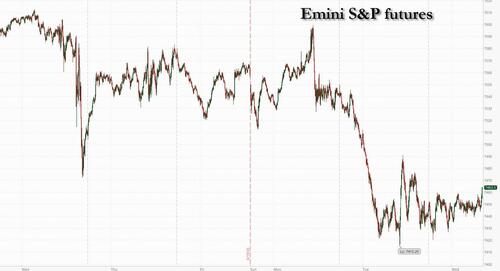
Futures Rebound From "Chip-Wreck" Ahead Of Critical Micron Earnings


인기 뉴스
더보기
