How SpaceX Reusable Rockets Reshape the Space Economy: From Falcon 9 to Starship, and the Road to SPCX's Trillion-Dollar Valuation
Key Takeaways
- SpaceX reusable rockets fundamentally rewrote the economics of commercial spaceflight: On December 21, 2015, Falcon 9's first-stage booster completed the world's first orbital-class rocket vertical landing, compressing per-launch costs from tens of millions of dollars to levels previously considered impossible.
- Falcon 9 captured roughly 90% of global commercial orbital launches in 2025, with the most-flown boosters completing as many as 34 successful missions — a cadence no single-use rocket program can match.
- Starship is SpaceX's next-generation, fully reusable super-heavy launch system, selected by NASA as the crewed lunar lander for the Artemis program, capable of delivering over 100 metric tons of payload to low Earth orbit per mission.
- Reusability is the core pillar behind SPCX's approximately $1.75 trillion IPO valuation. According to SpaceX's S-1 filing with the SEC, consolidated revenue reached $18.67 billion in 2025.
- SpaceX plans to list on Nasdaq under the ticker SPCX on June 12, 2026, at a fixed offer price of $135 per share, targeting approximately $75 billion in proceeds — surpassing Saudi Aramco's 2019 record as the largest IPO in history.
- Retail investors can position ahead of the listing through SPCX perpetual contracts on MEXC, a USDT-margined derivative instrument, without needing a traditional brokerage account.
1. SpaceX Reusable Rockets: From Science Fiction to Industrial Reality
For more than 60 years before SpaceX entered the aerospace industry, launch vehicles followed a "use-once-and-discard" logic. Every rocket's first stage — the largest, most technically complex, and most expensive component — would either disintegrate during atmospheric re-entry or sink into the ocean after exhausting its fuel.
A useful analogy: if commercial airlines were forced to destroy their aircraft after every flight and pass that cost on to passengers, plane tickets would be unaffordable for nearly everyone. That was the reality of traditional rocketry for over half a century — payload-to-orbit costs running in the tens of thousands of dollars per kilogram.
The founding premise of SpaceX was that rocket reusability is the only path to enable humanity's mass access to space, and ultimately to fulfill the vision of making humanity a multiplanetary species that Elon Musk laid out when founding the company in 2002.
And it all started with one landmark landing by Falcon 9.
2. Falcon 9: The Reusable Rocket That Defined a New Era of Commercial Spaceflight
2.1 The Landing That Rewrote the Industry
On December 21, 2015, a Falcon 9 first-stage booster — having just completed its mission of delivering satellites to orbit — flipped around, reignited its engines, descended through the atmosphere, and touched down in a controlled vertical landing at Cape Canaveral, Florida. This was the first time in human history that an orbital-class rocket's first stage returned to Earth intact and was cleared for reuse.
For decades, the aerospace establishment had insisted that reusability was "economically impractical and engineering-wise impossible." Falcon 9's flawless landing dismantled that entire argument in one stroke.
SpaceX subsequently achieved the same landing performance on autonomous spaceport drone ships, extending recovery capability from coastal facilities to global mission profiles.
2.2 Let the Numbers Speak: Falcon 9's Market Dominance
According to SpaceX's S-1 prospectus filed with the SEC:
- In 2025, Falcon 9 accounted for roughly 90% of global commercial orbital launches
- The most-flown Falcon 9 boosters have completed 34 successful missions each
- The Space segment contributed $4.1 billion in revenue in 2025
No legacy manufacturer relying on single-use rockets can replicate this launch cadence or unit economics.
3. Starship: The Next Leap into the Fully Reusable Era
If Falcon 9 proved that "first-stage reusability" is feasible, Starship aims to prove that "full-vehicle reusability" is also feasible.
Starship is SpaceX's next-generation super-heavy launch system under development, with the following key specifications:
- Single-mission payload capacity exceeding 100 metric tons to low Earth orbit
- Both the Super Heavy booster (first stage) and the Starship spacecraft (second stage) are designed for rapid reuse
- The Super Heavy booster has already been caught mid-air by the "Mechazilla" mechanical arm system at SpaceX's Starbase facility in Texas
- NASA has selected Starship as the crewed lunar lander for the Artemis program
The commercial implications of Starship go far beyond "a bigger rocket." It enables SpaceX to deploy more Starlink satellites at unprecedented speeds, place AI compute centers in orbit, and ultimately translate Musk's repeatedly emphasized Mars colonization vision from an engineering blueprint into an executable mission roadmap.
The S-1 disclosed that SpaceX invested approximately $3 billion in Starship R&D during 2025 alone, which is the primary reason the Space segment recorded an operating loss for the year.
4. How Reusable Rockets Support SPCX's $1.75 Trillion Valuation
Many investors will ask: how can a company that posted a net loss of approximately $4.9 billion in 2025 justify going public at nearly $1.75 trillion?
The answer lies in the competitive moat built by reusable rocket technology, and the cascading enablement it provides to every other business segment:
| Business Segment | 2025 Revenue | Dependence on Reusable Rockets |
|---|---|---|
| Connectivity (Starlink) | $11.4 billion | Relies on Falcon 9's high-cadence, low-cost launches to deploy 9,600+ satellites |
| Space (Launches & Spacecraft) | $4.1 billion | Directly generated by Falcon 9 / Falcon Heavy |
| AI (xAI / Grok / X) | $3.2 billion | Future plans depend on Starship to deploy orbital AI compute satellites |
In short, reusable rockets are not "just a product" for SpaceX — they are the underlying infrastructure supporting its connectivity business, its AI business, and its long-term Mars ambitions. That is why the market is willing to assign SpaceX a price-to-sales multiple of roughly 94 times — investors aren't buying current earnings; they're buying the entire space economy unlocked by reusable rocket technology.
For a complete breakdown of this historic IPO's timeline, pricing mechanics, and risk analysis, see MEXC Learn's Is the SpaceX IPO Worth $135? and Will SpaceX Hit $2 Trillion?.
5. Key Milestones for the SPCX IPO
According to SpaceX's S-1 amendment filed on June 1, 2026:
- Ticker symbol: SPCX
- Exchange: Nasdaq
- Offer price: $135 per share (fixed pricing, no price range used)
- Shares offered: Approximately 555.6 million Class A common shares
- Targeted raise: Approximately $75 billion
- IPO valuation: Approximately $1.75 trillion
- Pricing date: After market close on June 11, 2026
- First trading day: June 12, 2026
If executed on schedule, SPCX will surpass Saudi Aramco's $25.6 billion IPO record from 2019 to become the largest public offering in financial history.
6. How to Position for SPCX Ahead of the IPO on MEXC
For investors hoping to gain exposure to SpaceX before its official Nasdaq debut on June 12, traditional brokerages typically require high account minimums and a complex IPO subscription process. MEXC offers a more direct path: SPCX/USDT perpetual contracts.
6.1 Core Features of the SPCX Perpetual Contract
- USDT-margined: No fiat deposits or brokerage account required
- Two-way trading: Take long or short positions on SPCX's post-listing price movements
- Flexible leverage: Choose leverage levels matched to your risk tolerance
- 24/7 trading: Not restricted by U.S. stock market hours — react in real time during the roadshow, pricing, first-day open, and other key events
6.2 Steps to Participate
- Log in or register your MEXC account and complete identity verification
- Transfer USDT into your futures account
- Navigate to the SPCX/USDT perpetual contract trading page
- Select leverage, set stop-loss and take-profit, and place a buy (long) or sell (short) order
6.3 What's the Difference Between MEXC Pre-IPO Perpetual Contracts and Actual SPCX Shares?
The SPCXSTOCK_USDT perpetual contract on MEXC is not equivalent to directly purchasing SPCX shares on Nasdaq once they begin trading.
The key differences are as follows:
| Item | SPCXSTOCK_USDT Perpetual Contract | SPCX Shares |
|---|---|---|
| Trading Venue | MEXC futures market | Nasdaq or brokerages supporting U.S. equities |
| Margin / Denomination | USDT | U.S. dollars or brokerage-supported currencies |
| Represents Equity | No | Yes |
| Voting Rights | None | Depends on share class |
| Dividend Rights | None | Depends on company policy |
| Long & Short Trading | Generally supports two-way trading | Depends on brokerage and securities lending conditions |
| Risk Types | Leverage, liquidation, funding rate, liquidity risk | Share price volatility, company fundamentals, market risk |
| Suitable For | Short-term traders, event-driven traders, derivatives users | Long-term equity investors |
A clear reminder: perpetual contracts are derivative instruments. While their prices track SpaceX's valuation performance, they do not represent equity ownership in SpaceX. Holding these contracts does not grant shareholder rights. Contract trading also carries significant risk and should be approached based on your own risk tolerance.
Frequently Asked Questions (FAQ)
Q1: How much do SpaceX's reusable rockets actually save in costs?
According to publicly disclosed SpaceX data, Falcon 9's first-stage reuse has compressed per-kilogram-to-orbit costs by roughly an order of magnitude compared to traditional single-use rockets. The most frequently reused boosters have completed 34 missions, with each reuse further amortizing hardware manufacturing costs.
Q2: What's the biggest difference between Starship and Falcon 9?
Falcon 9 only recovers the first-stage booster, while Starship is designed for both the first stage (Super Heavy) and the second stage (Starship spacecraft) to be fully reusable and rapidly reflyable. This is a fundamental leap from "partial reusability" to "full reusability."
Q3: When does SPCX begin trading on Nasdaq?
Per the S-1 amendment SpaceX filed with the SEC, SPCX is scheduled to begin trading on Nasdaq on June 12, 2026, at a fixed offer price of $135 per share.
Q4: What's the difference between trading SPCX perpetuals on MEXC and buying SPCX shares directly?
The SPCX perpetual contract on MEXC is a USDT-margined derivative instrument primarily designed to track SpaceX's valuation movements and provide long/short flexibility — it does not represent equity or shareholder rights. Purchasing SPCX shares directly requires a Nasdaq-connected brokerage, grants actual equity ownership, but involves a more complex process.
Q5: How significant is reusable rocket technology to SpaceX's valuation?
Reusable rockets are the underlying infrastructure supporting all three of SpaceX's business segments (Space, Connectivity, AI). Without Falcon 9's low-cost launches, Starlink could not have deployed over 9,600 satellites across 164 countries. Without Starship's future payload capacity, orbital AI compute centers, a lunar economy, and Mars colonization would all be impossible. This is the fundamental reason the market is willing to assign a $1.75 trillion valuation.
Q6: Will Elon Musk still control the company after SpaceX goes public?
Yes. According to the S-1, Musk will retain approximately 82% of voting power post-IPO through his ownership of super-voting Class B shares, giving him decisive influence over the company's strategic direction.
Conclusion
From that breath-stopping Falcon 9 landing in December 2015 to the upcoming $1.75 trillion IPO under the ticker SPCX, SpaceX has used reusable rocket technology to prove one thing: what truly disrupts an industry is not a bigger budget, but a fundamental redesign of its economic model.
For investors looking to participate in this historic event — whether by buying SPCX shares through a traditional brokerage on June 12, or by immediately positioning through SPCX perpetual contracts on MEXC using USDT as margin — the key lies in understanding SpaceX's true value anchor: the reusable rocket that crosses the atmosphere, lands precisely, and does it again.
Risk disclaimer: This article is for informational and industry-analysis purposes only and does not constitute investment advice. Perpetual contracts, IPO shares, and crypto asset trading all carry substantial risk. Please make decisions based on your own circumstances.
Popular Articles
View More
Oura Competitors: Samsung, Apple and the Smart Ring Market
Oura's competitors fall into three groups, according to its IPO prospectus: smartwatch makers such as Apple, Google and Samsung; fitness wearables such as Garmin, Coros and Whoop; and software-only
Is Oura Profitable? Revenue, Business Model and Valuation
Yes, Oura is profitable on a net income basis. Its IPO prospectus shows net income of $60.8 million on revenue of $1.21 billion in the nine months to June 30, 2026. The $924.3 million loss in some
Bitget Review 2026: 3.8 Out of 5, the Deepest Copy-Trading Shelf, and a Japan Exit With Three Dates You Need
Bitget scores 3.8 out of 5 on our six-dimension scorecard as of 25 September 2026, leading on derivatives, holding a provisional 3.5 on security after the hot-wallet incident of about $351.6 million
Hot Crypto Updates
View More
Red Sea Tensions Return as Houthi Threats Put Oil Shipping Costs at Risk
Overview Red Sea tensions have returned to the centre of global market attention because the risk is no longer confined to isolated attacks on individual vessels. Investors are now considering the

Is CoinEx Going Bankrupt? What the Shutdown Notice Really Means
Overview Heightened sensitivity surrounding digital asset custodian solvency has once again triggered severe market volatility, as rumors questioning whether CoinEx is bankrupt rapidly circulated

Apple Stock Outlook After iPhone Duo Launch: Can AAPL Keep Rising?
Overview Global equity markets are reassessing valuation thresholds across megacap technology bellwethers as consumer hardware enters an era centered on edge intelligence. Following the formal

Trending News
View More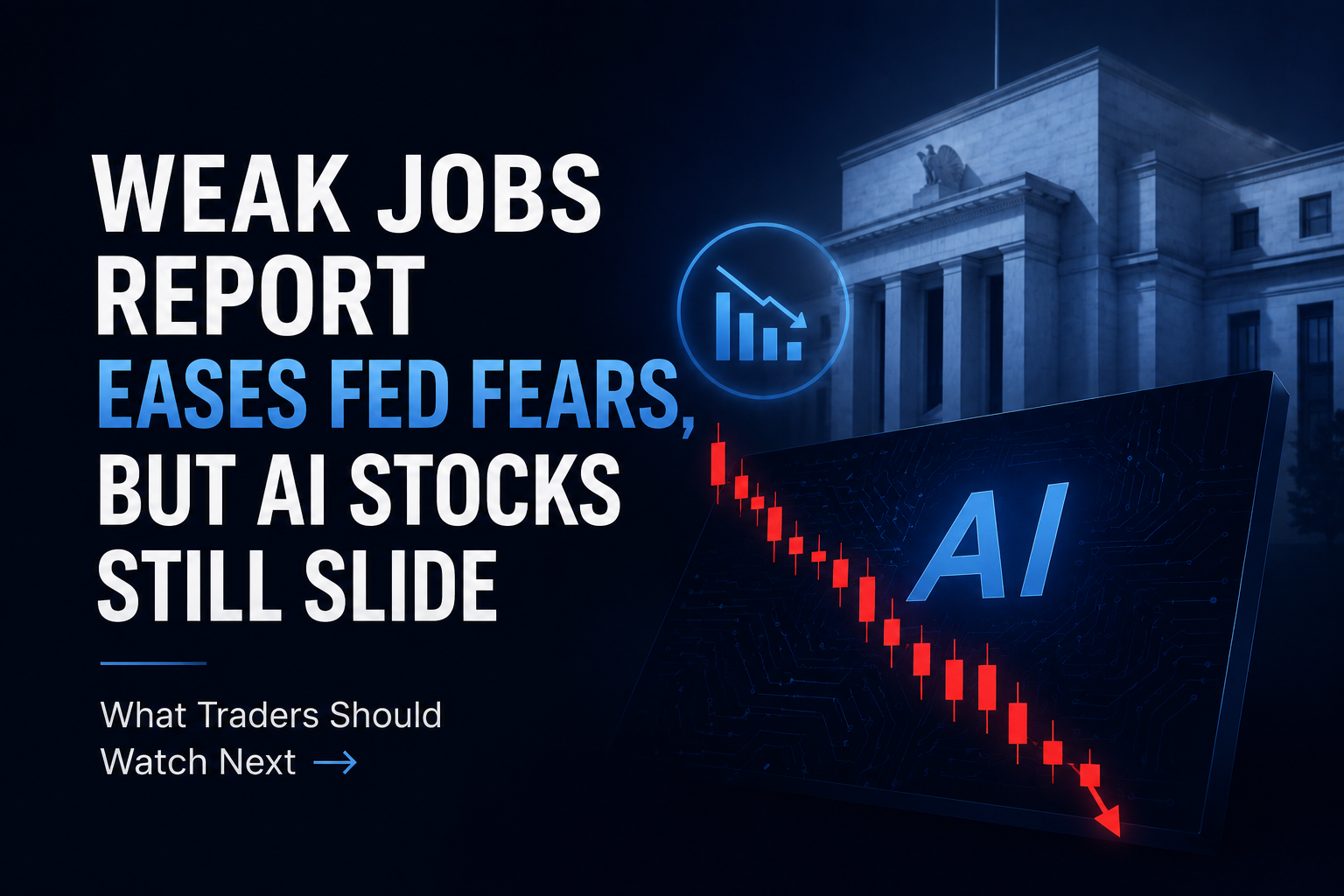
Weak Jobs Report Eases Fed Fears, But AI Stocks Still Slide: What Traders Should Watch Next
The U.S. June jobs report signaled a clear economic slowdown, missing expectations and lowering Federal Reserve rate hike fears. Despite lower Treasury yields, AI and tech stocks slid, proving that ma

Stablecoin Adoption: Why Bank-Level Protection Matters
Stablecoin adoption may depend less on blockchain technology than on whether consumers receive protections they already associate with banks and card networks. Visa’s Money Travels 2026 research found
Related Articles
View More
Rate Hike Lands, BTC Hits 8-Month High — Bad News Priced In or a Short-Squeeze Rally? | MEXC Alpha Trader Weekly Research
Week 3 of September 2026Statistics Period: September 16 – September 22, 2026Data Cutoff: September 22, 2026Core NarrativeOver the past week, crypto markets moved through a full cycle of pre-decision p
How Deep Is MEXC's Liquidity? Order Book Depth, Slippage, and What Third-Party Reports Show
Liquidity is the difference between the price you clicked and the price you got.This page tracks MEXC liquidity the way third-party researchers measure it: order book depth in tight bands around the m
CPI Surges, Stoking Rate Hike Fears; U.S. Treasury Yields Breach 5% to Reach 19-Year High: What’s the Market Pricing In? | MEXC Alpha Trader Research Weekly
September 2026, Week 2Reporting Period: September 9 – September 15, 2026Data Cutoff: September 15, 2026Market OverviewLast week, the crypto market faced sustained pressure driven by a confluence of be