

Must Read
This story is not about which Lopez is right. It is about what happens to the rules that protect everyone else when powerful families fight.This story is not about which Lopez is right. It is about what happens to the rules that protect everyone else when powerful families fight.
When the ASM has no election: What the Lopez family dispute means for every investor
For feedback or concerns regarding this content, please contact us at crypto.news@mexc.com
Every year, around this time, the companies listed on the Philippine Stock Exchange (PSE) hold what are called annual stockholders’ meetings (ASM) — a name so procedural it tends to slip past most people without registering what it actually means. Strip away the proxy forms and the quorum counts and the information statements filed with the Securities and Exchange Commission (SEC), and what you have left is something much simpler: the one legally guaranteed moment each year when the people who own a company can choose who runs it.
You may own a share of that moment. If you have money in the Social Security System (SSS), Government Service Insurance System (GSIS), Pag-IBIG, a mutual fund, or a retirement account invested in any listed company, a fund manager is casting votes on your behalf at meetings like these, and the rules governing those votes are the rules that make your ownership mean something more than a line on a statement. When those rules hold, even imperfectly, the accountability they create is real. When they bend — even for reasons that sound sensible — the question worth asking is who benefits from the bending, and who doesn’t.
This year, that question has a Lopez answer.
Five meetings
The Lopez family has five publicly listed entities connected to its corporate tree: First Philippine Holdings Corporation, Lopez Holdings Corporation, First Gen Corporation, ABS-CBN Corporation, and ABS-CBN Holdings Corporation, which issues Philippine Depositary Receipts (PDR) traded on the stock exchange under the ticker ABSP. Each is required by law to hold an annual stockholders’ meeting. Each is navigating that requirement in 2026 under the shadow of an intra-family dispute that has now reached the boardroom calendar itself, bending the rules of corporate accountability into shapes the law did not quite anticipate.
First Philippine Holdings (FPH) will hold its annual meeting on July 27, 2026. But the SEC has allowed it to proceed without electing a new board of directors. Meaning, the incumbent board stays in place on holdover until the intracorporate case is resolved or a court orders an election meeting, with no timeline set in the disclosures for either.
Lopez Holdings Corporation postponed its annual meeting from June 11 to August 7, 2026, after two independent directors resigned within days of each other in late April and minority shareholders were left without enough time to nominate replacements. The election remains on the agenda. The delay was designed to protect the vote, not cancel it.
First Gen Corporation has continued with its annual meeting preparations in textbook fashion: the board first set a May 28, 2026 at The Fifth at Rockwell, then upgraded it to a fully virtual meeting with a detailed online voting script and a full agenda that still includes the election of directors, independent directors, and an external auditor — the complete annual accountability ritual, moved online but otherwise intact.
ABS-CBN Corporation has publicly and carefully tried to hold itself apart from the dispute, its board going so far as to say, in a formal disclosure, that the company should not be drawn into a conflict that does not directly involve it, even as pressure from the family war has reached its boardroom.
ABS-CBN Holdings Corporation, the PDR issuer that sits between Lopez Inc. and the ABS-CBN shares it technically holds, has its own separate listed existence and its own annual meeting obligations. It’s another governance layer in a corporate structure that is already under significant strain.
The same family, the same underlying dispute, and five different answers to the same legal obligation. This story is not about which Lopez is right. It is about what happens to the rules that protect everyone else when powerful families fight.
Why annual meetings are required
Think of a listed company as a large building with thousands of owners, each holding a share proportional to their stake, all of them relying on a professional management team to run things day to day — but above that management team, a board of trustees who sets the big rules, approves the big spending, and can hire or fire the managers themselves. Once a year, the owners gather to vote on who sits on that board, to question what has been done with their money over the past 12 months, and to vote on major actions the company wants to take. Then they go home, and the board and management run the building for another year.
That annual gathering is the stockholders’ meeting, and in the Philippines, it is not optional.
The Revised Corporation Code — Republic Act 11232, signed into law in 2019 — hard-wires the annual meeting into corporate life. Section 49 requires that regular stockholders’ meetings be held every year on the date fixed in the company’s bylaws, or if not fixed, on any date after April 15 as set by the board. Section 22 establishes that directors serve one-year terms, holding over only until their successors are elected and qualified. This means a holdover is a bridge, not a destination. The law assumes a fresh election is always coming. Together these two provisions create a legal expectation that is also a promise to investors: every year, shareholders gather, and the board faces a vote.
Section 25 handles what happens when that vote doesn’t occur. If an election is not held on the scheduled date, the company must report it to the SEC within 30 days, explain why, and set a new election date no later than 60 days from the original. If that rescheduled election is also not held, the SEC may, upon application, summarily order that one take place. SEC Memorandum Circular No. 3, Series of 2020, adds procedural discipline on top: at least 21 days’ notice for regular meetings, at least two weeks’ written notice with stated reasons for any postponement, and new dates that comply with the Code’s requirements.
The structure is intentional. Annual elections are the rule. Short, justified delays are the exception. The SEC’s power to compel elections is the safety net. What happened at First Philippine Holdings this year tested all three layers — and found, in the space between them, a gap the law did not anticipate.
The ‘no-election’ meeting
On May 4, 2026, FPH’s board filed a disclosure with the Philippine Stock Exchange setting the annual meeting for July 27 via remote communication. Buried in the same filing was a contingency clause tied directly to the intra-corporate dispute between Federico “Piki” Lopez and Lopez Inc.: “If, by the deadline for submitting nominees for election to the board of directors, there remains unresolved issues regarding director nominations and the intra-corporate case between Federico R. Lopez and Lopez, Inc. et al., then the election of directors will be deferred and excluded from the July 27, 2026 ASM agenda.”
The board committed to convening a special stockholders’ meeting to elect directors “as soon as practicable” once the dispute was resolved, and said it would submit the arrangement to the SEC for consideration and approval.
Three days later, on May 7, FPH disclosed the answer. The SEC’s Markets and Securities Regulation Department (MSRD) had “allowed First Philippine Holdings Corporation to hold its Annual Stockholders’ Meeting on July 27, 2026, deferring or excluding the election of directors from the agenda,” with the condition that once the intra-corporate issues were resolved — or a court ordered an election — the board must immediately convene to set a date.
Two disclosures. Six days. A listed company now holds its annual meeting without electing its board, by regulatory permission, with no endpoint written into the arrangement.
The incumbent board — which includes Piki Lopez as chairman — stays in place on holdover, for as long as the court case runs or, on the face of the filings, depends on how and when the intracorporate case is resolved.
Why this sits uneasily with the law
Section 25 of the Revised Corporation Code was written as a correction mechanism, designed to run in one direction: if elections don’t happen, the SEC can order them. What the MSRD did for FPH runs in the other direction — before any election was missed, the regulator pre-approved its absence, using the discretionary space inside the same provision that was meant to compel accountability.
The distinction matters more than it might seem. The 60-day ceiling in Section 25 applies when an election is missed on its scheduled date; because FPH’s elections were excluded from the agenda before the meeting rather than missed during it, that ceiling may not apply at all, and the holdover can last as long as the litigation does. There is no written rule establishing that a pending intra-corporate case constitutes justification for a pre-approved election-free annual meeting. No memorandum circular, no published standard, no regulatory guidance that other companies could read and apply to their own situations. What the MSRD exercised was regulatory discretion, judgment rather than codified policy, applied without publishing the reasoning behind it.
That gap — between what the law anticipated and what the regulator approved — is not a scandal. It may even be the right call for this particular dispute, in this particular moment, given the complexity of what is happening inside the Lopez corporate tree. But “it may be the right call” is not the same as “it was made transparently, with clear standards, and with minority shareholders consulted.” Those are different things, and only one of them is currently true.
The independent directors who left
While FPH was preparing its no-election arrangement, something quieter was happening one company up the Lopez corporate tree, and the contrast between the two responses is itself a governance story.
On April 29, Lopez Holdings Corporation disclosed that Roberto Panlilio had resigned as independent director, effective May 1, citing personal reasons. Panlilio came from JP Morgan, where he spent two decades as senior country officer for the Philippines, leading the management, governance and control of the bank’s entire local franchise — precisely the kind of career that signals, to capital markets, that the person in the room understands how institutions are judged when things go wrong. A week earlier, Consuelo Garcia — who built her name at ING, where she served as country manager and head of clients, and who chaired Lopez Holdings’ Audit Committee — had also resigned, also citing personal reasons.
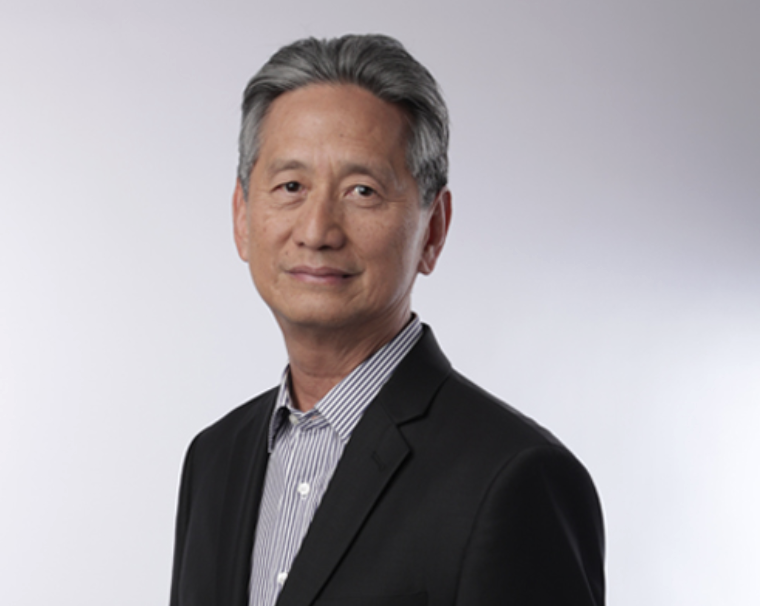 Roberto Panlilio
 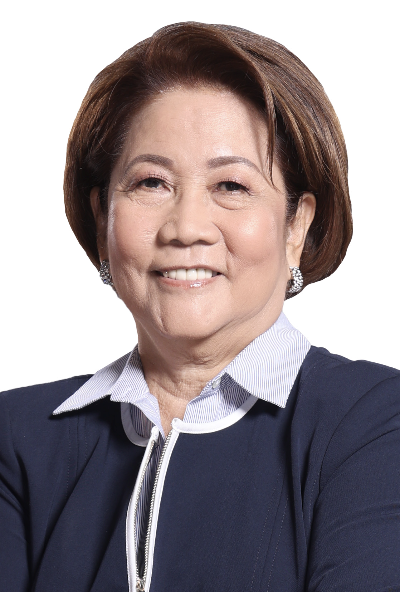 Consuelo Garcia
Two independent directors in just one week, both from institutions where market discipline and reputational risk are daily realities, both gone at the peak of the family dispute, both with the same two-word explanation.
Bienvenido Bautista of the Institute of Corporate Directors has written that the significance of these resignations lies not in what the filings say but in what they signal, arguing that independent directors almost never resign simultaneously during calm periods and that when they leave amid questions involving shareholder rights and defensive mechanisms, “stakeholders naturally begin asking deeper questions — not necessarily about legality, but about governance confidence.” The independent directors, in his framing, exist to be the last internal line of defense when family interests and minority rights collide, their job not simply to check the “independent” box in annual reports but to ask uncomfortable questions on behalf of all shareholders, and their departure raises a question that governance cannot easily answer: are they expected to stay and absorb tension quietly, or to shape institutional outcomes, even to the point of walking away when they no longer believe they can?
Lopez Holdings’ response to the resignations was to open the calendar rather than close it. In a May 6 secretary’s certificate, the board noted that the two independent directors had “recently resigned and declined any nomination for re-election,” that with the stockholders meeting scheduled for June 11 and the preliminary information statement due the very next day, “the minority shareholders will need more time to submit nominations for independent director,” and resolved accordingly to move the ASM to August 7, 2026, at 10 am via remote communication. The election stays on the agenda. The delay was in service of participation, not a substitute for it — one model of how a listed family firm can respond when its outside directors walk out, using the tools in the regulatory rulebook to keep accountability in view while acknowledging that the independent-director bench has to be rebuilt.
First Gen: Where the deals sit, the vote goes on
Just one step down the group structure, the scene looks almost textbook.
On 13 February 2026, First Gen’s board approved the basic details of its 2026 annual stockholders’ meeting: 10 am on Thursday, May 28, 2026; venue “The Fifth at Rockwell,” 5th Floor Power Plant Mall in Makati; record date March 31, 2026. By April 30, when the company filed its definitive information statement with the PSE, the date, time, and record date were unchanged — but the meeting had been moved fully online, to be “conducted virtually” through a dedicated portal, with shareholders of record able to register, log in, and vote electronically themselves, through a proxy, or through the chairman as proxy, with proxies validated on May 20 at the Rockwell office and the proceedings recorded in audio and video.
The agenda reads like a governance checklist: approval of the previous year’s minutes; presentation of the annual report and audited consolidated financial statements; ratification of the acts of the board and management; election of directors (including independent directors); election of an external auditor; and approval of an Employee Stock Purchase Plan. It is the full ritual of corporate accountability, conducted on schedule, with the only major change being the shift from ballroom to browser.
The math of control makes that ritual look almost symbolic. First Gen’s April 30, 2026 Public Ownership Report shows that First Philippine Holdings owns 67.84% of its outstanding common shares, shares, Singapore-based Valorous Asia Holdings another 19.90%, and the public only about 11.67%. Minority investors have almost no mathematical ability to change the board’s composition even if they voted unanimously. And yet the board still submits itself to a formal annual vote, because that is what the law requires and what listed companies, at least on paper, owe their shareholders as a matter of governance posture, regardless of whether the outcome is ever genuinely in doubt.
The stakes at First Gen are higher than its calm annual stockholders meeting notice suggests. It is here that the Lopez group’s biggest recent transactions with Enrique Razon’s Prime Infrastructure actually sit — from the multi-billion-peso gas asset sale and contract extensions, to the binding heads of terms for a 40% stake in Prime Infra’s 2,000MW Wawa and Pakil pumped-storage hydro portfolio, and the related BDO standby letters of credit and covenants it previously disclosed. These are the same deals, and especially the “key-man” provisions that make a change in Federico “Piki” Lopez’s status trigger costly penalties or financing consequences, that the Lopez majority cousins led by Gabby are now attacking in their own statements and court actions as poison-pill-type protections that entrench him and were not adequately cleared with all shareholders — an allegation that First Gen and Prime Infra push back against in their filings, saying the clauses were requested by Prime, are standard in project finance, and were approved and disclosed in the normal course.
Against that backdrop, the FPH “no-election” arrangement looks less like an inevitable response to an impossible situation and more like a deliberate, regulator-approved choice. It’s a decision made at the holding-company level that the core accountability mechanism can be deferred into an unspecified future, while the operating subsidiary two floors down in the corporate structure holds its meeting, and its vote, by the book.
ABS-CBN: Trying to stay out of it
ABS-CBN Corporation has not yet filed a 2026 ASM notice, but its posture throughout the family dispute has been one of studied distance — its board formally stating, in a disclosure that responded to a PSE query, that one director had proposed shutting down the company without discussing how it would meet its obligations to employees, that the majority of directors “strongly argued for continued financial support rather than liquidation,” and that the conflict’s public dimensions “do not affect the business operations, financial condition, and prospects of ABS-CBN.” The company’s 2025 annual report emphasizes that shareholders received not less than 21 days’ notice for the previous year’s meeting, held on June 26, 2025, and that questions and answers from the meeting are recorded in the minutes and posted online — governance norms being restated, perhaps, as a signal of institutional steadiness during institutional turbulence.
ABS-CBN Holdings Corporation, the PDR issuer owned 59.50% by Lopez Inc. and 40.50% by the estates of Oscar and Manuel Lopez and a handful of individuals, has its own separate listed existence and its own annual meeting obligations — a fifth corporate governance layer in a structure where the governance conversation is already happening simultaneously at four other levels, each with its own shareholder base, its own board, and its own relationship to the rules that are supposed to make listed companies accountable.
The open question for both entities is whether the norms they describe in their filings will hold when pressure reaches its peak, given that one company up the chain — FPH, whose governance choices ripple through everything below it — has now established that those norms can be adjusted, with regulatory approval, when the family fight gets difficult enough.
Three moments when the SEC handled contested meetings differently
The FPH arrangement looks different placed alongside three earlier cases, each of which illuminates a different regulatory instinct.
Philcomsat Holdings, 2001 to 2004. Philcomsat Holdings Corporation went three years without holding its annual meeting as a bitter control dispute between two shareholder groups paralyzed governance at the company and its parent entities. The SEC’s response, when pushed, was to order elections — citing the Corporation Code’s mandatory annual meeting requirement and the one-year limit on directors’ terms, eventually dragging the matter through litigation that reached the Supreme Court. The regulatory instinct then was to compel accountability despite the dispute, to treat elections as the floor below which a listed company could not go regardless of how complicated the family situation had become.
Meralco, 2008. In the 13-hour Meralco annual stockholders’ meeting, the SEC issued a cease-and-desist order in the middle of a highly contested election, instructing the company to stop the vote and allow the commission to supervise the canvassing of nearly 4,400 disputed proxies that pension fund GSIS had challenged. The acting corporate secretary read the order aloud on stage and, with the backing of a board majority, declared it “null and void.” The meeting continued, the votes were counted, and the board retained effective control; the Supreme Court later voided the SEC’s orders as beyond its jurisdiction. The SEC in that case was trying to control how an election happened, intervening as referee in a live vote — not canceling one before it could take place.
GMA Network, 2026. Earlier this year, GMA Network (GMA) asked the SEC to move its May 20 annual meeting to December 9, citing the difficulty of adjusting its board composition to comply with new SEC rules on the nine-year term limit for independent directors — a legitimate governance reason, grounded in a regulatory requirement the SEC itself had imposed. The SEC said no, pointing to the Revised Corporation Code’s 60-day window for meeting resets and finding that GMA’s compliance-related scheduling need did not constitute “valid grounds” for a seven-month delay.
The juxtaposition has not been publicly reconciled: GMA could not move its meeting 7 months for a compliance-driven reason rooted in SEC-mandated governance reform, while FPH was permitted to strip the election entirely from its meeting because of a family dispute. Both decisions came from the same regulator, in the same year, under the same legal framework. The standard that separates them has not been published.
The question Bautista asks, and what the Lopez companies answer
Institute of Corporate Director’s Bautista locates the Lopez situation inside a much older story — the difficult transition, common across Asia’s great family conglomerates, from founder-era control to institutional governance, from centralized decision-making anchored on deep personal trust to systems that work independently of any single person’s authority and can be scrutinized by public investors who arrived long after the founding bargain was made.
He draws a parallel to Samsung and the Lee family succession disputes in South Korea — years of public scrutiny over cross-shareholdings and contested inheritance that raised questions about whether the conglomerate’s structure was being used primarily to preserve dynastic control rather than serve all shareholders, questions that ultimately pushed the group toward stronger institutionalization: more disclosure, more board scrutiny, more investor engagement, and a recognition that governance credibility had itself become a strategic asset that family dominance could not indefinitely substitute for.
The Lopez companies are at a similar inflection point, with the pressure coming not from outside investors but from inside the family itself, making the governance mechanisms that should manage the transition the very terrain being contested. In that context, what the five companies are doing with their annual meetings this year is not just a scheduling question. It is a statement about what kind of institution each of them intends to be when the dispute is resolved and the family has to go back to running companies that public markets are supposed to be able to trust.
At Lopez Holdings, the board’s response was to open the calendar, to use the postponement to give minority shareholders more time to name the outside directors who are supposed to be their voice in the room. At First Gen, the board is conducting its annual election on schedule, submitting to a vote whose outcome is mathematically predetermined but whose form matters as a governance signal. At First Philippine Holdings, the board and the regulator together agreed that the election could wait, that continuity was more important than contestability, and that the shareholders who hold the remaining 11.67% — or the pension funds and institutional investors who hold the 20% Valorous Asia stake and other positions in the chain — would simply have to wait for a date that no one can yet name.
What this means if you have money on Lopez firms
The Revised Corporation Code’s annual election requirement exists precisely because the people who run listed companies and the people who own them are not always the same, and their interests are not always aligned, and the mandatory annual vote is the law’s way of keeping that gap from growing too wide to manage. What the SEC allowed at FPH this year is a licensed exception to that mechanism — granted without published criteria, without a fixed endpoint, and apparently with no public indication that minority shareholders, including government funds, were consulted.
Whether it was the right exception for this particular dispute is a question the courts may eventually answer. Whether it should ever happen again — and under what conditions, with what transparency, and with what protection for the investors who cannot afford lawyers to fight it — is a question the SEC has not yet addressed, and one that the market will keep asking for as long as the FPH board governs on holdover, by regulatory grace, while the family figures out who is in charge.
In the meantime, the shareholders wait. So does the calendar, which has stopped moving for at least one of the Lopez companies, in a way that, based on publicly accessible cases and guidance, Philippine corporate governance almost certainly has never allowed before. – Rappler.com
Here are other related articles on the Lopez family dispute:
Market Opportunity
AS Monaco Price(ASM)
$0.06273
$0.06273$0.06273
USD
AS Monaco (ASM) Live Price Chart


Disclaimer: The articles reposted on this site are sourced from public platforms and are provided for informational purposes only. They do not necessarily reflect the views of MEXC. All rights remain with the original authors. If you believe any content infringes on third-party rights, please contact crypto.news@mexc.com for removal. MEXC makes no guarantees regarding the accuracy, completeness, or timeliness of the content and is not responsible for any actions taken based on the information provided. The content does not constitute financial, legal, or other professional advice, nor should it be considered a recommendation or endorsement by MEXC.
You May Also Like
Republicans 'can’t escape' their 'abusive marriage' with Trump: DC insider
Former Republican strategist Rick Wilson said he was worried that House and Senate Republicans had tied themselves so thoroughly to President Donald Trump that
Share
Alternet2026/06/27 03:47

Malaysian Ringgit: Policy Support Tempers Downside but Caps Upside, Says MUFG
BitcoinWorld Malaysian Ringgit: Policy Support Tempers Downside but Caps Upside, Says MUFG The Malaysian ringgit is navigating a delicate balance, supported by
Share
bitcoinworld2026/06/27 03:05

U.S. Regulation of ChatGPT Turns Washington Into AI Gatekeeper
The U.S. federal government is moving to control who gets access to the most advanced ChatGPT technology — a development that could reshape how American companies
Share
The Cryptonomist2026/06/27 02:54



