

JPMorgan sees inflation problem investors are missing
JPMorgan’s Bruce Kasman is putting a tougher Fed risk back in front of investors.
In an interview with CNBC, as cited by Seeking Alpha, the bank’s chief global economist said inflation remains stickier than markets currently appreciate, warning that the Federal Reserve might have to raise interest rates before year's end if price pressures persist and the labor market tightens.
Wall Street has been looking for relief, but Kasman is pointing to renewed pressure.
He said the market is "bending" but not breaking, while both tech and non-tech businesses show enough strength to continue driving economic growth.
That resilience matters because it gives the Fed less room to treat inflation as a fading problem.
JPMorgan’s official forecast still puts the next rate hike in 2027. But Kasman said incoming data could pull that timeline forward.
For perspective, Bank of America analysts recently said they expect three rate hikes in the back half of 2026.
The big question is whether strong earnings can continue to support stocks if inflation forces the Fed back into a corner.
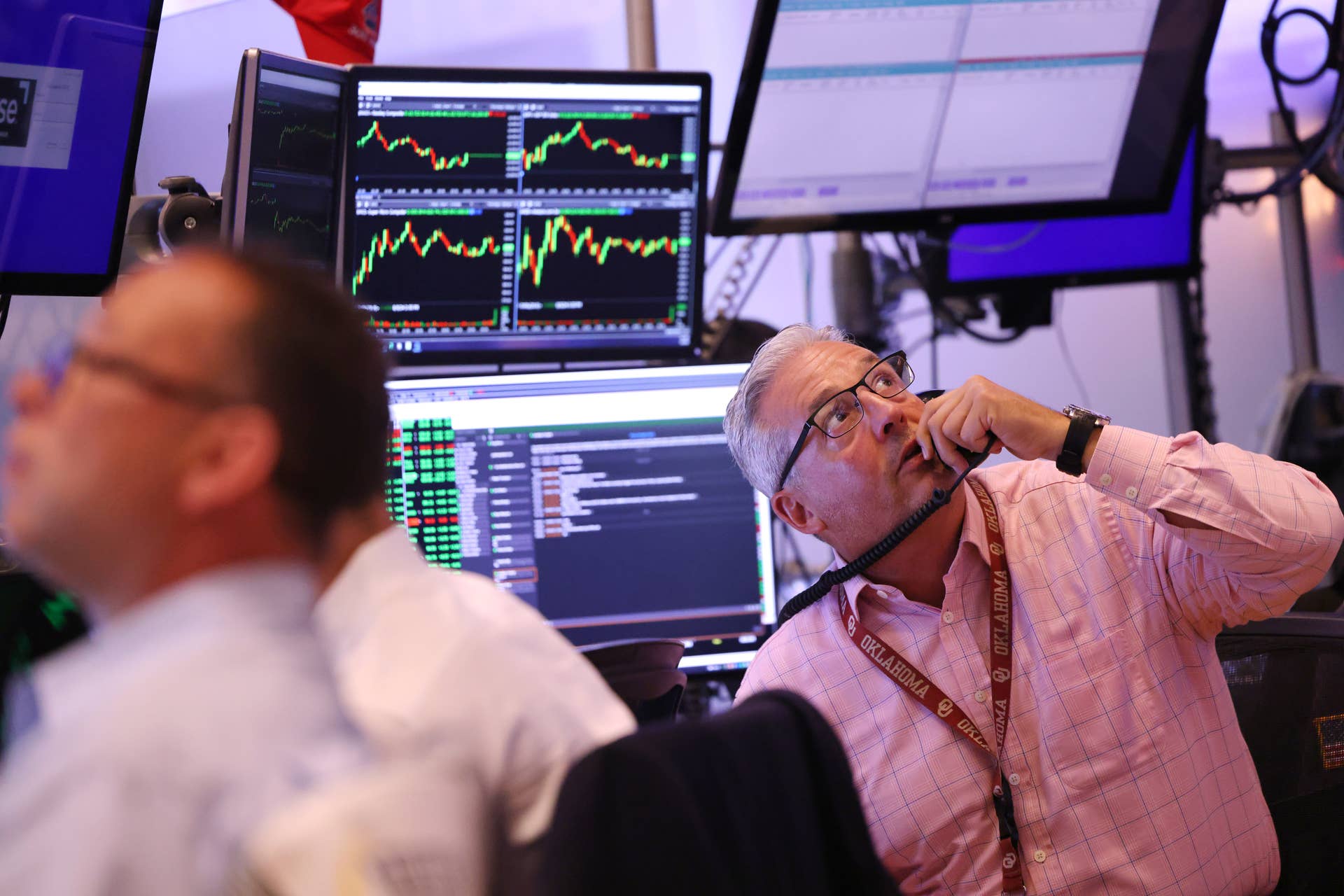 JPMorgan warns sticky inflation may complicate the Fed’s next move.
Michael M&period Santiago&solGetty Images
What JPMorgan said about sticky inflation
Kasman is essentially challenging what has apparently been a comfortable Fed rate-cut timeline.
For the better part of the year, investor expectations were that the Federal Reserve could stay on hold for now, monitor inflation to cool off gradually, and push any new rate-hike risk into 2027.
More Federal Reserve:
- Warsh's first Fed meeting resets interest rate-cut bets
- Hot May CPI sticks a pin in Fed rate-cut bets
- Goldman Sachs sends strong message on next Fed rate cut
However, Kasman feels the real-time data force that timetable forward.
“The underlying inflation story is stickier than people perceive,” he told CNBC. If inflation keeps showing persistence and the labor market tightens, he said, “the Fed should be hiking sometime before year-end."
The latest inflation readings throw even more weight behind that argument.
- The consumer price index rose 0.5% in May and 4.2% from a year earlier, up from a 3.8% annual pace in April, according to the Bureau of Labor Statistics.
- Core CPI, which excludes food and energy, increased 0.2% on the month and 2.9% over the past 12 months, showing that underlying inflation is still above the Fed’s comfort zone.
- Energy was the biggest pressure point, rising 3.9% in May and 23.5% from a year earlier, while gasoline prices jumped 7% on the month.
- The Fed’s preferred inflation gauge, the PCE price index, rose 4.1% in May, while core PCE climbed 3.4%, according to Reuters.
To complicate matters further, you have inflation sitting atop an economy that hasn’t weakened enough to give the Fed cover to ease rates.
Kasman said the consumer is “bending a bit," but “certainly not breaking." He also talked about strength across tech and non-tech businesses, saying the economy has enough cyclical lift to keep demand firm.
What a tighter labor market means for rates
A tighter labor market makes the Fed’s inflation problem a lot tougher to dismiss.
According to Kasman, the price pressure doesn't stem just from energy or one-off shocks. If companies continue hiring while the supply of workers remains limited, wage growth will remain firm.
That keeps household income supported, protects consumer demand, and makes it harder for inflation to fall cleanly back toward the Fed’s 2% inflation target.
A labor market that tightens over the next six to nine months would signal to policymakers that the economy still has momentum, despite higher borrowing costs over the past couple of years.
Why stronger earnings may not protect stocks forever
Strong earnings can continue to push stocks higher, but they are unlikely to eliminate the risk of higher rates.
Like other analysts, Kasman acknowledged that corporate profits are still supporting the market.
In fact, in a recent piece I wrote, JPMorgan’s Stephen Parker said the recent stock market rally was entirely driven by earnings.
With that in mind, investors become much more tolerant of expensive valuations, knowing that companies continue to grow sales, protect margins, and beat market expectations.
That also helps to explain why stocks have been able to look past some of the pressure from inflation and higher borrowing costs.
The problem is that earnings strength can cut both ways.
If companies are still posting healthy results, hiring workers, and spending on technology, the Fed may see less evidence that policy is restrictive enough.
A resilient profit cycle can keep demand firm, support wages, and make inflation harder to cool. That makes strong earnings both a comfort to stock investors and a reason the Fed may hesitate to ease.
The bigger risk is what happens if rate expectations shift again. Higher yields can put pressure on valuation multiples, especially in AI-backed growth stocks, where investors are paying for future profits.
For some color, Nvidia, the world's biggest AI player, trades at almost 22 times forward earnings and more than 12 times sales, according to Seeking Alpha.
At the same time, tighter policy can eventually hit consumers, credit, and corporate spending.
What investors have to watch before year-end
That said, investors now have a clear year-end checklist.
The first test is inflation. If price pressure cools off gradually, the Fed can continue to be patient, and markets can lean on the soft-landing trade. If inflation stalls or reaccelerates, Kasman’s warning becomes even tougher to ignore.
The second test is the labor market.
If we see softer hiring, sluggish wage growth, and higher unemployment, it would give the Fed more room to wait. But if job growth remains firm and labor supply remains tight, investors may have to price in renewed risk of tightening.
Earnings are the third piece.
Strong profits can support stocks, especially if companies continue to improve margins despite higher labor, funding, and energy costs. But earnings strength also has to be balanced against what it tells the Fed about demand.
Related: Goldman Sachs resets Micron stock target with a twist


You May Also Like

Chainlink added 6,182 new wallets in two days, hitting 2024’s highest network growth

An MOU that has in-built tensions in the Strait of Hormuz — Phar Kim Beng
Bitcoin (BTC) Price: ETF Outflows Hit June High as BTC Holds Around $60,000



