

Senators Press CFTC for Investigation Into Polymarket Ad Claims
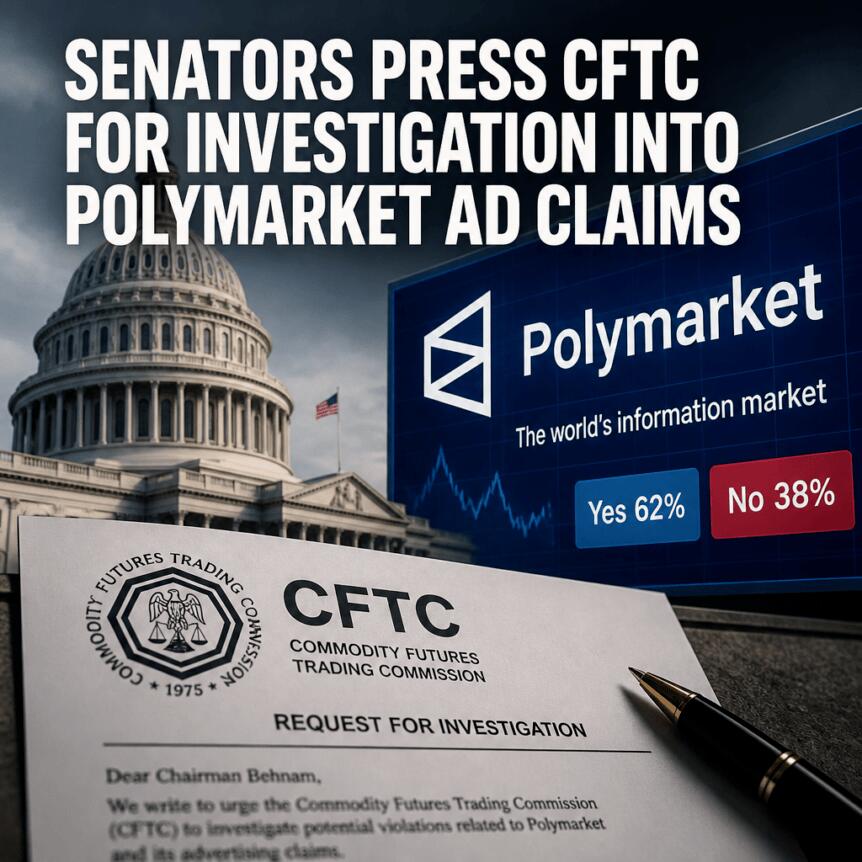
A bipartisan group of US lawmakers has asked the Commodity Futures Trading Commission (CFTC) to examine Polymarket after reports that the prediction market operator paid social media influencers to publish videos depicting fake bets. The request highlights intensifying scrutiny over how prediction platforms market products to US audiences—and whether existing CFTC oversight is sufficient to address deceptive advertising and gambling-style promotion.
In a letter to CFTC Chair Rostin Behnam, Senators John Curtis (Republican) and Adam Schiff (Democrat) said the allegations, if accurate, would point to “deceptive marketing tactics” used to promote gambling-like products. The correspondence follows investigative reporting by The Wall Street Journal and comes as the CFTC’s broader approach to prediction markets remains a subject of legal and policy dispute.
Key takeaways
- US Senators John Curtis and Adam Schiff have asked the CFTC to investigate Polymarket following allegations of deceptive influencer promotion.
- Reports cited by lawmakers describe videos showing fake trades on content styled like Polymarket, with limited or no disclosure that creators were paid.
- The lawmakers questioned whether the CFTC is enforcing existing rules effectively and whether it has the resources to regulate prediction market advertising and conduct.
- The request underscores ongoing tension between federal commodity regulation and state-level efforts to treat prediction markets as gambling or sports betting.
- Institutional compliance teams may face heightened scrutiny of marketing practices, influencer disclosures, and the product characterization used by prediction market platforms.
Senators request CFTC scrutiny over reported influencer promotions
The senators’ letter—sent to the CFTC—centers on concerns that Polymarket allegedly used influencer campaigns to promote its platform using content that did not reflect real trading activity. According to reporting by The Wall Street Journal, Polymarket paid influencers to record videos of “fake bets” on websites resembling the platform, and many creators reportedly did not disclose that they were being compensated by Polymarket.
The Journal said it reviewed more than 1,100 videos and found that roughly 70% depicted fake bets totaling nearly $2 million. The senators framed the conduct, if verified, as both a consumer protection and regulatory enforcement issue—arguing that marketing practices can distort how US audiences perceive the risks and nature of prediction market products.
In response to the earlier reporting, a Polymarket spokesperson told Cointelegraph that the company was “conducting a comprehensive audit” of active promotional content to ensure compliance with its standards and applicable regulatory and legal disclosure requirements.
Regulatory authority and the “gambling-style” framing debate
Beyond the specific allegations, Curtis and Schiff raised broader questions about how prediction markets should be regulated in the US. In their letter, they argued that the CFTC has repeatedly claimed authority over prediction markets and event contracts, yet they described a marketing environment in which content creators often depict prediction products as “free money.”
The senators contended that these representations provide little basis for treating prediction markets differently from gambling-style offerings. They also warned that the contracts are not in the public interest and should not be treated as derivative products with hedging characteristics.
While the senators’ argument is policy-oriented, it is also operational from a compliance perspective: product characterization affects which regulatory frameworks apply, how marketing claims are reviewed, and whether conduct could be evaluated under commodity laws, anti-fraud standards, or state gambling statutes.
The dispute is occurring against a backdrop of increased prediction market use and regulatory attention. US lawmakers have highlighted concerns about the CFTC’s ability to police content and advertising, including how promotional campaigns influence consumer perceptions—particularly when promotions resemble or mimic real trading.
What the CFTC investigation could examine
The letter asks the CFTC to provide written answers by July 10 to several questions, including whether it is investigating Polymarket, whether the reported advertising practices were legal, and whether the commission has sufficient resources to police prediction markets. The senators’ requests reflect an enforcement focus that goes beyond marketplace mechanics—targeting marketing disclosures, promotional content integrity, and the adequacy of regulatory capacity.
Multiple reports have indicated that the CFTC is considering enforcement steps. CNBC, citing a person familiar with the inquiry, reported that the CFTC has an ongoing and extensive investigation into Polymarket, though the timeline for when it began was not disclosed. Polymarket declined to comment on the senators’ letter and on the reported investigation.
In practice, an inquiry of this kind could also involve scrutiny of influencer marketing controls—such as disclosure requirements, the use of simulations or staged content, and whether promotional material could be viewed as misleading. For regulated firms and institutional counterparties, such issues matter because marketing representations can be linked to compliance risk, reputational risk, and potential legal exposure under consumer protection and anti-fraud principles.
Federal vs. state oversight: the broader legal context
The Curtis-Schiff letter arrives amid persistent federal-state regulatory friction over prediction market platforms. The CFTC has argued that it holds authority over prediction markets because platforms are registered with the agency and operate under federal commodities law.
At the same time, the CFTC has pursued litigation tied to state efforts to regulate prediction markets. The regulator has sued nine US states that filed legal action to accuse prediction market platforms of offering unlicensed sports betting through event contracts.
This federal posture remains politically and legally contested. For compliance teams, the key uncertainty is that even when platforms argue they fall within commodity regulation, marketing practices can become a flashpoint—particularly if promotional content is perceived by regulators or litigants as indistinguishable from gambling or sports betting activity.
MiCA is not directly implicated in these US disputes, but the situation offers a broader institutional lesson: cross-border crypto businesses must manage divergent regulatory interpretations across jurisdictions. In the US, characterization battles can flow from product design and contract structure into advertising and promotion, creating compliance obligations that extend well beyond technical listings or trading interfaces.
Closing perspective
As lawmakers press for answers from the CFTC, the immediate focus will likely be on whether promotional campaigns and influencer arrangements complied with disclosure expectations and anti-misleading standards, and what enforcement resources the agency can deploy across a fast-growing prediction market ecosystem. The outcome could shape how regulated platforms structure marketing approvals, manage influencer relationships, and document compliance—while leaving unresolved questions about the line between commodity-regulated contracts and gambling-style promotion.
This article was originally published as Senators Press CFTC for Investigation Into Polymarket Ad Claims on Crypto Breaking News – your trusted source for crypto news, Bitcoin news, and blockchain updates.


You May Also Like

Memecoin figure loses $60M trading mostly SPX6900, not selling

An MOU that has in-built tensions in the Strait of Hormuz — Phar Kim Beng
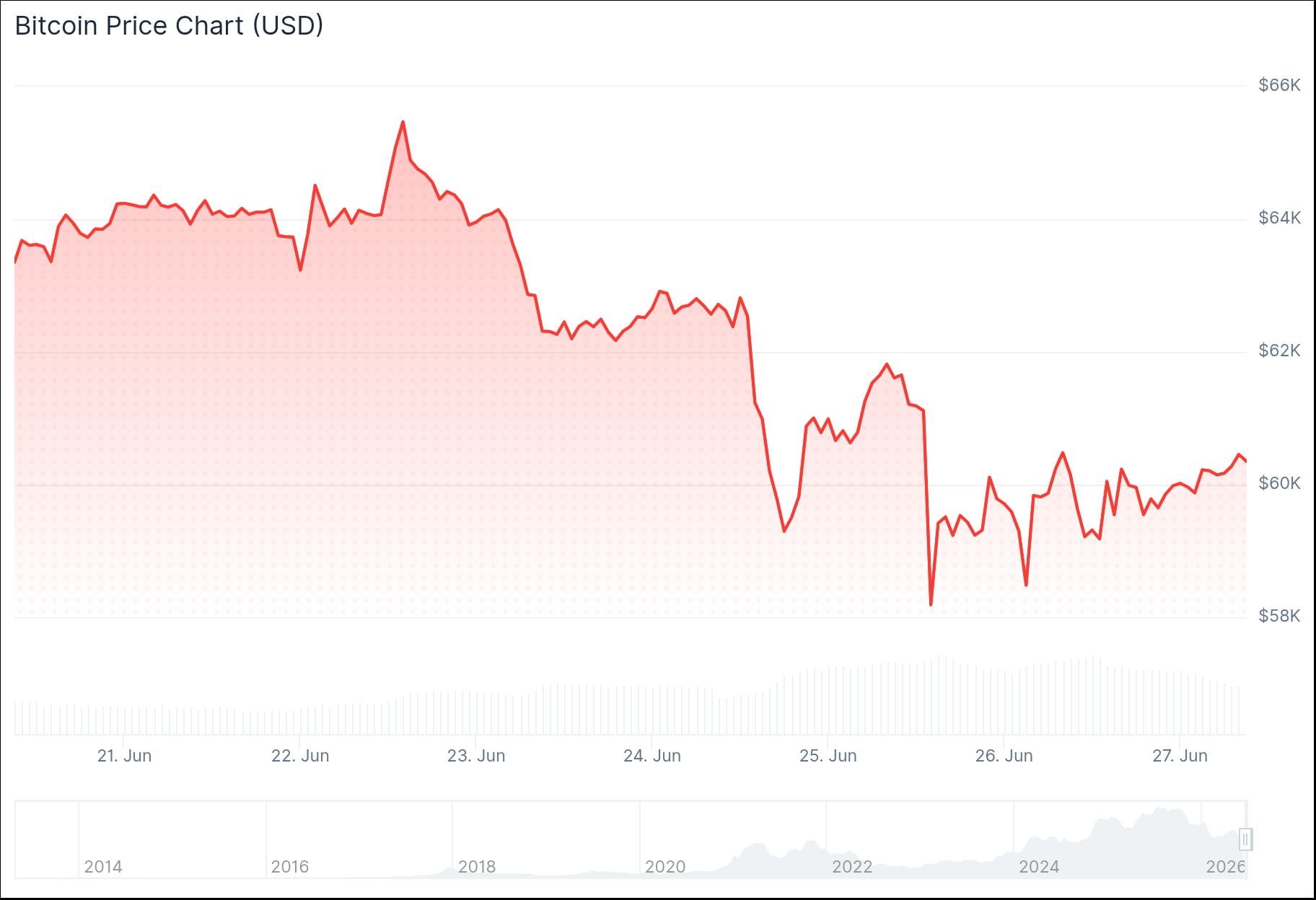
Bitcoin (BTC) Price: ETF Outflows Hit June High as BTC Holds Around $60,000



