Why a $4 Million Nest Egg at 70 Really Only Buys $88,000 of Real Annual Spending
The post Why a $4 Million Nest Egg at 70 Really Only Buys $88,000 of Real Annual Spending appeared first on 24/7 Wall St..
- A $4 million portfolio with $152,000 annual withdrawals funds only $88,000 in true discretionary spending after federal and state taxes, Medicare IRMAA surcharges.
- Convert $60K-$80K annually to Roth through age 72 to fill 22% bracket and prevent future RMD-driven IRMAA escalation; waiting until RMD at 73 eliminates this powerful strategy.
- Are you ahead, or behind on retirement? SmartAsset's free tool can match you with a financial advisor in minutes to help you answer that today. Each advisor has been carefully vetted, and must act in your best interests. Don't waste another minute; learn more here.
$4 million sounds like a lot of money. But stretched over a long retirement, the number results in a fairly modest annual income.
Imagine a married couple, both 70, sitting on $4 million in retirement assets. They have $2.6 million in traditional pre-tax accounts, $700,000 in Roth, and $700,000 in a taxable brokerage. They draw $58,000 a year in Social Security and just turned the corner on a comfortable retirement. They pull a textbook withdrawal of nearly 4%, or roughly $152,000, expecting that on top of Social Security it will feel like real money. But after taxes and Medicare premiums, the portfolio funds closer to $88,000 of true discretionary spending, about $7,300 a month.
This is a common scenario on online retirement forums. A couple in their late 60s or early 70s is surprised that a $4 million portfolio doesn’t allow the spending they imagined.
Walking $152,000 Down to $88,000
Start with the $152,000 gross withdrawal. Most comes from the traditional IRA and is taxed as ordinary income. A slice from the taxable brokerage arrives as qualified dividends and long-term gains, which get the preferential rate. Layer in $58,000 of Social Security, up to 85% of which is taxable, and household taxable income lands comfortably in the 22% federal bracket, which for joint filers in 2026 runs from $100,800 to $211,400, after the $32,200 standard deduction.
The deductions stack like this:
- Federal income tax: A blended bill of roughly $24,000 to $26,000 on the withdrawal once ordinary income, taxable Social Security, and favorably taxed dividends are netted out.
- State income tax: Around 5%, or close to $8,000, in a typical middle-tax state. (Of course, these rates are lower or can even be 0% in some states.)
- Medicare with IRMAA Tier 2: The 2026 standard Part B premium is about $203, but joint filers with MAGI between $274,000 and $342,000 pay about $406 per person, plus a roughly $38 Part D surcharge. For two spouses, that plus Medigap and a base Part D plan runs $14,000 to $16,000 a year.
- Out-of-pocket healthcare: Dental, vision, hearing aids, and uncovered prescriptions easily clear $5,000 to $6,000 annually for a couple in their 70s.
- Long-term care reserve: Self-insuring against a future care event requires earmarking roughly $10,000 a year, whether through a hybrid policy premium or a dedicated fund. (Many retirees don’t have an LTC plan but advisers increasingly recommend that you have one.)
Add those up and the $152,000 withdrawal funds about $88,000 of actual spending.
Why the RMD Wave at 73 Makes This Worse
At 73, the IRS forces distributions on the $2.6 million traditional balance whether the couple wants the cash or not. The first RMD will land near $100,000 and grow from there. That pushes MAGI higher, drags more Social Security into the taxable column, and risks bumping IRMAA from Tier 2 into Tier 3. If that happens, Part B jumps to about $528 per person for joint MAGI between $342,000 and $410,000.
Here are two strategies the couple could consider.
Aggressive Roth conversions before 73. The couple has three years to voluntarily move money out of the traditional IRA at the 22% bracket ceiling of $211,400 and into the Roth, where it never triggers an RMD and never lifts IRMAA again. Converting $60,000 to $80,000 a year fills the 22% bracket without spilling into 24%. Yes, it raises this year’s tax bill and likely this year’s IRMAA tier. The trade-off is paying a known 22% now to avoid a future blend of 24% ordinary tax plus a permanent IRMAA escalator on a forced distribution stream.
IRMAA calibration. The $274,000 joint MAGI line is the one to model carefully. Crossing it by a dollar adds roughly $2,900 a year in combined Part B and Part D surcharges per spouse. Time conversions, capital gains harvesting, and bond interest to land just under the next tier rather than just over it.
Once RMDs begin, qualified charitable distributions become a third lever. A QCD sends up to $108,000 per spouse in 2026 directly from the IRA to charity, satisfies the RMD, and never appears in MAGI. For charitably inclined retirees, this is the single most efficient way to suppress IRMAA after 73.
Steps to Take
Pull a one-page projection of taxable income at 73, 75, and 80 under a do-nothing path, then under a conversion path that fills the 22% bracket each year through 72. The dollar difference in lifetime IRMAA alone usually justifies the strategy. Experts advise not to wait until the first RMD year to react. By then, the bracket and the surcharge tier are already set, and the three-year conversion window, is gone. A 10-year Treasury near 4.4% means the safe portion of the portfolio is finally paying real income, which makes the conversion math even more favorable. Pay the tax from taxable brokerage cash, let the Roth compound untouched, and stop letting the IRS ride shotgun on every future withdrawal.
If You’ve Been Thinking About Retirement, Pay Attention (sponsor)
Retirement planning doesn’t have to feel overwhelming. The key is finding expert guidance, and SmartAsset’s simple quiz makes it easier than ever for you to connect with a vetted financial advisor. Here’s how:
-
Answer a Few Simple Questions.
-
Get Matched with Vetted Advisors
-
Choose Your Fit
Why wait? Start building the retirement you’ve always dreamed of. Get started today! (sponsor)
The post Why a $4 Million Nest Egg at 70 Really Only Buys $88,000 of Real Annual Spending appeared first on 24/7 Wall St..
You May Also Like

Report: Q2 2026 Becomes Worst Quarter Ever for Crypto Hacks

Supreme Court quietly doubling its police force — and 'loathes' acknowledging it: report
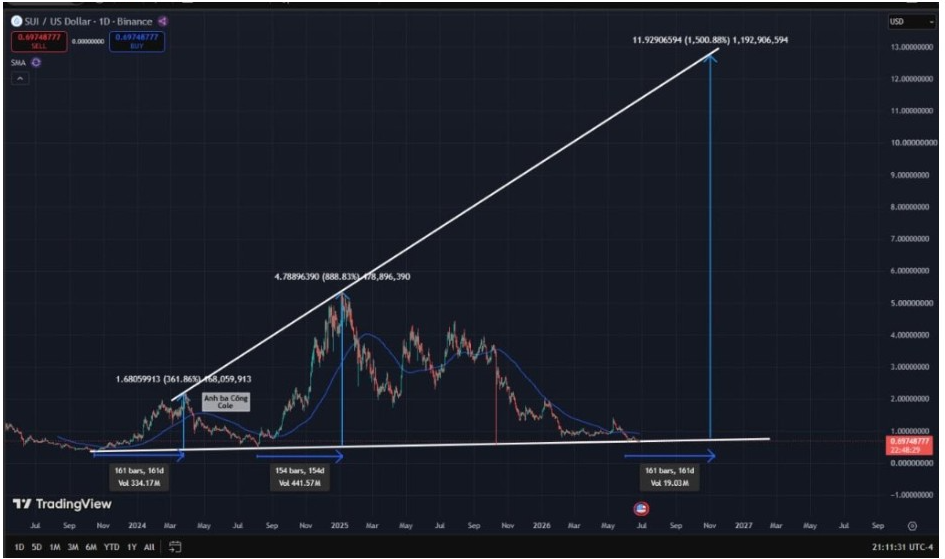
SUI Price Holds Near $0.70 as Analysts Target a Recovery Toward $0.84