

Opal Chain $OPAL Distribution Still Pending After Mini App Launch Date
Opal Chain hit its June 28 milestone right on schedule. The Telegram Mini App went live that day, exactly as promised. What has not moved since then is the actual $OPAL token distribution, and that gap is now the thing holders are watching closely.
A launched app is not the same as tokens in wallets. That distinction is where things currently stand.
What Has Opal Chain Actually Confirmed So Far?
The Mini App launch on June 28 was the first concrete milestone was delivered, and it came through as scheduled. That part is done.
Token distribution to holders was described as "coming soon" at the time of the Mini App launch. 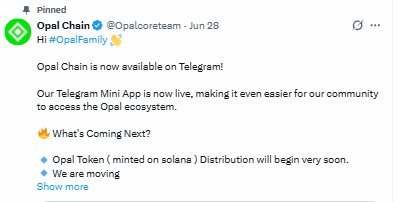
As of this update, no specific distribution date has been confirmed publicly. The word "soon" remains the only timeline reference available.
Why Hasn't Opal Chain Started $OPAL Distribution Yet?
No official reason has been given for the gap between the Mini App going live and distribution actually beginning. Projects following this sequence, app first, tokens later, often use the interim period for final wallet infrastructure checks or compliance steps.
Project has not stated whether this is the reason here. Until the team communicates a specific cause or date, the honest answer is that the delay reason remains unconfirmed.
What Does the $OPAL Token Structure Look Like?
$OPAL has a fixed supply of 153 million $OPAL tokens, with no ongoing inflation built into the model.
| Allocation Category | Percentage |
|---|---|
| Mining Rewards | 53% |
| Ecosystem Fund | 21.2% |
| Marketing | 18% |
| Team Tokens | 7.8% |
Mining rewards make up more than half the total supply, which puts Opal Chain closer to a community-distribution model than a team-heavy one.
The ecosystem and marketing allocations combined sit just under 40%, reserved for growth initiatives once distribution and listing actually happen.
When Will the Opal Chain $OPAL Burn Mechanism Kick In?
The burn mechanism tied to $OPAL is not active yet. It is designed to trigger after the DEX launch, not before.
This means two major events are still stacked ahead of each other in the $OPAL roadmap, first the token distribution, then the DEX listing that activates the burn function. Neither has a confirmed date as of now.
How Does Opal Chain Compare to Similar Mobile Mining Projects?
$OPAL has drawn comparisons to the Pi Network model, mobile-first mining leading eventually to token distribution and exchange listing. The sequencing looks similar on paper.
Where Opal Chain differs is in its fixed 153 million supply cap and its heavier mining allocation. Whether that structure translates into a smoother rollout rollout than comparable projects is something that will only become clear once actual rollout begins.
What Should Opal Chain Holders Watch For Next?
The official Opal Chain channels remain the only reliable source for a confirmed rollout date.
Community estimates circulating without an official source should be treated as speculation, not confirmation.
The next two milestones to track are the actual start of token rolloutand, following that, any confirmed DEX listing date that would activate the burn mechanism.
Expert Opinion
Analysts following mobile-mining projects note that a gap between app launch and token rollout is a common phase in this model, since wallet verification and compliance checks often take longer than the front-end product rollout.
The $OPAL allocation structure, with mining rewards accounting for more than half of total supply, suggests the project is positioning itself around broad community distribution rather than concentrated early holdings.
Analysts add that the actual test of this model will come once rollout and DEX listing dates are confirmed and holders can see real wallet activity.
Disclaimer: This article is for informational purposes only and does not constitute financial advice. No official rollout or listing date has been confirmed for $OPAL as of this update. Cryptocurrency projects carry high risk, including delays to stated timelines. Readers should conduct independent research before making any investment decisions.


You May Also Like

MiCA Deadline Closes as Gate Builds Regulated Crypto Base in Europe

Alabama Enacts Dual Legislative Breakthrough in Blockchain and Judicial Reform


