Kraken Arbitration Win Puts a $22M Price Tag on Biden’s Crypto Crackdown
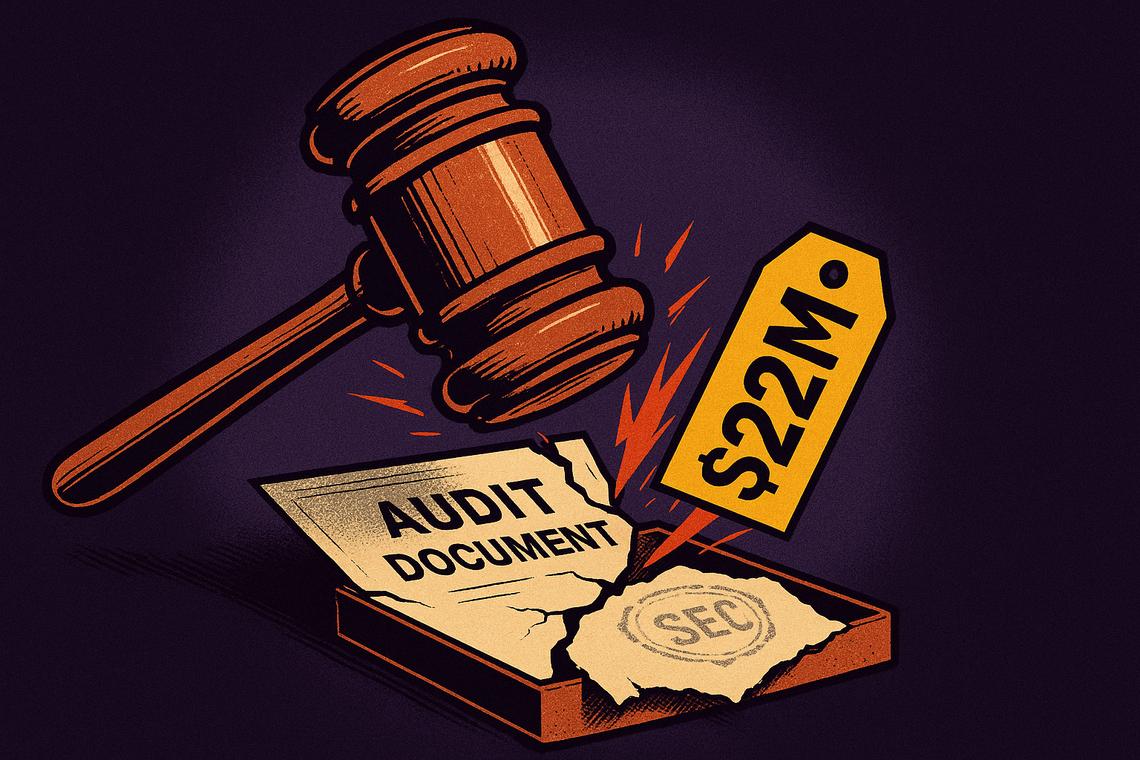
Kraken’s parent company just turned years of regulatory frustration into a $22 million arbitration win — and the story behind it exposes just how much damage the Biden-era crackdown on crypto quietly inflicted on the industry.
Key takeaways
- Payward, Kraken’s parent company, won a $22 million arbitration award against auditor Mazars USA after the firm abandoned a nearly complete audit in 2022.
- Mazars halted the audit just days before completion, citing legal uncertainty including an SEC complaint against Kraken — a complaint later dismissed after Gary Gensler resigned.
- The arbitrator found that Mazars’ withdrawal created a “licensing crisis” for Kraken, affecting its ability to obtain state money transmitter licenses; $12.5 million of the award relates to Kraken’s acquisition of TradeStation Crypto.
- Operation Choke Point 2.0 — the Biden administration’s unofficial campaign pressuring banks away from crypto clients — shaped the regulatory environment that led to the audit abandonment.
- Payward co-CEO Arjun Sethi is now calling on Congress to pass the Clarity Act, which would establish clear regulatory boundaries for crypto oversight.
Kraken’s $22 Million Arbitration Win Over Auditor Mazars
Payward is asking the Delaware Court of Chancery to enter final judgment on the arbitration award, following a confidential proceeding in which a retired judge ruled in Kraken’s favor. The arbitrator’s decisions, filed in redacted form as part of the lawsuit, found that Mazars’ withdrawal had caused real, quantifiable damage — not just reputational embarrassment.
The numbers tell the story. Of the total $22 million award, $12.5 million was directly connected to Kraken’s acquisition of TradeStation Crypto, an investment platform Kraken purchased partly because of its regulatory licenses. When Mazars walked away from the audit, Kraken found itself unable to complete state money transmitter license applications that required audited financials. The arbitrator called it a “licensing crisis.”
What makes the ruling particularly pointed is what Mazars itself acknowledged on the way out. “When they withdrew, Mazars confirmed in writing that they had no disagreement with our management, no concerns about our integrity, and that they had found no fraud,” Arjun Sethi said. The auditor, he noted, abandoned a nearly finished audit of a client it had no professional dispute with.
The arbitrator gave Mazars “credit for being honest” about its situation but concluded the firm still owed Kraken millions. Mazars, now part of the Forvis Mazars group — the 10th largest accounting firm in the US with approximately $2.2 billion in revenue — has not publicly responded to the lawsuit.
Operation Choke Point 2.0 and the Regulatory Pressure Behind the Audit Collapse
Operation Choke Point 2.0 describes the Biden administration’s unofficial campaign to pressure banks and financial service providers into distancing themselves from the crypto industry. The term was coined by venture capitalist Nic Carter, drawing a parallel with a similar Obama-era policy that pushed banks to cut ties with businesses like arms dealers. For Kraken, OCP2.0 was not an abstract policy debate — it was something that directly disrupted the company’s ability to function.
Banking regulators and the joint warning
The Federal Reserve, FDIC, and OCC issued a joint letter in January 2023 raising soundness concerns for banks working with crypto firms. Behind the scenes, according to Sethi, the FDIC sent at least 25 letters to 24 banks instructing them to pause or stop expanding crypto-related activity. That kind of coordinated pressure didn’t just chill banks — it chilled the service providers that crypto firms depended on, auditors included.
The SEC’s role in Mazars’ exit
Mazars stopped work on Kraken’s audit just days before completing it, about a month after the SEC filed a lawsuit accusing Kraken of operating as an unregistered securities exchange. Court filings also show that Mazars received subpoenas from a grand jury and the SEC for its Kraken files during this period. The audit firm pointed to “uncertainty and risk from legal developments,” including the SEC’s complaint, when it ended its engagement.
The SEC’s complaint against Kraken was ultimately thrown out in March 2025, shortly after President Trump took office and the agency reversed course on nearly all of its crypto enforcement actions. Gary Gensler, who had led the SEC’s aggressive posture toward the industry, resigned. The legal risk Mazars cited as justification for walking away — it simply ceased to exist.
Reputational Fallout and the Wider Cost to the Industry
The damage wasn’t limited to a licensing backlog. Sethi described a compounding effect where losing an auditor mid-engagement — without any findings of wrongdoing — left Kraken carrying a cloud it had done nothing to create. Banking relationships, licenses, and counterparty trust all depend on completed audits. When that process collapses under political pressure, the costs are real and lasting.
The human dimension also surfaced during this period. Kraken’s founder and former CEO Jesse Powell had his home raided by federal agents in March 2023, another element of what Sethi frames as a coordinated campaign against the exchange and the broader industry.
Mazars had been pulling back from the crypto sector since 2022, when it halted all crypto proof-of-reserves work across the industry. Kraken was not an isolated case. Smaller firms that lacked the resources to fight back through arbitration almost certainly absorbed the damage permanently, without any legal recourse to show for it.
That asymmetry matters. Kraken had the capital and legal firepower to pursue a years-long arbitration and win. Most companies in the crypto space facing the same circumstances did not. The $22 million verdict is a data point, but the broader cost of OCP2.0 to the industry remains largely uncounted.
Sethi’s Call for the Clarity Act
Payward’s legal victory has become a platform. Sethi used his public statement not only to announce the arbitration outcome but to call directly on Congress to pass the Clarity Act, legislation currently under debate across Senate committees that would establish clear regulatory boundaries between the SEC and the Commodity Futures Trading Commission over crypto.
“Vindication is not the point,” Sethi wrote. “The point is that no founder, no developer, and no customer should ever need to win an arbitration to prove they deserved a bank account, an auditor, and the basic infrastructure of doing business in America.”
His framing positions the arbitration win not as the end of the story but as evidence that the system failed in the first place. Winning a legal fight to recover what should never have been taken — that, he argues, is not a functioning regulatory environment. It is a workaround.
The Clarity Act remains in Senate deliberations, and its passage is not guaranteed. But Kraken’s arbitration victory hands its advocates a concrete, documented case study: what happens when regulatory ambiguity is weaponized, who bears the cost, and how long it takes to recover — if recovery is possible at all.
FAQ
Why did Mazars abandon the Kraken audit?
Mazars cited legal uncertainty and risk from ongoing legal developments, including an SEC complaint against Kraken, when it pulled out of the nearly complete audit. The firm also received subpoenas from a grand jury and the SEC for its Kraken files during this period.
What was Operation Choke Point 2.0?
Operation Choke Point 2.0 refers to the Biden administration’s unofficial campaign pressuring banks and financial service providers to avoid or exit relationships with crypto industry clients. The term was coined by crypto venture capitalist Nic Carter and references a similar Obama-era policy targeting other industries.
What consequences did Kraken face due to the audit abandonment?
Kraken suffered reputational harm and a licensing crisis — Mazars’ withdrawal delayed the exchange’s ability to obtain state money transmitter licenses that required audited financials. The arbitrator linked $12.5 million of the $22 million award directly to Kraken’s acquisition of TradeStation Crypto, purchased partly to address the licensing gap created by the failed audit.
What is the Clarity Act?
The Clarity Act is proposed US legislation currently under consideration in Senate committees that would establish clear regulatory boundaries between the SEC and the Commodity Futures Trading Commission over the crypto industry. Payward co-CEO Arjun Sethi has publicly called for its passage following the arbitration outcome.
Article produced with the assistance of artificial intelligence and reviewed by the editorial team.


Ayrıca Şunları da Beğenebilirsiniz

One Of Frank Sinatra’s Most Famous Albums Is Back In The Spotlight

Not a loophole: Singapore AI export controls let China tap US AI legally

Q2 Market Insights: Bitcoin regains dominance in risk-averse environment, ETFs remain critical to market structure


Popüler Haberler
Daha fazla