

Key TakeawaysUS nonfarm payrolls fell by 23,000 in July against forecasts for a gain of roughly 80,000, the first negative month since the pandemic recovery, while revisions erased a combined 103,000 Key TakeawaysUS nonfarm payrolls fell by 23,000 in July against forecasts for a gain of roughly 80,000, the first negative month since the pandemic recovery, while revisions erased a combined 103,000
Why Is Bitcoin Up? BTC Tops $65,000 as Jobs Shock Kills September Hike Bets, With CPI the Next Test

作者:OoJae
分享
Key Takeaways
US nonfarm payrolls fell by 23,000 in July against forecasts for a gain of roughly 80,000, the first negative month since the pandemic recovery, while revisions erased a combined 103,000 jobs from May and June.
Bitcoin (BTC) jumped nearly 2% to month to date highs above $65,200 on the report and enters the new week trading near $64,800, as traders sharply cut the odds of a September Federal Reserve rate hike.
CME FedWatch hike odds for September fell to about 40% from 55%, with hold odds now in the lead, while Polymarket traders cut the probability of a hike before year end to 56% from a recent high of 77%.
US spot Bitcoin ETFs collected $853.5 million across five straight sessions through Friday, the largest weekly inflow since April 17, with BlackRock's IBIT taking $693.7 million, more than 80% of the total.
Wednesday's August 12 consumer price index report is the next major test, with oil's retreat to the mid $70s and reports that President Trump is weighing an exit from the Iran conflict adding to the supportive backdrop.
The Jobs Shock That Moved Everything
The catalyst behind Bitcoin's strongest week in a month arrived at 8:30 a.m. ET on Friday. The Bureau of Labor Statistics reported that the US economy lost 23,000 jobs in July, a stunning miss against economist forecasts for a gain of 80,000 to 85,000 and the third largest monthly contraction since 2020. The details were arguably worse than the headline: May's gain was slashed to 63,000 from 129,000 and June's to 20,000 from 57,000, removing 103,000 jobs from the recent record, while annual wage growth slowed to 3.2%. The unemployment rate held at 4.1%, but analysts noted that was largely because labor force participation slipped to 61.4%, masking the underlying pullback.
One senior market analyst called the print a massive surprise that could see markets completely price out a September hike, and warned that the steady jobless rate was the report's most deceptive detail. Markets traded it exactly that way: the dollar index fell toward 99.5, the 10 year Treasury yield slid to 4.64%, gold jumped more than 2% to a seven week high near $4,340, and the S&P 500 closed at a record. Bitcoin, which had spent the week pinned near $64,000 while traders feared a hawkish Fed, rose almost 2% to trade above $65,200, its highest level of the month.
How Fed Bets Repriced
The move matters because it flips the macro question that has weighed on crypto since June, when nine Fed officials penciled in a hike this year and three dissented in favor of one at the July meeting. After the payrolls report, CME FedWatch showed the probability of a September hike falling to roughly 40% from 55% a day earlier, putting hold odds in the lead for the first time in weeks, though the tool still prices a 44.4% chance of one more quarter point move this cycle. Polymarket traders cut the odds of any hike before the end of 2026 to 56% from 77%.
Analysts caution against declaring victory. One chief investment officer noted that a single weak report may not shift Chair Kevin Warsh's stance while energy and shipping risks remain elevated, and inflation still runs near double the Fed's target. That is what makes Wednesday's CPI release on August 12 the week's decisive event: a soft print would validate the new pricing and could extend the rally, while a hot one would put the September hike debate right back on the table.
ETF Demand Is Back in Force
Flows tell the same story as price. US spot Bitcoin ETFs absorbed $853.5 million across five consecutive sessions through Friday, their largest weekly haul since April 17, led overwhelmingly by BlackRock's IBIT at $693.7 million with Fidelity's FBTC adding $116.4 million. Bloomberg Intelligence analyst Eric Balchunas highlighted a telling detail: several Bitcoin funds have recorded inflows every single day since the Coldcard hardware wallet exploit surfaced on July 30, suggesting some self custody refugees are choosing regulated wrappers. Galaxy Research now estimates that theft at 1,719 BTC, about $111 million.
Ethereum is riding the same wave: spot ETH ETFs drew $244.9 million last week, extending their inflow streak to five weeks, the longest run of 2026.
The Tailwinds, and the Caution Flags
Beyond the Fed, the supportive list has grown. Oil has retreated from above $90 to the mid $70s as the Wall Street Journal reports President Trump is weighing an exit from the Iran conflict even without a nuclear deal, easing the energy driven inflation fear that has stalked crypto all year. The weekend's BIP-110 chain split fizzled after two blocks without touching the market. The offset is Washington: the CLARITY Act missed its window before the Senate recess and now waits until at least mid September, delaying the year's biggest regulatory catalyst.
Technicians also urge restraint. Desks at QCP Capital and DWF Labs describe the bounce as resilience rather than a confirmed breakout, noting Bitcoin still trades below key long term moving averages in a death cross configuration, and options markets continue to price meaningful downside protection. In other words, the burden of proof still sits with the bulls until resistance breaks.
The Levels and the Calendar
The map for the week is straightforward. Bitcoin needs to hold the reclaimed $64,000 to $65,000 zone, with the July 21 high at $66,910 as the gatekeeper to a larger recovery and $68,000 beyond it. Failure at resistance risks a slide back toward $62,000, with the psychological $60,000 floor beneath. The calendar stacks the catalysts early: CPI lands Wednesday, August 12, followed by producer prices and retail sales later in the week, all feeding the September 16 Fed decision.
What It Means for Traders on MEXC
Macro weeks reward preparation over prediction, and this one has a single dominant event in Wednesday's CPI. Traders can follow the live BTC/USDT and ETH/USDT prices on MEXC, set alerts at $64,000 and $66,910, and use stop loss and take profit orders on MEXC Futures to predefine risk before the 8:30 a.m. ET data drop rather than reacting mid spike.
Disclaimer: This content is for educational and reference purposes only and does not constitute any investment advice. Digital asset investments carry high risk. Please evaluate carefully and assume full responsibility for your own decisions.
市場機遇
比特幣實時價格 (BTC)
--
----
USD
比特幣 (BTC) 實時價格圖表
描述:幣圈脈動基於 AI 技術與公開信息,第一時間呈現最熱代幣趨勢。如果想了解更多專業解讀與深度分析,請訪問新手學院。
本頁面分享的文章均源自公開平台,僅供參考。該內容不代表 MEXC 的立場或觀點。所有版權歸 OoJae 所有。如果您認為任何內容侵犯了第三方的權益,請聯絡 service@support.mexc.com 以便及時刪除。 MEXC 不保證任何內容的準確性、完整性或及時性,且不對基於所提供信息而採取的任何行動負責。本內容不構成財務、法律或其他專業建議,亦不應被解釋為 MEXC 的推薦或認可。如需專家見解和深入分析,請造訪 MEXC 學院。
學習更多 比特幣 知識
查看更多
MEXC Alpha Trader 投研週報 | 通膨降溫遇上地緣僵局:BTC 6.4萬箱體難破——突破窗口何時開啟?
2026年8月第3週 統計週期:2026年8月12日 – 8月18日 數據截止:2026年8月18日 核心敘事 過去一週,加密市場在宏觀數據與地緣政治的雙重驅動下延續區間震盪。比特幣在62,000-65,000美元箱體內反覆拉鋸,截至8月18日報約64,246美元,始終未能形成有效突破。市場正陷入「有資金、沒趨勢」的困局。 通膨數據全面降溫,升息預期進一步走弱。8月12日,美國勞工統計局公布7月C
2026/08/20

比特幣價格展望接近 $72K: BTC 接下來能否挑戰 $75,000?
比特幣飆升至 $72,000,已將市場關注點從長期盤整階段轉向一個新問題:BTC 接下來會怎樣? 突破 $71,000 的走勢結束了為期六週的區間,並清除了大量看跌槓桿倉位的集中分佈。 然而,突破並不自動意味著比特幣會繼續直接上行至 $75,000 或更高。 摘要 比特幣突破了自 7 月初以來一直限制價格的約 $62,000–$66,900 區間,並於 8 月 20 日觸及 $71,000–$72
2026/08/20

比特幣 做多 vs 做空:合約交易者如何在波動的行情中應對
比特幣不需要上漲,每位合約交易員都能參與市場。 與現貨交易不同,合約允許交易員根據對價格上漲或下跌的預期來建立持倉。 這使得區分 比特幣做多 vs 做空 成為新合約用戶應該理解的首要概念之一。 摘要 比特幣做多持倉通常在 BTC 上漲時受益。 比特幣做空持倉通常在 BTC 下跌時受益。 當市場朝相反方向波動時,兩者都可能產生虧損,而槓桿會放大這些虧損。 8 月比特幣漲勢清楚證明了這一點:大幅上漲突
2026/08/20
比特幣 最新動態
查看更多
Coldcard Mk3 安全警告:3800 萬美元比特幣盜竊謠言對 BTC 持有者的意義
據報導,Coinkite 在懷疑 Coldcard Mk3 與一宗價值 3800 萬美元的 Bitcoin 盜竊案有關後,發出了安全警告。以下是 BTC 持有者在簽署交易前應檢查的事項。
2026/07/31
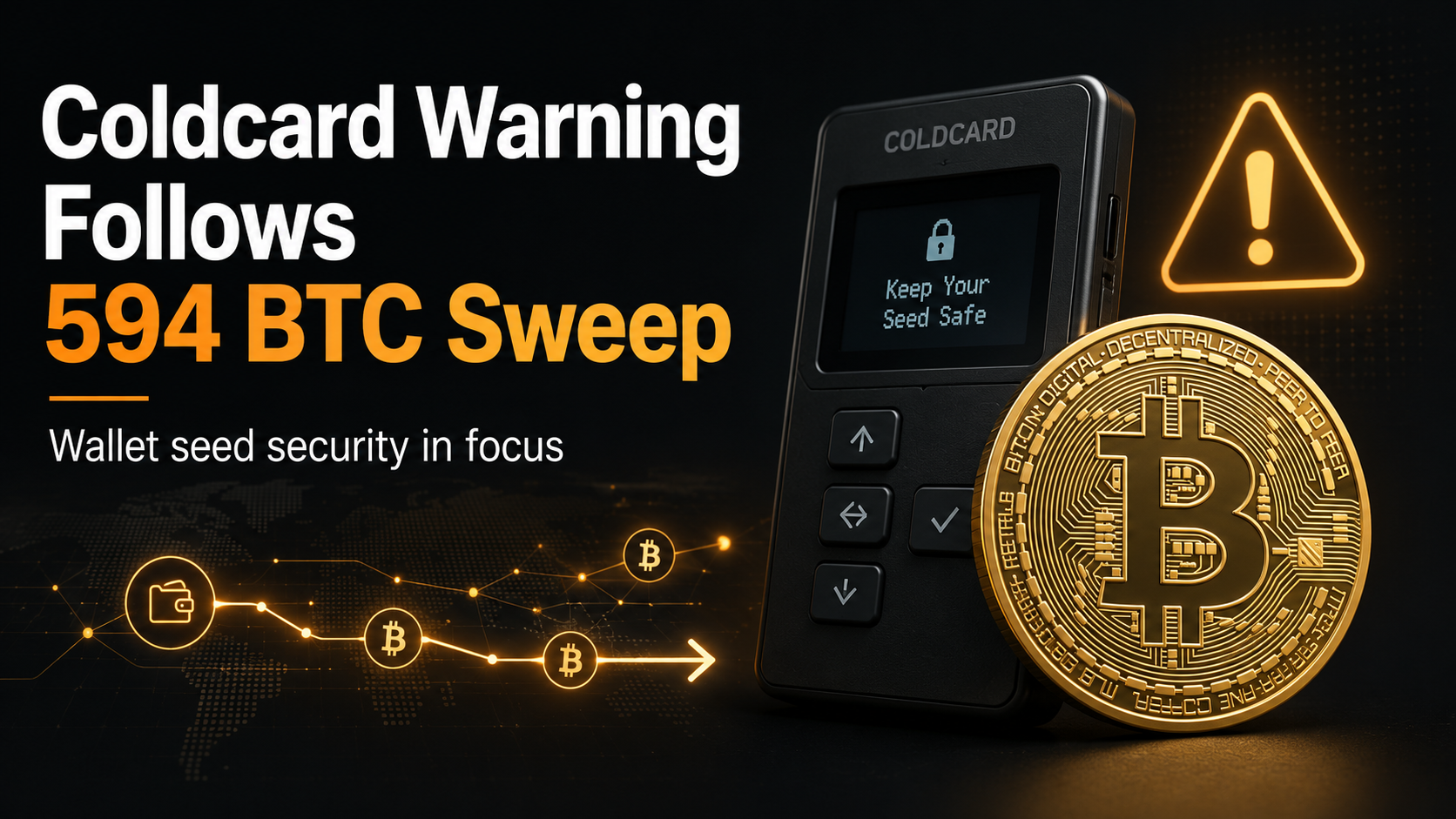
Coldcard Mk3 警告隨 $38M Bitcoin 掃蕩而來,但原因仍未確認
比特幣硬體錢包製造商 Coinkite 已警告用戶,Coldcard 裝置存在種子生成問題,影響範圍涵蓋所有 4.0.1 及更高版本的 Mk3 韌體。此警告是在安全研究人員調查一宗涉及 594.48 BTC(價值約 3,800 萬美元)的協調性盜取事件時出現的。然而,目前尚無公開的技術證據證實 Coldcard 的問題導致了這些轉帳。
2026/07/31

Coldcard 疑似第四波攻擊浪潮:為何仍有 462 個地址被清空?
Galaxy 研究主管 Alex Thorn 發現,這似乎是第四波有組織的 Bitcoin 盜竊事件,涉及由受影響的 Coldcard 韌體產生的種子。在區塊 960,778 至 960,792 之間約 2.5 小時的期間內,研究人員觀察到 218 筆交易,涉及 462 個疑似受害者地址、216 個新目的地以及 388.92748828 BTC。據報導,類似交易仍留在記憶體池(mempool)中,而已確認的交易則啟用了「手續費替代」(Replace-by-Fee,簡稱 RBF)功能。
2026/08/03
熱門
目前熱門備受市場關注的加密貨幣
加密貨幣價格
按交易量計算交易量最大的加密貨幣