Buy Crypto
Markets
Spot
FuturesBTC
Earn
Event Center
Rewards Hub
More
100%+ PoR
MEXC Editorial Team

MEXC Editorial Team

MEXC Editorial Team is the official content team of MEXC Exchange, staffed by eight full‑time professional editors. Each editor brings over 7 years of professional financial writing experience, with hands‑on investment and journalism expertise across cryptocurrency, stocks, commodities and global financial markets. Our team produces original market reports, breaking industry news, on‑chain research and macro‑economic commentary built upon independent analysis. We strive to deliver accurate, timely financial market insights for investors and users worldwide.

MEXC

MEXC Editorial Team's Articles

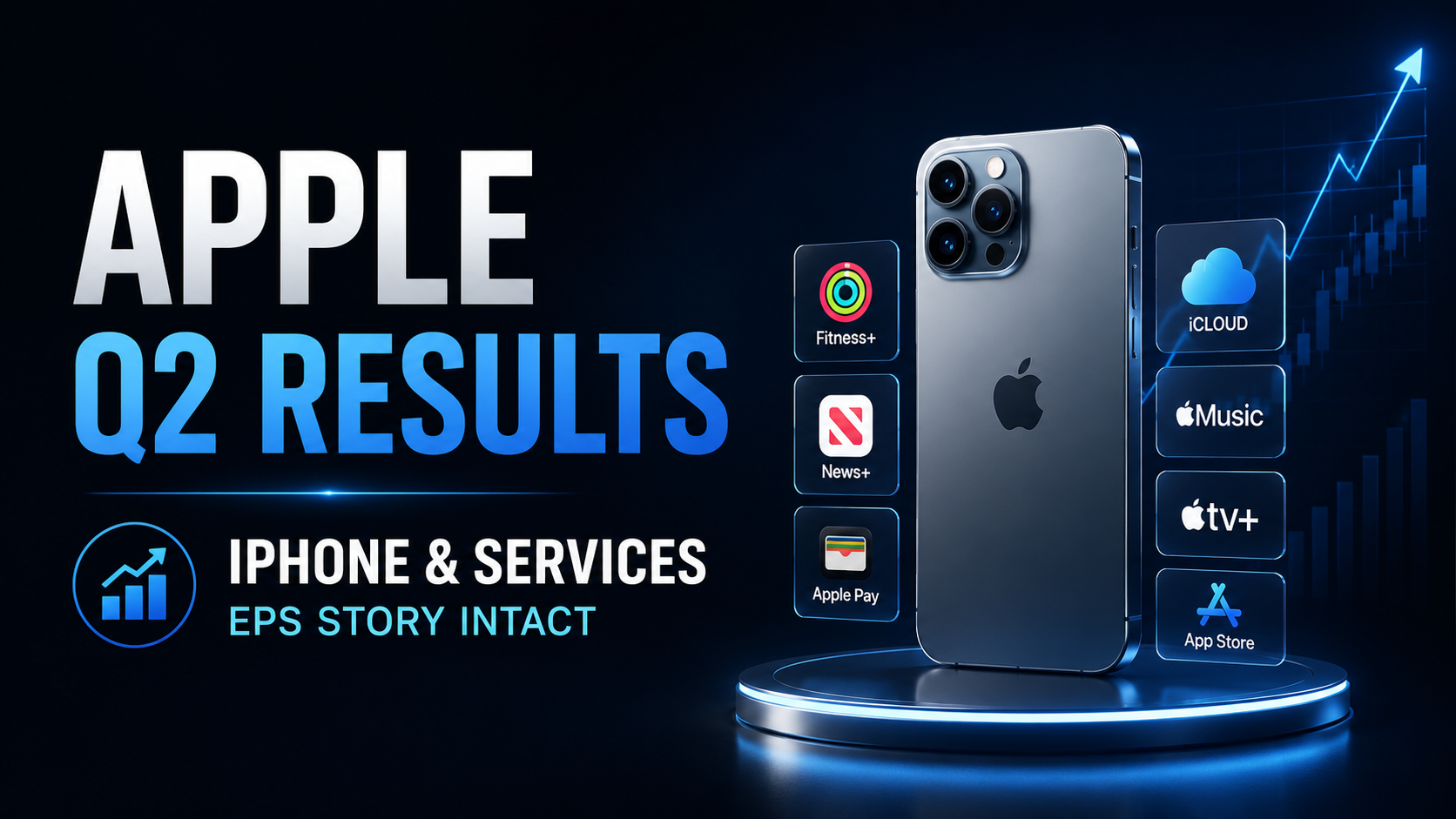
Apple FY2026 Q2 Earnings Review: iPhone Revenue and Services Growth Keep EPS Story Intact

Apple FY2026 Q2 Earnings Review: iPhone Revenue and Services Growth Keep EPS Story Intact

Apple reported fiscal 2026 second-quarter results on April 30, 2026, covering the quarter that ended March 28, 2026. Revenue reached $111.2 billion, up 17% year over year, while diluted EPS rose 22% to $2.01. Apple noted that the quarter set March-quarter records for total company revenue, iPhone revenue, and EPS, while Services revenue soared to a new all-time high. This was not just another routine hardware-cycle earnings report. Apple’s Q2 results proved that iPhone demand, Services growth, and aggressive capital return programs are still working in harmony to support the company’s powerful EPS story. For investors searching for the next Apple earnings report or AAPL earnings updates, the key issue moving forward is whether Apple can maintain its premium valuation while the market waits for stronger AI and product-cycle catalysts.
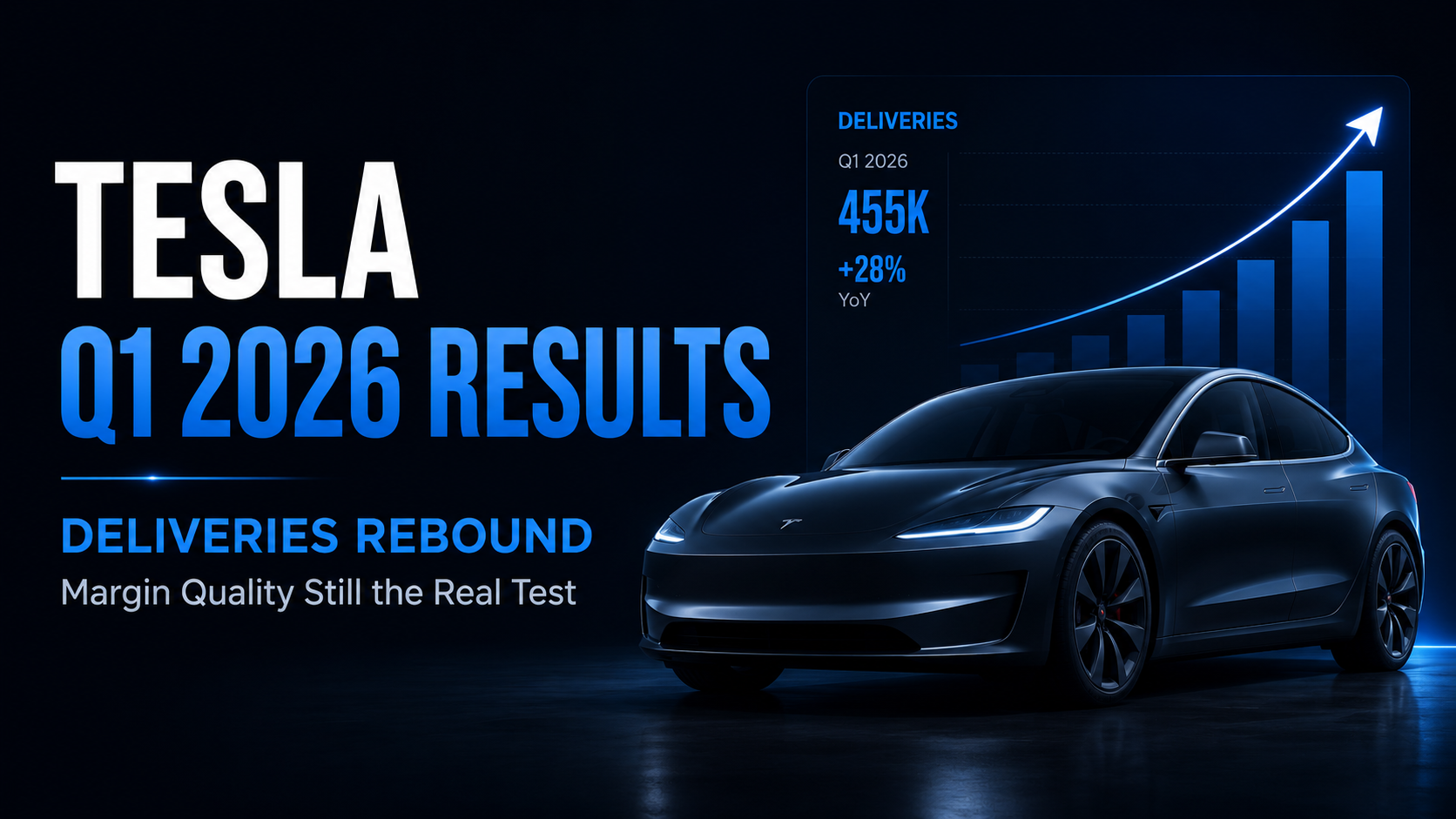
Tesla Q1 2026 Earnings Review: Deliveries Rebounded, But Margin Quality Remains the Real Test

Tesla Q1 2026 Earnings Review: Deliveries Rebounded, But Margin Quality Remains the Real Test

Tesla reported its Q1 2026 financial results on April 22, 2026, after the U.S. market close. The company delivered 358,023 vehicles in the quarter, generated total revenue of $22.4 billion, and reported GAAP net income attributable to common stockholders of $477 million. Total GAAP gross margin improved to 21.1%, while operating margin reached 4.2%. The headline signal is not just that Tesla's deliveries recovered from a weaker prior-year base. The more important question is whether higher deliveries, FSD-related revenue, lower vehicle costs, and improved automotive margins can rebuild confidence in Tesla’s profitability story. For investors searching for the next TSLA earnings report, Q1 sets up a critical test for Q2: determining whether volume growth can sustainably turn into higher-quality earnings.
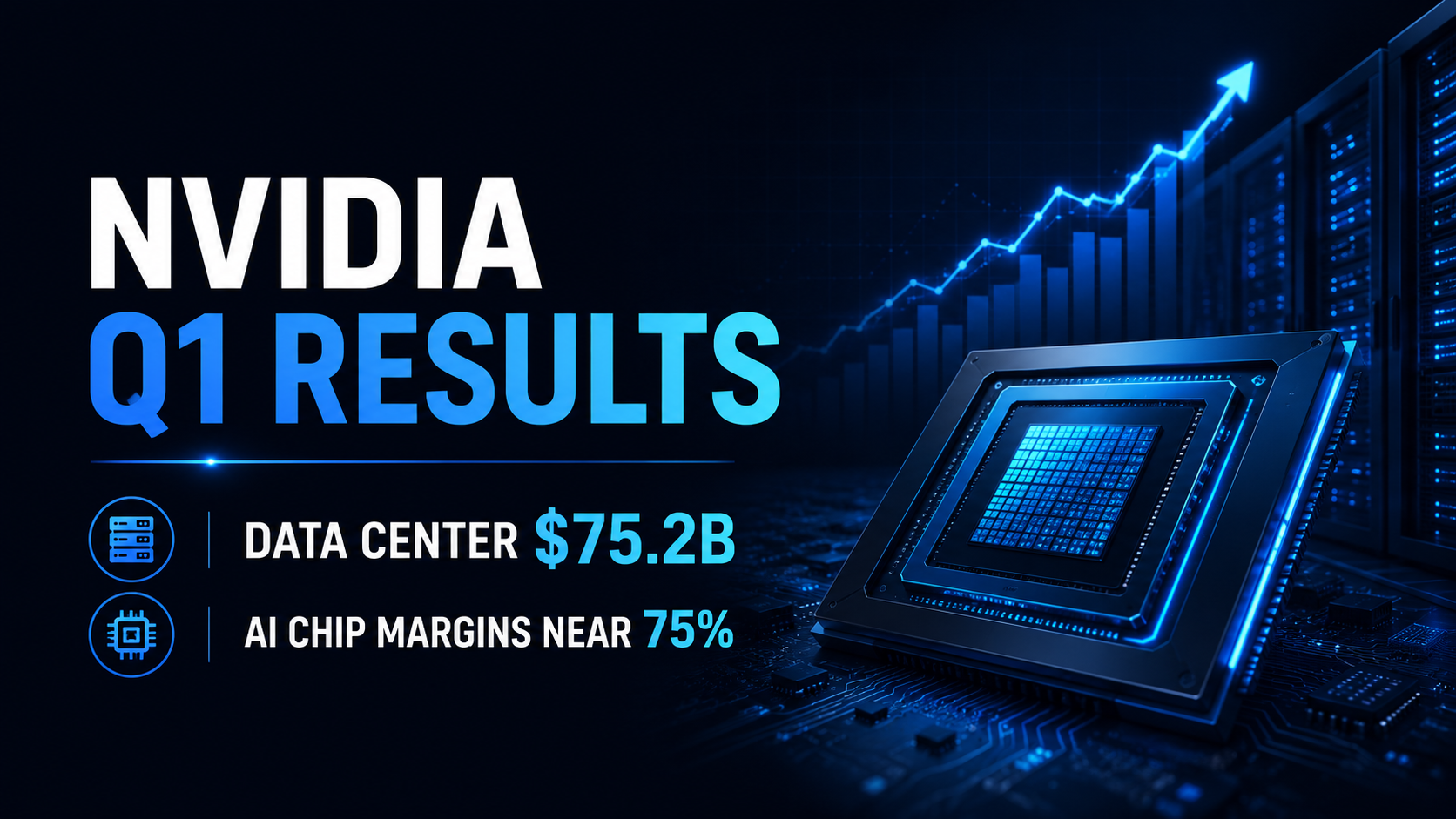
Nvidia FY2027 Q1 Earnings Review: Data Center Revenue Hits $75.2B as AI Chip Margins Hold Near 75%

Nvidia FY2027 Q1 Earnings Review: Data Center Revenue Hits $75.2B as AI Chip Margins Hold Near 75%

Nvidia reported its fiscal 2027 first-quarter financial results on May 20, 2026, delivering an absolute powerhouse of a quarter. For the period ending April 26, 2026, the chip giant pulled in a record-shattering $81.6 billion in total revenue—marking an 85% surge year-over-year. The star of the show was once again the Data Center segment, which brought in $75.2 billion alone, jumping 92% from the same time last year. Even with massive scaling efforts, Nvidia kept its pricing power completely intact, with GAAP and non-GAAP gross margins landing at a remarkable 74.9% and 75.0%, respectively. This update proved that global AI demand isn't just an abstract narrative; it is translating directly into high-margin revenue at an unprecedented scale. For investors checking the latest market trends, this Q1 report sets a massive baseline for Nvidia's next earnings cycle, testing whether the AI infrastructure boom can keep moving at this pace without hitting supply limits or margin fatigue.
SK Hynix vs Micron: How the Upcoming SKHY Listing Reprices AI Memory and HBM Leadership

SK Hynix vs Micron: How the Upcoming SKHY Listing Reprices AI Memory and HBM Leadership

SK Hynix’s highly anticipated Nasdaq debut under the ticker SKHY is poised to shake up how U.S. investors evaluate AI memory stocks. For years, Micron (MU) has served as the go-to U.S.-listed proxy for trading DRAM, NAND, and AI-fueled data center demand. Meanwhile, SK Hynix cemented its reputation as a dominant force in High-Bandwidth Memory (HBM), though its primary South Korean listing made access trickier for overseas investors. With the SKHY ADR launch, that accessibility gap is rapidly closing. This isn't just an early-stage growth story hitting the market—SK Hynix is arriving on the heels of a massive AI rally, armed with a dominant HBM narrative. The real question for traders isn't merely which company is "better." Instead, it's about identifying the superior setup: will the market reward SK Hynix for its HBM dominance and newfound liquidity, or stick with Micron’s proven U.S. market access and record-breaking earnings?
SK Hynix U.S. Listing Guide: SKHY Date, ADR Structure, AI Memory Exposure, and MEXC Access

SK Hynix U.S. Listing Guide: SKHY Date, ADR Structure, AI Memory Exposure, and MEXC Access

SK Hynix is moving closer to its U.S. market debut, giving global investors a new way to access one of the most important companies in the AI memory supply chain. The South Korean semiconductor maker has launched a major U.S. share sale through American Depositary Receipts (ADRs) on the Nasdaq under the expected ticker SKHY. According to Reuters, SK Hynix is seeking to raise about 43 trillion won, or approximately $28.07 billion, through this ADR offering. The company plans to issue 17.79 million new shares, with 10 ADRs representing one common share. Final pricing is expected on July 9, ahead of the anticipated Nasdaq trading debut on July 10. This listing matters because SK Hynix is not just another foreign company seeking U.S. market access. It is one of the world's leading suppliers of high-bandwidth memory (HBM)—a critical component powering AI accelerators and modern data center infrastructure. The U.S. listing aims to broaden SK Hynix’s investor base, improve trading access for U.S. institutions, and test whether the market is willing to assign a higher liquidity premium to the AI memory leader. At the same time, investors should not treat this listing as a risk-free AI access event. The offering involves newly issued shares, arrives on the heels of a massive AI-driven memory stock rally, and comes at a point when the market is increasingly hyper-focused on capital expenditures, capacity expansion, and the risk of a future memory-cycle reversal.
MEXC On-chain Daily Report: Zcash team nears completion of mathematical proof for inflation vulnerability, ZEC rises 12%

MEXC On-chain Daily Report: Zcash team nears completion of mathematical proof for inflation vulnerability, ZEC rises 12%

The crypto market continues to advance toward institutional adoption, regulatory compliance, and real-world asset integration. Bitcoin Suisse secured an ADGM license, strengthening regulated digital asset services in the Middle East, while EU MiCA implementation has accelerated crypto compliance with over 270 registered service providers. Tether expanded its Latin America strategy through a $20 million investment in Mercado Bitcoin, and institutional infrastructure development remained active with EDX Markets’ funding and Securitize-related tokenization growth. Meanwhile, Base’s B20 upgrade and increasing tokenized asset adoption highlight the continued evolution of on-chain financial infrastructure.
SPCX Nasdaq-100 Inclusion: Why Price, Volume and Momentum Matter on Index Day

SPCX Nasdaq-100 Inclusion: Why Price, Volume and Momentum Matter on Index Day

SPCX is set to enter the Nasdaq-100 Index effective at the U.S. market open on July 7, 2026. The inclusion marks a major visibility event for Space Exploration Technologies Corp., but the short-term market setup is more mixed than the headline suggests. Based on MEXC SPCXUSDT Perpetual data as of 04:00 UTC on July 7, SPCX traded at 156.25 USDT, down 2.85% over 24 hours, with the price sitting close to the lower end of its daily range. For traders, the key question is not only whether Nasdaq-100 inclusion brings passive-flow attention, but whether price action, volume, and momentum confirm sustained demand after the event becomes effective.
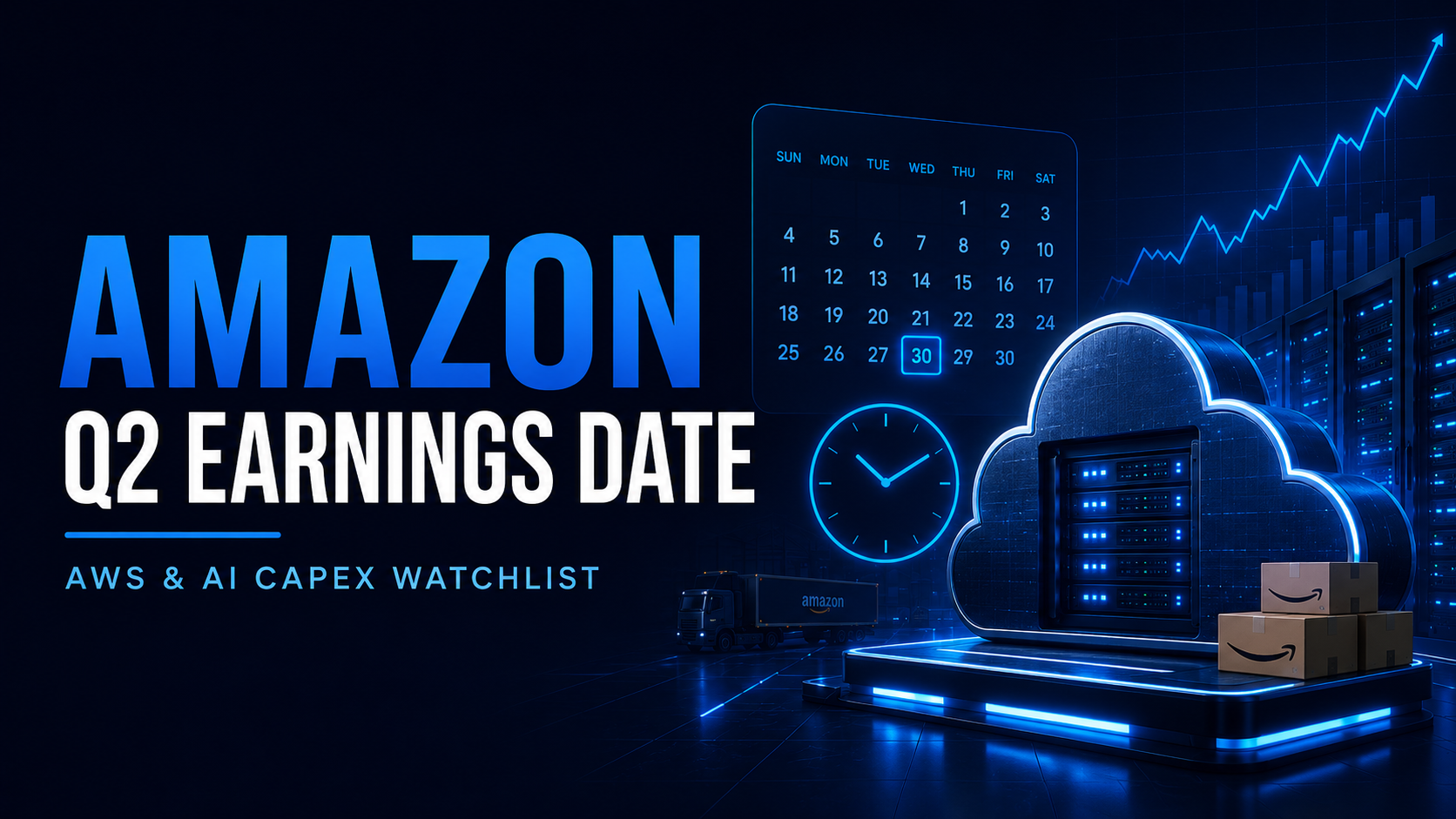
Amazon Q2 2026 Earnings Date: Expected Report Time, AWS Growth, and AI Capex Watchlist

Amazon Q2 2026 Earnings Date: Expected Report Time, AWS Growth, and AI Capex Watchlist

Amazon’s Q2 2026 earnings report is expected to be one of the most important cloud and AI infrastructure updates of the summer. Wall Street Horizon lists Amazon’s next earnings date as Thursday, July 30, 2026, after market close, for Q2 fiscal 2026, though the date is still marked as unconfirmed. Amazon has not yet posted a standalone Q2 2026 earnings event page, so investors should confirm the final webcast details closer to the report. For reference, Amazon hosted its Q1 2026 call at 2:30 p.m. PT / 5:30 p.m. ET. This is not just another Big Tech earnings date. Amazon’s Q1 results showed AWS revenue growth accelerating to 28% year-over-year—the fastest growth rate in 15 quarters—while free cash flow declined sharply due to higher property and equipment purchases tied to AI investments. For traders, the key question is not simply whether Amazon beats Q2 revenue guidance, but whether AWS growth, AI revenue, and cloud demand are strong enough to justify Amazon’s rising AI capital expenditure (capex) cycle.